


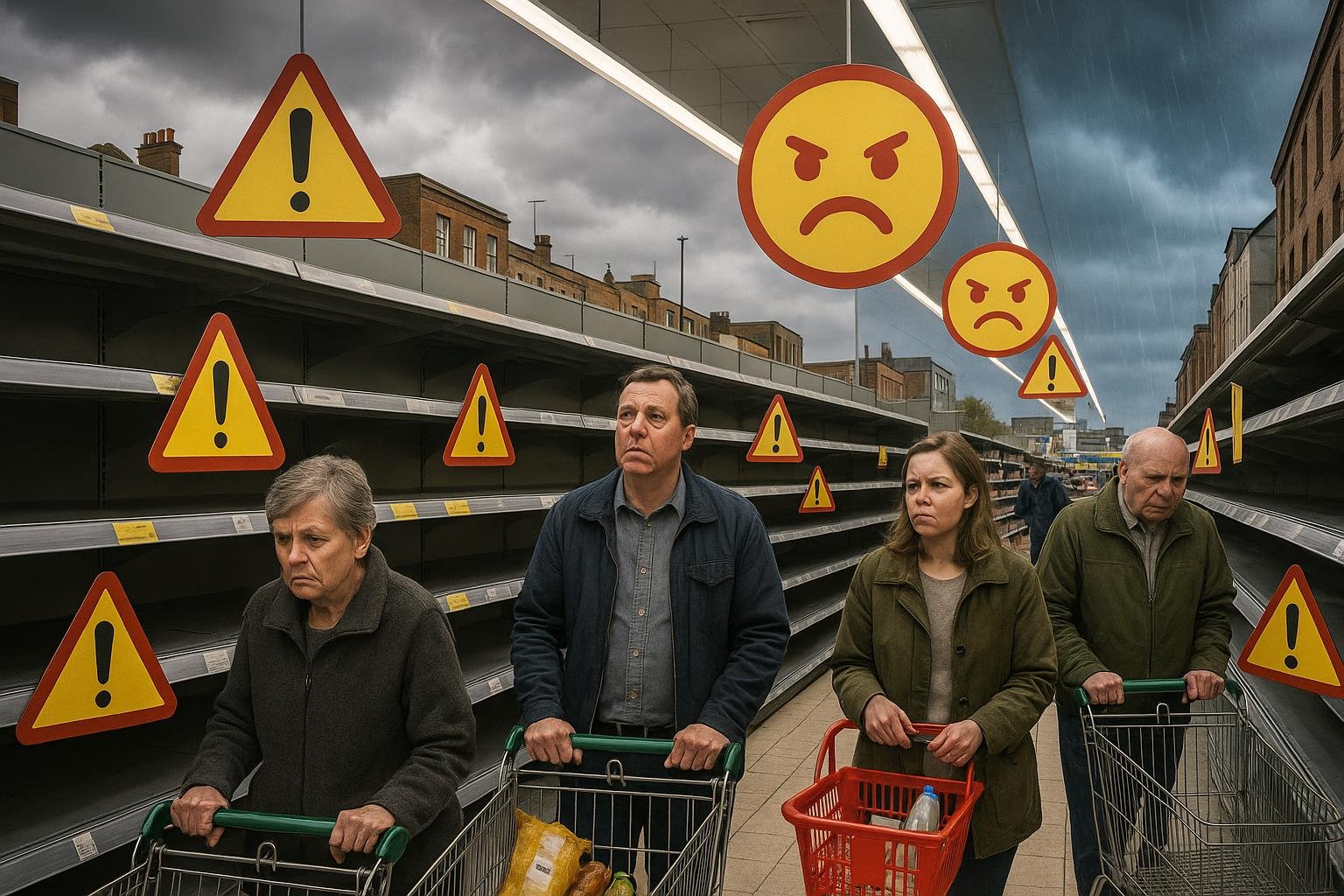
A new study reveals that product availability now influences UK shoppers more than price, with stock shortages threatening £2.1 billion in annual sales and reshaping loyalty in the retail sector.

Product availability has emerged as the dominant factor shaping UK grocery loyalty, displacing price as the primary influence on where shoppers choose to buy, a new study finds. According to the report by DHL Supply Chain and Retail Economics, stock gaps across the grocery sec...
Continue Reading This Article
Enjoy this article as well as all of our content, including reports, news, tips and more.
By registering or signing into your SRM Today account, you agree to SRM Today's Terms of Use and consent to the processing of your personal information as described in our Privacy Policy.
The research, titled “The Availability Effect: Why trust, margin and loyalty start at the shelf edge”, combined in‑store audits, a 2,000‑household survey and economic modelling to quantify the scope and consequences of out‑of‑stocks. It found that one in five grocery trips includes at least one missing item, equivalent to about 930 million shopping visits annually affected by product unavailability. The study also reports that 44 per cent of consumers have either switched or added a supermarket over the past year because of availability problems, rising to almost two‑thirds among shoppers under 45. Some 59 per cent of respondents said availability is an important reason they shop across multiple retailers, and around one in three now prioritise product availability over price.
Convenience stores are especially vulnerable, the report shows. Although they account for roughly one‑fifth of grocery sales, convenience outlets represent almost half of displaced spend tied to stock‑outs. Availability levels in convenience formats typically sit in the low‑to‑mid 80 per cent range, compared with more than 90 per cent in supermarkets and hypermarkets, and 63 per cent of shoppers believe availability is worse in convenience stores.
“The research shows that even small stock gaps can have a significant impact on how shoppers feel about a retailer. Despite the pressure on shoppers’ wallets, loyalty is being driven by more than price,” Nick Archer, DHL Supply Chain’s convenience and consumer managing director, said in the report. “In a market where customers can switch stores with ease, availability is much more than an operational metric. Being competitive in today’s market requires precision. Retailers and their partners need to be able to predict disruption, integrate data and execute efficiently.”
Retail Economics chief executive Richard Lim added: “In today’s environment of busy lifestyles, hybrid working and smaller, more frequent shopping trips, customers expect to find what they need quickly and easily. This is not only limited to grocery, but in all retail sectors, from fashion to beauty. Convenience comes down to having products there when the customer needs them, and availability has become the clearest sign of reliability. Retailers who get it right will be the ones who earn trust and lasting loyalty.”
The findings align with broader logistics and retail trends identified by DHL in recent years. DHL’s global analyses have repeatedly highlighted how supply‑chain disruption , from extreme weather events to capacity constraints , threatens availability and underlines the value of end‑to‑end visibility and predictive planning. Industry publications from DHL stress that climate‑related incidents and other operational shocks are among the leading risks facing supply chains, arguing that resilience and real‑time control‑tower capabilities are central to keeping shelves stocked.
Separately, DHL’s e‑commerce research underscores how fulfilment and delivery options now strongly influence consumer behaviour, with unavailability of preferred delivery choices prompting cart abandonment for many online shoppers. Retailers therefore face a twofold challenge: ensuring product presence at the physical shelf while also meeting consumer expectations across fulfilment channels. Other DHL work points to rising returns volumes and the cost and environmental consequences of inefficient reverse logistics, factors that can amplify pressure on inventory and availability if not managed.
Taken together, the evidence suggests retailers must treat availability as a strategic priority that spans procurement, store replenishment, digital fulfilment and returns management. The report urges closer data integration between retailers and supply‑chain partners, improved forecasting and more agile execution to limit displacement of sales and erosion of customer trust. For convenience operators in particular, lifting availability into line with larger formats may be critical to stemming the flow of spend to competitors.
Industry players are already investing in automation, analytics and inventory visibility to tackle these issues, but DHL’s analysis implies there is a commercial penalty for failure to act. With shoppers increasingly able and willing to move between stores or shop across multiple retailers, consistently meeting demand at the point of need has become a central test of retail reliability and a key determinant of long‑term loyalty.
Source: Noah Wire Services
Subscribe to Industry Updates

