


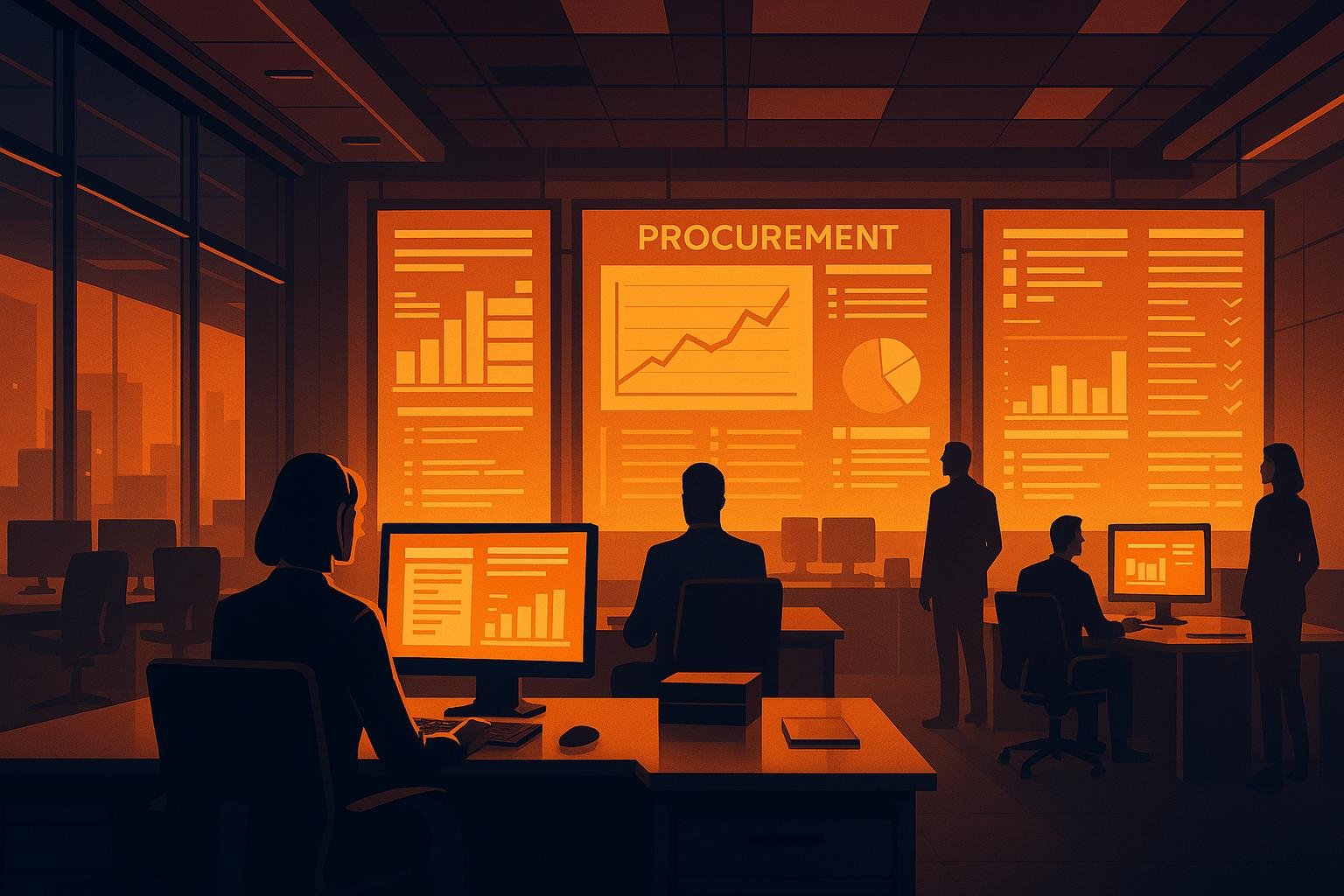
As organisations face increasing complexity and regulatory demands, centralised, automated procure‑to‑pay platforms are emerging as vital tools for cost control, supplier collaboration, and operational resilience, reshaping procurement from a back-office task to a strategic driver.

According to the original report, procurement has moved far beyond routine back‑office processing to become a strategic driver of cost control, supplier collaboration, compliance and op...
Continue Reading This Article
Enjoy this article as well as all of our content, including reports, news, tips and more.
By registering or signing into your SRM Today account, you agree to SRM Today's Terms of Use and consent to the processing of your personal information as described in our Privacy Policy.
Procure‑to‑pay platforms put a complete purchasing cycle into one place, replacing fragmented spreadsheets and siloed approvals with a single, auditable flow. The company said in a statement that this visibility , from requisition through receipt to payment , reduces confusion, shortens approval times and lowers the risk of invoice disputes. Industry data shows that automating tasks such as invoice matching and receipt reconciliation both cuts error rates and frees procurement and finance teams to focus on strategic work rather than manual follow‑ups.
Centralisation amplifies those gains. According to knowledge shared by procurement practitioners and trade publications, routing requests through a single intake and approval engine reduces duplicate purchases, tightens budget control and strengthens negotiating power with suppliers. Centralised models also accelerate decision‑making: visibility of spend and supplier performance lets managers enforce policy consistently and identify opportunities for consolidation or savings. Analysts note that centralisation’s benefits extend beyond cost: it builds trust across functions by providing a transparent, repeatable process for purchasing decisions.
Online procurement software and supplier collaboration tools further transform day‑to‑day workflows. The original report highlights that cloud‑based systems allow employees to raise requests, track approvals and monitor deliveries from anywhere, while suppliers can respond to quotes, submit invoices and check order status in real time. The result is fewer miscommunications, faster fulfilment and better audit readiness. Vendors specialising in procurement platforms commonly emphasise integrations with finance, inventory and vendor portals, so transaction data flows cleanly across systems and reporting becomes immediate and reliable.
Procure‑to‑pay automation is particularly potent where volume and complexity meet. Automation reduces manual data entry, enforces policy at scale and generates a complete approval trail that strengthens compliance. Predictive and analytics capabilities , increasingly powered by machine learning , can highlight supplier risk, suggest preferred suppliers and forecast demand to smooth purchasing cycles. According to industry thought leaders, early adopters of these capabilities tend to achieve sharper budgeting and fewer emergency purchases.
Procurement systems providers play a guiding role in realising these benefits. The company said that successful implementations require more than software licences: providers must support onboarding, workflow design, integrations and training so systems align with an organisation’s processes and controls. Vendor partnerships that deliver ongoing support and best‑practice advice help firms scale procurement ecosystems across locations and business units without losing discipline or security.
The case for centralised, automated procurement also rests on risk reduction. Fragmented buying creates hidden costs , duplicated orders, non‑compliant spend, late payments and weakened supplier oversight. Centralised systems and automation mitigate these risks by enforcing workflows, improving data fidelity and enabling easier supplier performance tracking. Government and industry auditors increasingly prize traceable approval trails and consistent policy application, making robust procurement platforms an element of regulatory readiness as well as efficiency.
Looking ahead, the procurement function appears set to gain further strategic influence. The integration of predictive analytics and artificial intelligence promises more accurate demand forecasting, earlier detection of supplier risk and automated recommendations that support negotiation and sourcing. Companies that adopt these tools early, analysts say, are likely to enjoy sustained advantages in cost control, supplier relationships and operational resilience.
In sum, the original report and related industry commentary converge on a simple thesis: modern procurement is a strategic capability grounded in centralisation, automation and collaborative technology. Organisations that invest in procure‑to‑pay platforms and the provider partnerships needed to embed them turn procurement from a transactional constraint into a scalable engine of financial discipline and supply‑chain stability.
Source: Noah Wire Services
Subscribe to Industry Updates

