


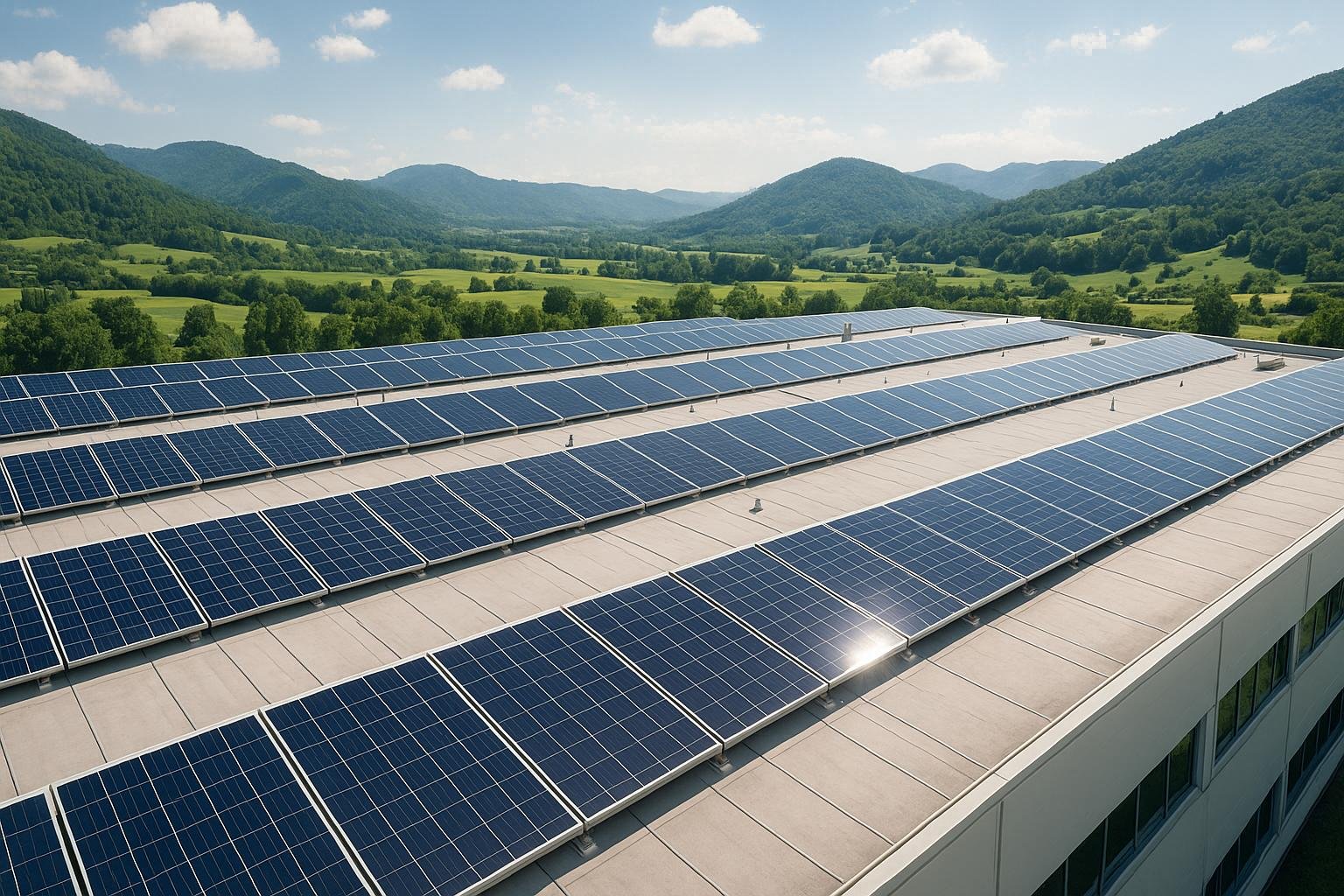
In 2025, Power Purchase Agreements have become a pivotal force in the shift to renewable energy, with major corporations leading the charge through innovative contracts, technological integration, and expanding global markets, shaping a decarbonised energy future.

Power Purchase Agreements (PPAs) have rapidly become a cornerstone instrument in the global transition to renewable energy, especially in 2025’s dynamic energy landscape. These long-term contracts, typically...
Continue Reading This Article
Enjoy this article as well as all of our content, including reports, news, tips and more.
By registering or signing into your SRM Today account, you agree to SRM Today's Terms of Use and consent to the processing of your personal information as described in our Privacy Policy.
PPAs originated as a response to the phasing out of government subsidies like feed-in tariffs, marking a shift towards market-driven renewable energy deployment. This evolution allowed private sector agreements to replace public incentives, paving the way for sustainable project funding and supporting various stakeholders’ climate commitments. Today, the global clean energy investment facilitated by PPAs surpasses $2.2 trillion.
The mechanics of a PPA involve distinct parties: the energy generator or project developer, the energy buyer (corporate, utility, or government), intermediaries such as energy service providers, and financial institutions underwriting the projects. Contract terms cover aspects such as fixed or escalating pricing, volume commitments, delivery points, and performance guarantees, which mitigate risk for both buyers and sellers. Variants of PPAs include physical agreements that deliver electricity directly, sleeved agreements managed by intermediaries, and virtual or synthetic PPAs where financial settlements replace physical electricity delivery.
Corporations are dominant drivers in the PPA market, with major tech giants like Google and Amazon leading the charge. Google’s renewable energy strategy, as illustrated by its recent 15-year agreement to purchase 1.5 terawatt-hours of electricity from TotalEnergies’ Montpelier solar farm in Ohio, demonstrates a commitment not just to procuring clean energy, but to integrating it into their operational geographies. Likewise, Amazon has secured over 500 renewable projects worldwide, expected to generate upwards of 77,000 gigawatt-hours annually. This extensive portfolio illustrates Amazon’s ambition to power its operations with net-zero carbon emissions by 2040, bolstered by agreements like the 100 MW wind project in India and multiple U.S.-based wind initiatives.
Beyond solar and wind, these corporations are also investing in emerging clean energy technologies. In early 2025, leading tech firms including Amazon, Google, and Microsoft signed PPAs and invested in small modular reactors (SMRs), injecting new momentum into the nuclear energy sector. Furthermore, Amazon and Google committed to supporting the tripling of nuclear energy capacity by 2050, reflecting a broader recognition of nuclear power’s role in providing low-carbon, reliable energy, especially important for energy-intensive data centres.
PPAs provide numerous advantages: long-term price certainty shields buyers from fluctuations in energy markets, while developers benefit from the stability essential for financing. The agreements also support organisational sustainability goals, allowing entities to meet science-based emissions targets and enhance ESG credentials without large upfront capital expenditures. However, PPAs are complex instruments requiring careful negotiation around risk allocation, contract length, and regulatory compliance. Challenges include potential market uncompetitiveness over time, credit risks, variability in renewable generation, and regional policy constraints.
Regionally, the United States remains the leading market for corporate PPAs, dominated by solar and wind projects primarily in Texas, California, Virginia, and North Carolina. Europe’s PPA market is expanding rapidly, supported by frameworks like the EU Green Deal, with Spain, Germany, and the Nordic countries leading capacity contracts. Emerging markets in Asia-Pacific, Latin America, and Africa are also experiencing notable growth, diversifying the global renewable energy supply landscape. Advancements in storage and hybrid projects are becoming integral, enabling more predictable energy delivery and grid services.
Forward-looking trends in PPAs include the integration of energy storage technologies to firm capacity and provide ancillary grid services, as well as innovative structures that allow for 24/7 carbon-free energy matching through hourly renewable energy certificates and demand response. Technological developments such as artificial intelligence for improved forecasting, blockchain for contract automation and REC tracking, and IoT for real-time performance monitoring are driving the evolution of the PPA model.
For organisations considering PPAs, success hinges on thorough preparation, conducting detailed energy audits, assessing sustainability and financial profiles, and engaging expert legal, technical, and financial advisory support. These steps are vital for navigating the complex negotiation process and aligning contract terms with strategic objectives.
In summary, Power Purchase Agreements stand as essential enablers of the clean energy transition in 2025, delivering stable, cost-effective renewable electricity while fostering innovation, sustainability leadership, and investment confidence across global markets. As the appetite for renewable energy surges and technological integration advances, PPAs will continue to adapt, underpinning the shift towards a decarbonised energy future.
Source: Noah Wire Services
Subscribe to Industry Updates

