


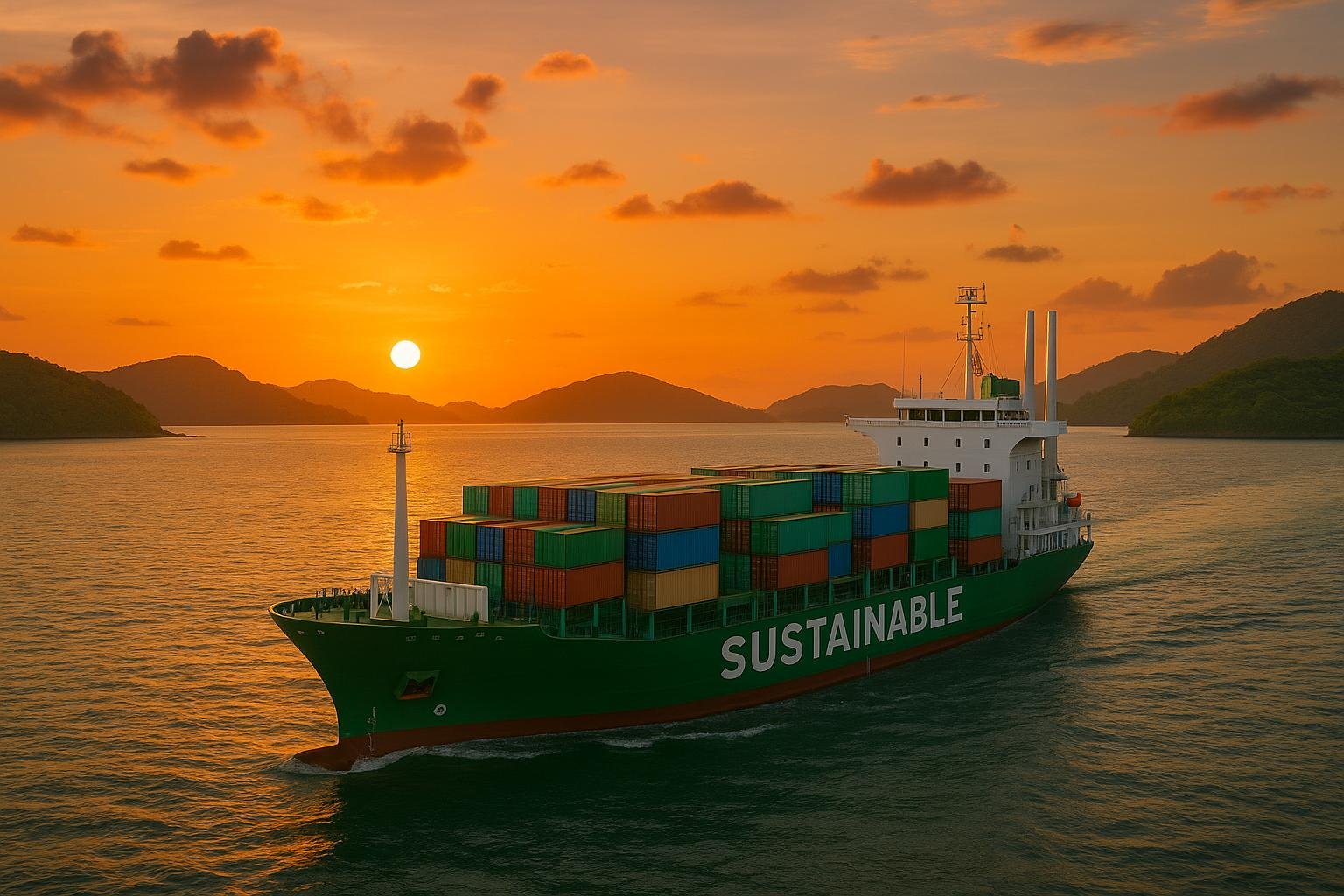
Amid strong economic growth, technological innovation and sustainability initiatives, the Philippine logistics industry is set for a pivotal year in 2026, demanding agility and resilience from market players.

The Philippine supply chain sector appears set for a pivotal year in 2026 as a confluence of strong domestic demand, business expansion, technology adoption and a push for greener operations reshapes logistics across the archipelago. According to a commentary by Ge...
Continue Reading This Article
Enjoy this article as well as all of our content, including reports, news, tips and more.
By registering or signing into your SRM Today account, you agree to SRM Today's Terms of Use and consent to the processing of your personal information as described in our Privacy Policy.
Economic tailwinds are a central part of the case for expansion. GetTransport.com cites forecasts of roughly 6% annual economic growth through 2026, positioning the Philippines among Asia’s faster-growing markets and prompting both local firms to scale up and foreign companies to enter. Industry research reported by Logistics News points to large public infrastructure programmes and recent liberalisation of foreign ownership rules as structural enablers; Mordor Intelligence data cited there projects the domestic freight and logistics market to expand from US$15.26 billion to US$20.41 billion by 2030, a 5.99% compound annual growth rate, with courier, express and parcel services expected to lead growth.
Market-value estimates vary by scope but together signal rapid expansion. GetTransport.com highlights a long-range projection in which the Philippine logistics market value rises from US$55.65 billion in 2024 to US$102.52 billion by 2034, illustrating anticipated dynamism across warehousing, freight forwarding and distribution. Government-led connectivity investments and growing e-commerce volumes are amplifying demand for end-to-end logistics, shorter replenishment cycles and broader geographic coverage beyond Metro Manila into Visayas and Mindanao, according to the sector commentary.
Providers warn 2026 will reward agility rather than complacency. The GetTransport.com analysis argues that cost pressures, intensified competition and ongoing supply-chain volatility will make innovation, speed and resilience the defining attributes of market leaders. Practical tactics highlighted include forward stocking, placing inventory close to demand centres for fast-moving consumer goods, pharmaceuticals and home-care products, and cargo consolidation to reduce costs, lower delivery lead times and improve sustainability.
Technology is central to that evolution. The GetTransport.com piece and industry sources point to accelerating adoption of artificial intelligence for route optimisation and truckload planning, alongside digital tools that enhance visibility and responsiveness. These capabilities, combined with network optimisation and selective partnerships, are presented as essential to maintaining service levels amid disruptions.
Sustainability is moving from aspiration to requirement. FAST Logistics Group, the largest domestic provider by footprint, states it is pursuing net-zero emissions by 2050 and is expanding electric vehicles and solar power across operations, including solar-powered cold-chain facilities in Cavite and Cebu and deployment of a 40-foot fully electric truck and high-capacity EV charging for large-volume clients, according to Power Philippines. The company’s scale, more than 3,100 trucks, over two million square metres of warehouse space and nationwide coverage of 94% of provinces, as described on FAST’s corporate site, illustrates how major operators can shape the pace of green transition.
Skills and human capital remain the sector’s backbone. Observers argue that increasingly complex, technology-driven logistics require a workforce with analytical and digital skills; investment in training, leadership development and hands-on operational expertise is presented as critical to sustain higher transaction volumes and service quality.
The outlook is not without qualifications. Reports emphasise the persistent dominance of road freight, accounting for a large share of revenue, and point to specialised segments such as air freight and temperature-controlled warehousing growing at faster rates, reflecting demand for high-value and time-sensitive products. Infrastructure gaps, weather risk and regulatory implementation will continue to test resilience, and industry commentary stresses that real-world performance by logistics providers ultimately determines which firms meet customers’ needs.
Platforms such as GetTransport.com are presented as bridging market signals and practical logistics, offering transparent options and customer feedback to help businesses choose carriers and solutions. According to the GetTransport.com commentary, that combination of marketplace transparency and competitive pricing can reduce friction for shippers and support faster adoption of new distribution strategies.
Taken together, the intelligence from market research, operator disclosures and industry commentary outlines a Philippine logistics sector transitioning to a more integrated, technology-enabled and sustainability-minded model. For businesses and carriers, the message for 2026 is clear: those that combine network reach, digital capability, green investments and a skilled workforce will be best placed to convert the country’s economic momentum into durable logistics advantage.
Source: Noah Wire Services
Subscribe to Industry Updates

