PepsiCo has announced a groundbreaking multi-year collaboration with Siemens and NVIDIA to use digital twin technology and artificial intelligence for transforming its plant and supply chain operations, promising smarter, faster, and more efficient manufacturing processes.

PepsiCo has announced a multi‑year, industry‑first collaboration with Siemens and NVIDIA to apply advanced digital twin technology and artificial intelligence across its plant and supply‑chain o...
Continue Reading This Article
Enjoy this article as well as all of our content, including reports, news, tips and more.
By registering or signing into your SRM Today account, you agree to SRM Today's Terms of Use and consent to the processing of your personal information as described in our Privacy Policy.
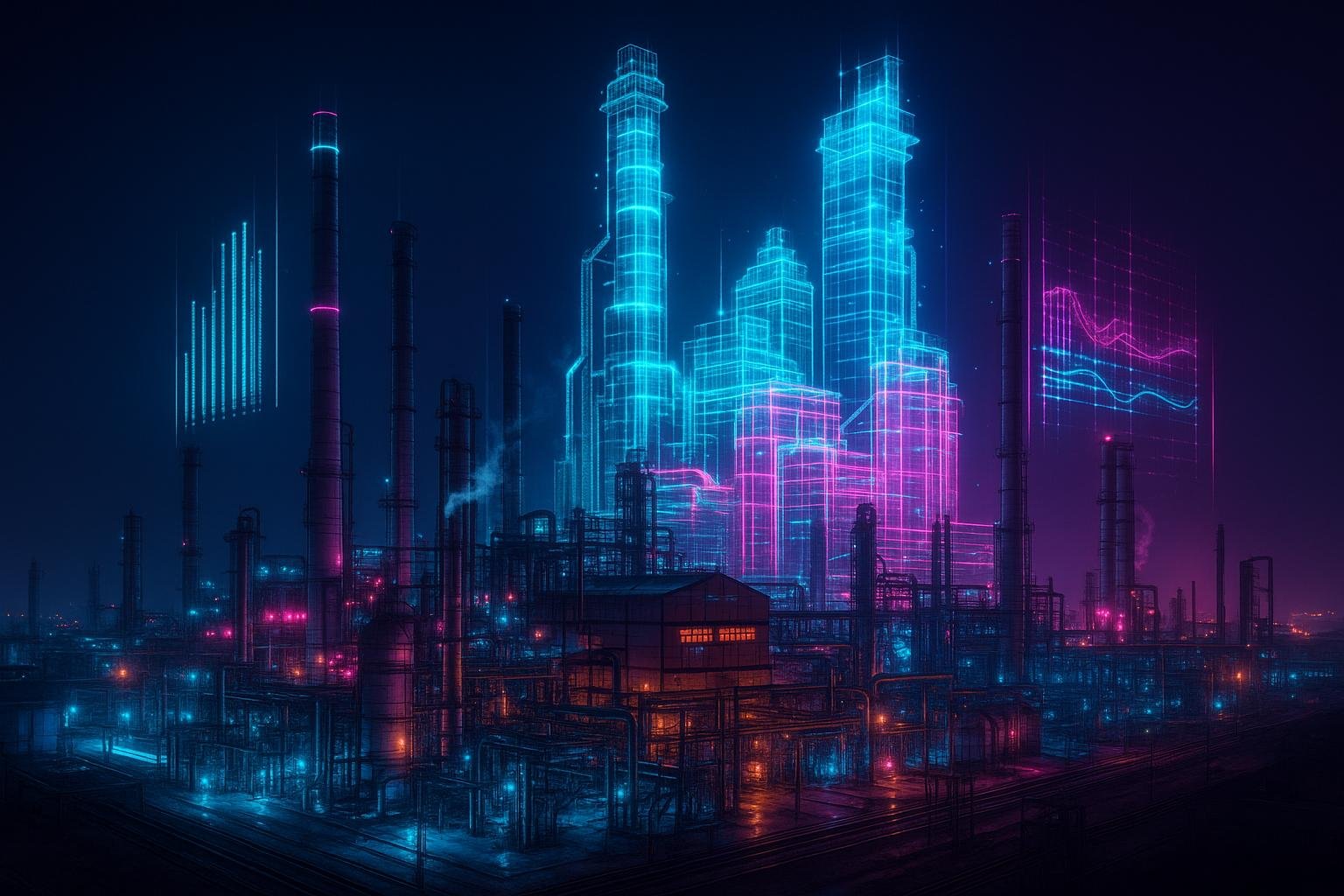
According to PepsiCo’s announcement, the partnership will use physics‑based digital twins and AI agents as co‑designers to simulate, validate and optimise facility layouts and processes before any physical build, shifting the company to a digital‑first planning strategy. Early pilots are already underway in the United States, the company said.
“The scale and complexity of PepsiCo’s business, from farm to shelf, is massive, and we are embedding AI throughout our operations to better meet the increasing demands of our consumers and customers,” said Ramon Laguarta, Chairman and CEO of PepsiCo. “Our work with Siemens and NVIDIA will help accelerate our continued journey of becoming a future‑fit company, operating with agility and foresight.” That statement was included in PepsiCo’s press release.
PepsiCo said it is using Siemens’ new Digital Twin Composer, built on NVIDIA Omniverse libraries, to create high‑fidelity 3D digital replicas of manufacturing and warehousing sites that combine 2D and 3D engineering data with real‑time physical inputs. Siemens described the Digital Twin Composer in its CES 2026 materials as a solution that builds Industrial Metaverse environments at scale, enabling companies to apply industrial AI, simulation and live data to make virtual decisions “at speed and at scale.”
“Physical industries are entering the age of AI. For companies with real‑world assets, digital twins are the foundation of their AI journey,” said Jensen Huang, founder and CEO of NVIDIA. “Working with NVIDIA and Siemens, PepsiCo is re‑architecting its operations, using physically accurate digital twins and AI to reinvent how it designs, optimises, and runs its global operations.” NVIDIA outlined the companies’ expanded collaboration in its briefing materials, emphasising Omniverse libraries and AI‑accelerated simulation.
Siemens also framed the initiative as part of a broader push to expand industrial AI capabilities. “We are proud to partner with PepsiCo and NVIDIA to digitally transform their manufacturing facilities using physics‑based digital twins and AI from design to engineering to operations. The Digital Twin Composer is a cornerstone in enabling PepsiCo to transform manufacturing and warehousing,” Roland Busch, CEO of Siemens AG, said in Siemens’ press release announcing the product at CES.
PepsiCo reported early results from pilot deployments in the U.S., saying teams were able, within weeks, to build performance baselines, simulate upgrades and validate new configurations that boosted capacity and throughput. The company claimed the approach can identify up to 90 percent of potential issues before physical modifications, delivered a 20 percent increase in throughput on initial deployment, produced nearly 100 percent design validation and yielded 10 to 15 percent reductions in capital expenditure by uncovering hidden capacity in virtual environments. PepsiCo’s release positioned the work as a blueprint for scaling globally.
Industry materials from Siemens and NVIDIA place the PepsiCo collaboration in the context of a wider drive to create AI‑driven, adaptive manufacturing sites. Siemens has described plans to connect Digital Twin Composer with its Xcelerator platform and NVIDIA’s Omniverse to enable continuous analysis of digital twins and faster iteration from virtual testing to shop‑floor change. A Siemens press release and NVIDIA briefings from recent industry events outline ambitions to begin creating fully AI‑driven factories, starting with pilot blueprints in 2026.
Athina Kanioura, CEO, Latin America, and Global Chief Strategy & Transformation Officer of PepsiCo, said the company is deploying “the first digital blueprint that reimagines how the supply chain is designed, built, and scaled, a first for the industry.” PepsiCo framed the collaboration as building “a unified, AI‑powered digital foundation” so plants and warehouses can act as a single, intelligent ecosystem that anticipates and adapts to demand.
While companies and vendors emphasised rapid gains from virtual validation and physics‑accurate simulation, independent verification of the claimed performance improvements and cost savings will be needed as pilots scale. Siemens’ materials describe the Digital Twin Composer as a managed, secure platform for photorealistic virtual scenes; NVIDIA’s materials highlight the role of Omniverse and AI infrastructure in accelerating simulation fidelity. Together, the vendors present the initiative as part of an expanding industrial metaverse aimed at shortening design cycles and reducing risk when reconfiguring real‑world assets.
PepsiCo, Siemens and NVIDIA said the collaboration is multi‑year and will scale beyond the initial U.S. pilots; Siemens and NVIDIA have also publicised broader partnerships to build AI‑accelerated industrial solutions across product and production lifecycles. The companies presented the work at CES as an example of how generative and simulation‑based AI can be used to transform manufacturing and supply‑chain design, while PepsiCo positioned the effort as central to meeting rising demand with greater speed, agility and validated investment decisions.
Source: Noah Wire Services
Subscribe to Industry Updates