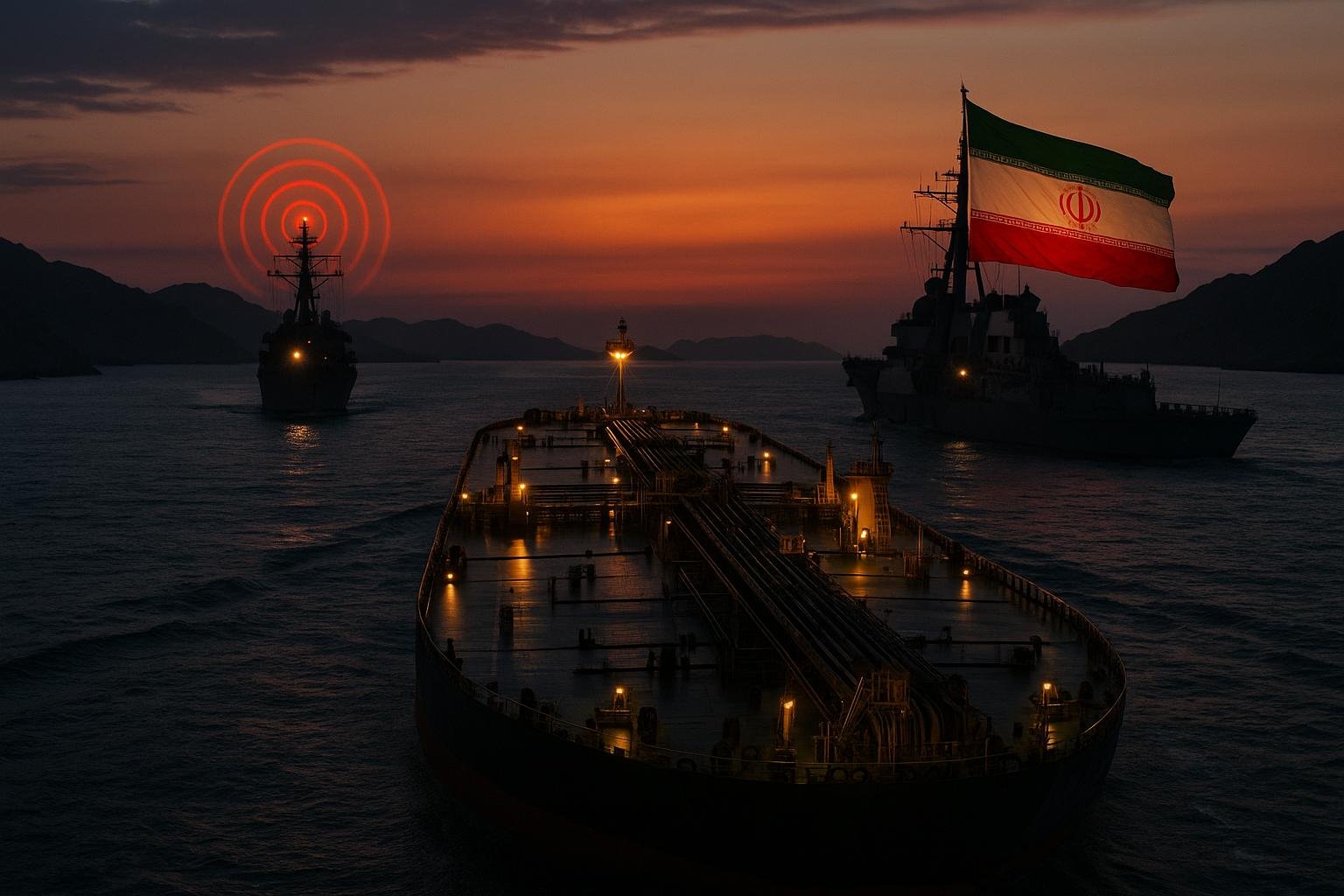
Global oil markets spiked on Monday after President Donald Trump issued a hardline ultimatum aimed at Iran over the Strait of Hormuz, fuelling fears of further disruption to supplies that traverse the chokepoint.
According to NDTV Profit, Brent crude climbed above $110 a barrel while the U.S. benchmark WTI neared $113 as traders priced in the risk that access through the strait could remain restricted. Market participants said the moves reflected a sharp reassessment of near‑...
Continue Reading This Article
Enjoy this article as well as all of our content, including reports, news, tips and more.
By registering or signing into your SRM Today account, you agree to SRM Today's Terms of Use and consent to the processing of your personal information as described in our Privacy Policy.
term physical tightness across crude and refined products.
Trump’s post demanding that Iran reopen the strait by a set deadline and threatening strikes on Iranian infrastructure prompted the immediate reaction. The Daily Beast reported that his message warned Iran it would be “living in hell” if the waterway was not reopened, language that Tehran dismissed and said the strait would remain closed until compensation for war damage was secured. Axios noted that Trump had described an escalation that included naming days for attacks, calling Tuesday “Power Plant Day” and “Bridge Day” in a separate post on Truth Social.
Iranian officials and parliamentarians publicly rejected the ultimatum, and shipping restrictions through the Hormuz corridor remained tight, with only selected vessels granted passage. The continued limitations have intensified concerns that a prolonged or expanded disruption would choke a route responsible for roughly a fifth of global seaborne oil and LNG flows.
Analysts warned the supply shock could widen into a broader energy crisis. Eurasia Group analysts estimate a better‑than‑one‑in‑two chance the conflict persists into May and have suggested oil could reach $150 a barrel if Iranian attacks damage regional energy infrastructure; some scenarios cited by industry observers even place prices nearer $200 a barrel should the strait stay closed for an extended period. The International Energy Agency has urged governments to mobilise emergency measures as strategic reserves and in‑transit buffers are drawn down.
Physical market indicators underlined the tightness. NDTV Profit reported that prompt spreads moved into steep backwardation, and dated Brent , a benchmark for deliverable cargoes , jumped above $140 a barrel, levels not seen since the 2008 spike. Traders said these signals point to an urgent scramble for immediate supplies rather than longer‑dated contracts.
The regional fighting has already reached beyond Iran’s borders. Axios reported drone strikes over the weekend struck oil‑related facilities in Kuwait and Bahrain, reinforcing fears that attacks could cascade through Gulf energy infrastructure. OPEC+ has cautioned that damage to facilities may have lasting consequences for output even after hostilities subside, and while the producer alliance has signalled higher official quotas, physical flows are constrained by damage, logistics and security risks.
The economic implications are measurable: higher fuel costs are feeding inflationary pressures and threaten to sap growth in many economies. AP noted that Asian markets were mixed on Monday, with some indices gaining despite the uncertainty; Japan said it would tap reserves and explore alternative supply routes, while South Korea planned naval shipments to Saudi Arabia to diversify sources.
Investors were also unsettled by mixed messaging from Washington. Axios highlighted that Trump has alternated between signalling negotiations and threatening military action, leaving markets to weigh both the likelihood and the potential scale of U.S. intervention. Legal scholars and some international voices have criticised the President’s rhetoric; The Daily Beast reported commentators warning such threats risk breaching norms of international law if they target civilian infrastructure.
With the conflict now in its sixth week and diplomatic channels active but fragile, market-watchers say volatility is likely to persist. Short‑term relief would depend on either a prompt reopening of Hormuz, a rapid de‑escalation, or coordinated releases from strategic reserves; absent those developments, analysts warn the near‑term path for oil prices remains sharply higher.
Source: Noah Wire Services