


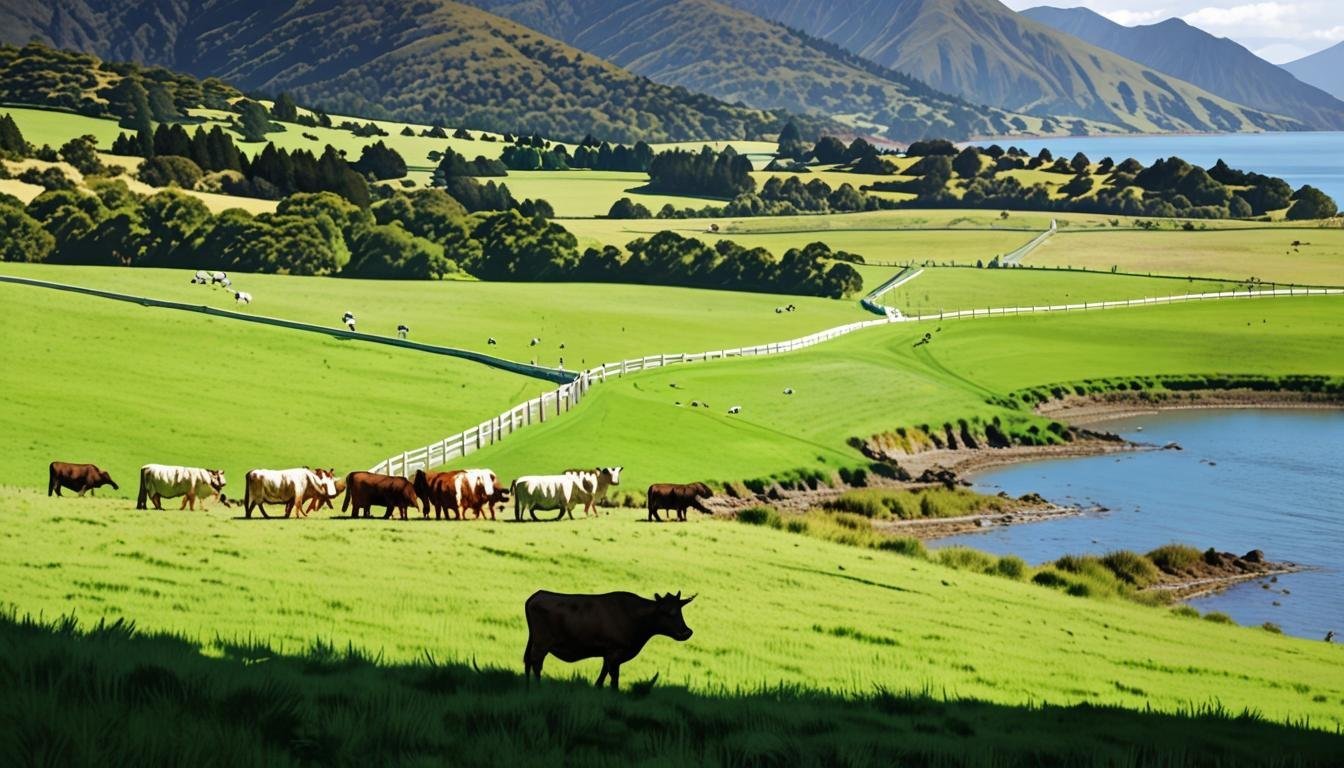
**Wellington**: New Zealand’s beef industry confronts potential US tariffs amidst rising global trade tensions. While some experts predict low chances of retaliatory measures, market dynamics may allow New Zealand to fill supply gaps in key markets like China as US exports decline.
New Zealand’s beef export sector faces significant challenges as global trade tensions rise, particularly influenced by recent tariff actions taken by the United States. In 2024, New Zealand farmers are grappling with the implications of these tariffs, which have affected major exporting countries, including Canada, Mexico, and China, further raising concerns about a potential global trade war.
Industry insiders worry about the possibility of retaliatory tariffs being imposed on New Zealand beef exports to the US. Such tariffs could adversely impact the New Zealand beef industry, which relies heavily on the US market. However, experts suggest that the likelihood of these tariffs being implemented is low. New Zealand imposes only a 2% tariff on agricultural imports, while the US maintains a 4% tariff. The Congressional Research Service (CRS) notes that approximately 70% of all US imports enter duty-free, with successive administrations prioritising low tariffs on food imports to keep consumer prices down. According to data from the United States Department of Agriculture (USDA), food accounted for just 6.7% of consumer expenditures in 2023, underscoring the significance of maintaining affordable food prices in the US.

The importance of New Zealand beef, particularly lean cuts, is well established, as it is often blended with fattier meats to produce a variety of products such as hamburgers. Stakeholders report that lean beef from New Zealand currently trades at a significant discount in the US market, contributing to lower prices for consumers.
The outlook for New Zealand beef exports appears more favourable in light of potential declines in US beef exports. Projections from the USDA indicate that US beef exports might decrease by 7% in 2025. In response, New Zealand and Australia may play critical roles in supplying key markets such as Japan, Korea, and China. This trend has already started, but it is expected to intensify as the US beef export market contracts.
The USDA also reports a 15% year-on-year drop in US cow slaughter numbers, with a decline of 27% from two years prior, leading to a critical shortage of lean beef. With both Australia and Brazil on track to rebuild their beef herds by 2025, the global supply of lean beef is predicted to tighten further. This development puts New Zealand in a strategically advantageous position to fill supply gaps in both the US and international markets.
However, the landscape remains uncertain, particularly in light of potential US retaliatory measures. Such tariffs could impact US beef and pork exports, especially to China, where recent licensing issues have raised concerns about the continued export of US protein products. Under the China Import Food Enterprise Registration (CIFER) system, many US establishments have faced non-renewal of export licences, bringing the flow of exports for beef, pork, and chicken into question. Notably, 71 US poultry plants saw their auto-renewal licences not renewed, halting exports from these facilities.
As the deadline approaches for the renewal of licences for 800 export establishments involved in pork, chicken, and beef, uncertainty looms. If exports from the US to China suddenly cease, New Zealand may find itself well-positioned to fill any resultant void in the Chinese market. In 2024, US beef exports to China accounted for 179,464 tonnes valued at approximately US$1.58 billion, whereas New Zealand’s exports for the same period totalled 146,290 tonnes worth US$631 million.
Simon Quilty, an independent livestock analyst from Australia, notes that while these developments remain speculative, they underscore the volatility of global beef supply chains and the potential for rapid changes in trade dynamics that could benefit New Zealand beef exports in the near future. With ongoing tensions and market fluctuations, the situation for New Zealand farmers will continue to evolve, pressing them to navigate an ever-changing global landscape.
Source: Noah Wire Services

