PARIS – Nestlé chief executive Philipp Navratil says the rise of agentic artificial intelligence could give the food group a meaningful edge as retailers and shoppers increasingly lean on machine-driven decision-making.
Speaking at Deutsche Bank’s dbAccess Global Consumer Conference on 2 June, Navratil said agentic AI would be a “big impact” and a “big change” for the sector, with retailers using it to refine shopping journeys and consumers depl...
Continue Reading This Article
Enjoy this article as well as all of our content, including reports, news, tips and more.
By registering or signing into your SRM Today account, you agree to SRM Today's Terms of Use and consent to the processing of your personal information as described in our Privacy Policy.
oying it to make purchasing decisions.
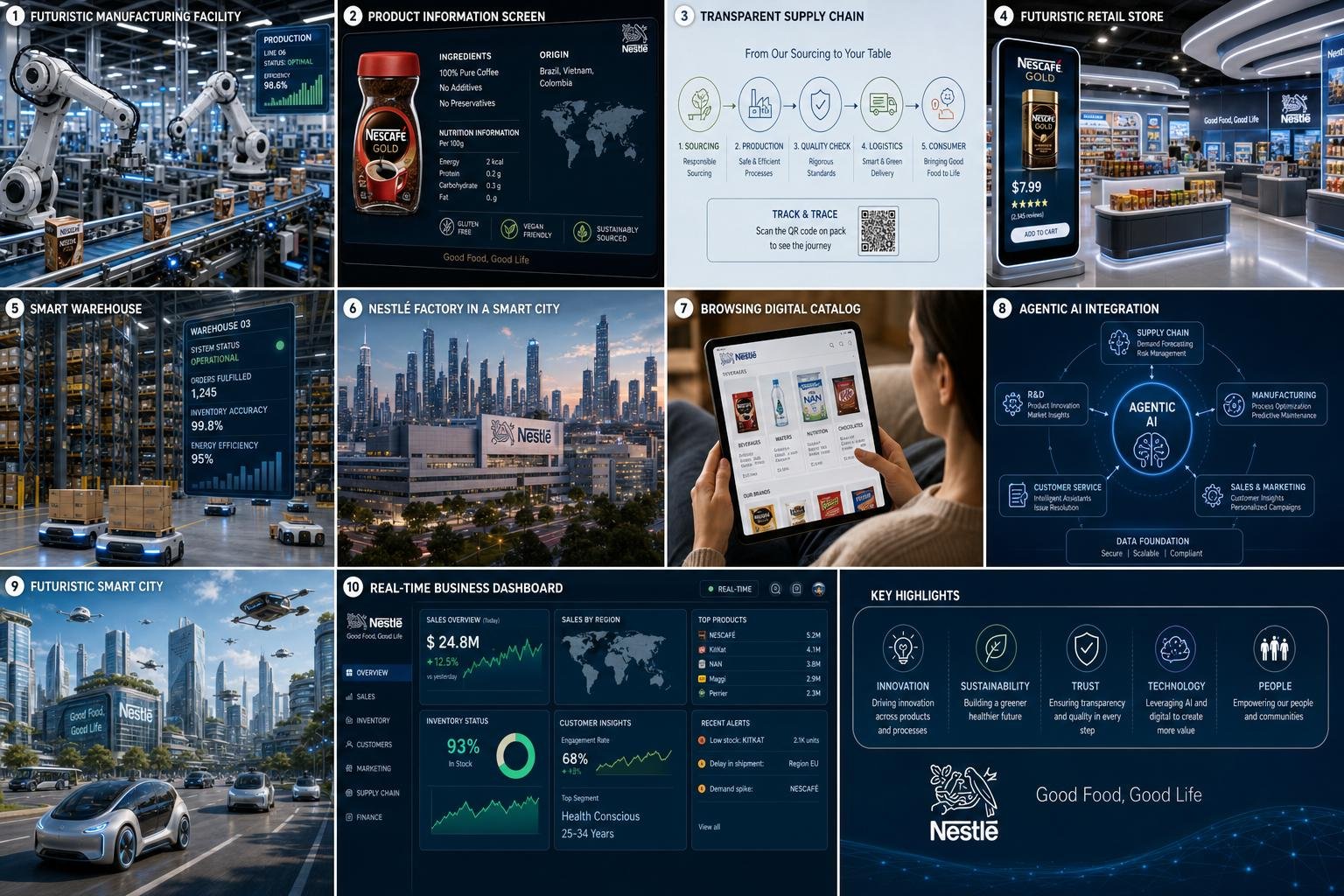
He argued that Nestlé’s advantage lies not in advertising flair, but in depth of information. Traditional marketing, he said, depends heavily on visuals and influencers, whereas large language models are built to absorb vast quantities of structured data. Nestlé, he suggested, has a sizeable store of product science, sourcing details and manufacturing information that can be fed into those systems.
That could allow the company to provide consumers with much richer product explanations, including what he described as a kind of “birth certificate” for some items. In practice, that would mean more transparent detail on origins, ingredients and production methods at a time when AI tools are increasingly mediating what shoppers see and trust.
Navratil also said Nestlé is experimenting on a small scale with AI agents that could eventually interact with retailers’ own systems. The aim, he said, would be to improve assortment planning, customer experience and supply-chain efficiency. “Those agents … will work together for a better assortment, for a better consumer experience (and) for a better supply chain,” he said.
His comments come as major companies move beyond using AI purely for cost savings and towards growth-oriented applications. Deutsche Bank’s own recent AI summit underlined that shift, with executives and speakers stressing that organisations need to design AI for new outcomes rather than simply automate existing processes.
Navratil framed Nestlé’s data infrastructure as a foundation for that next phase. He said the company’s long-running SAP-based enterprise resource planning set-up means around 90% of the business runs through a unified system, giving managers a common database from which to extract more useful commercial insight.
The broader message was clear: in a market where algorithms may increasingly decide what gets noticed, Nestlé believes information, not imagery, could become the new competitive advantage.
Source: Noah Wire Services