


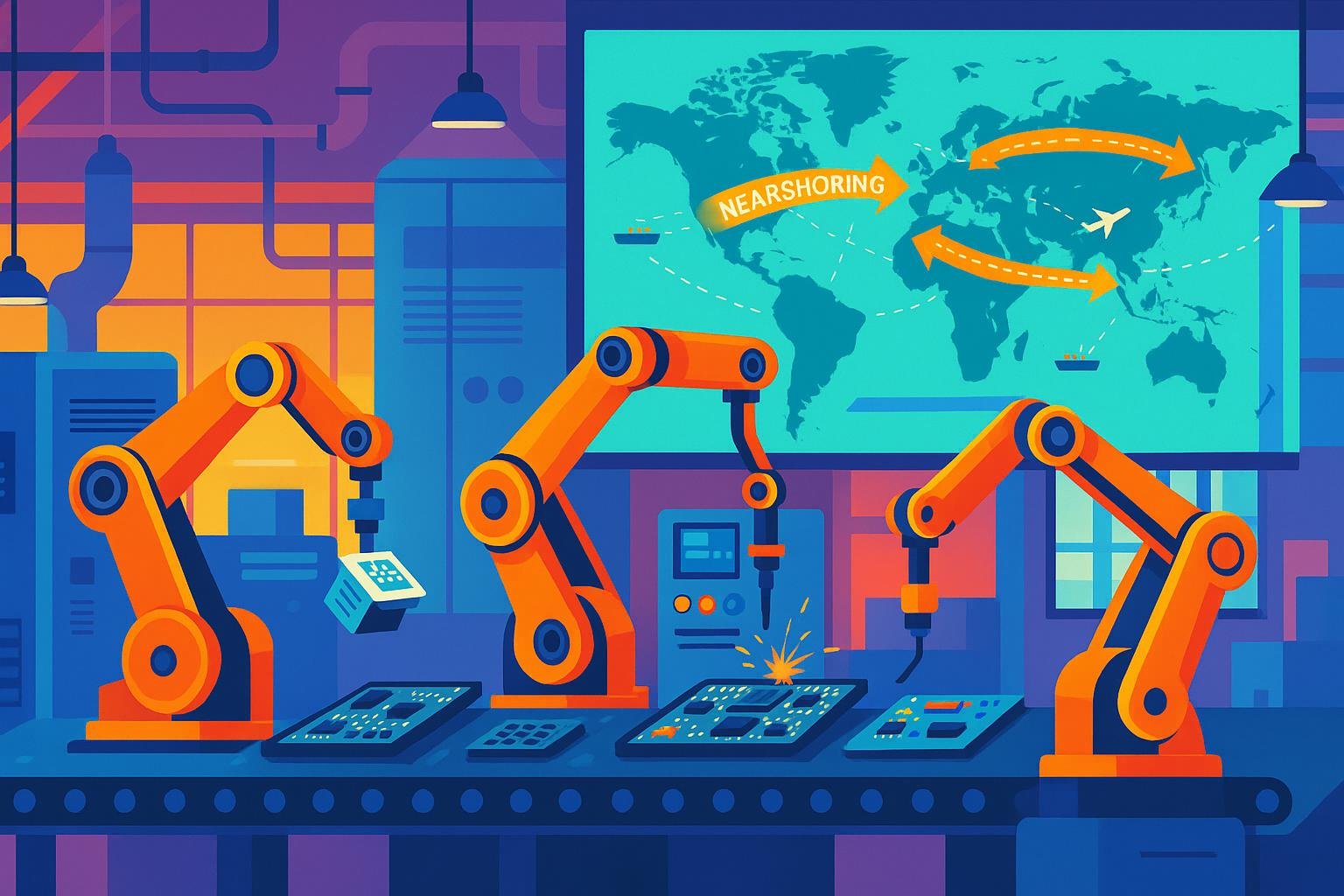
As offshoring risks become apparent amid geopolitical tensions and supply chain disruptions, electronics manufacturing services firms are increasingly turning to nearshoring and hybrid production models to boost agility, resilience, and sustainability in a rapidly evolving post-2024 landscape.

The global manufacturing sector is undergoing a profound transformation driven by a complex interplay of geopolitical tensions, supply chain vulnerabilities, and evolving trade dynamics. Traditional offshoring strategies, which primarily capitalized on low labour costs in regions like the Asia Pacific, are increasingly being reconsidered in favour of more resilient and agile approaches. In the evolving post-2024 landscape, nearshoring has emerged as a compelling alternative, particularly within the electronics manufacturing services (EMS) industry, shaping the future of global production strategies.
Historically, offshoring enabled companies to achieve significant cost savings by relocating manufacturing to countries with cheaper labour. The Asia Pacific region was a dominant destination due to its ability to offer economies of scale alongside low wages. However, this model came with notable drawbacks such as long lead times, communication barriers, intellectual property risks, and increasing supply chain disruptions catalysed by geopolitical conflicts and trade disputes. These challenges have exposed the fragility of deeply globalised supply chains, prompting businesses to rethink their manufacturing footprints.
Nearshoring, the practice of moving production closer to the target markets, offers a balanced way forward by combining cost advantages with operational proximity. North American firms, for example, are increasingly shifting manufacturing closer to home, notably into Mexico, while European companies find attractive opportunities in Eastern Europe. This proximity inherently reduces lead times and accelerates time-to-market—an especially critical factor in the fast-paced electronics sector where product lifecycles are short and demand fluctuates rapidly.
Industry analyses highlight several concrete benefits of nearshoring, including enhanced supply chain resilience and improved quality control. Being closer to manufacturing sites allows for more frequent and effective audits and inspections, reducing defects and ensuring higher product standards. Moreover, companies benefit from reduced exposure to geopolitical instability, unexpected logistical disruptions, and natural disasters. This diversification of supply chains broadens supplier bases and enhances overall operational robustness.
Supply chain experts also note that nearshoring contributes to sustainability through shorter transportation distances, which lowers carbon emissions, aligning with growing environmental responsibilities. Additionally, improved communication and time zone alignment foster faster adaptation to market demands and supply disruptions, an agility that global firms increasingly seek. Automation and digitalisation further enhance these advantages by streamlining nearshoring operations, improving visibility, and reducing complexity in production processes.
Within this shifting paradigm, Electronics Manufacturing Services providers play a pivotal role. EMS companies manage everything from product design and prototyping to mass production and after-market support. By expanding nearshore facilities and investing in advanced manufacturing technologies like automation and digitalisation, these providers offer clients a strategic pathway that minimizes risk while maximising efficiency and competitiveness. The proximity to key markets enables OEMs to respond rapidly to changing consumer needs and reduces reliance on vulnerable, far-flung supply chains.
Looking ahead, manufacturing strategies post-2024 are expected to adopt diversified models. Hybrid approaches, combining offshoring for cost-sensitive, high-volume goods with nearshoring for high-value, critical components, are gaining traction. The development of regional manufacturing hubs aims to centralise production within specific geographical areas, enhancing responsiveness to local market demands. Such models prioritise a blend of cost efficiency with resilience and agility, which have become paramount considerations alongside traditional cost savings.
Comprehensive industry data corroborate these trends, highlighting how nearshoring delivers tangible benefits such as reduced lead times, lower shipping costs, fewer import tariffs, and improved intellectual property protection—all factors that drive cost and speed efficiencies. These advantages are particularly pronounced in electronics manufacturing, where rapid innovation cycles necessitate a flexible, responsive production network.
In conclusion, the manufacturing world is transitioning from a cost-driven offshoring mindset towards a strategy that values agility, quality, and resilience through nearshoring. The EMS sector exemplifies this shift by leveraging proximity to key markets and advanced technologies to meet the demands of an unpredictable global environment. Hybrid models and regional hubs are set to dominate future production strategies, aligning supply chain stability with competitive cost structures. As companies navigate this post-2024 era, the emphasis on supply chain resilience and operational agility is as critical as cost considerations, marking a fundamental realignment in global manufacturing approaches.
Source: Noah Wire Services

