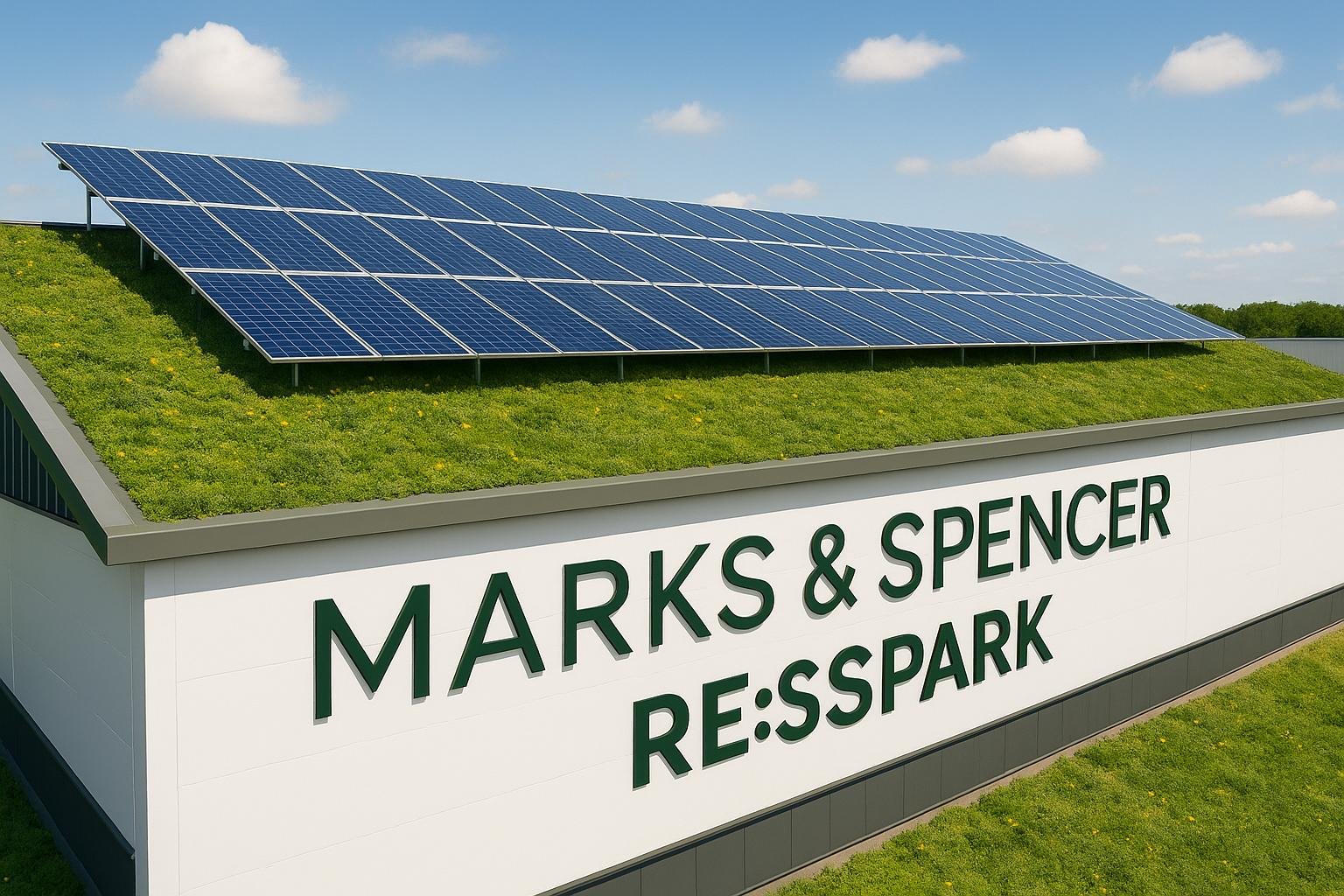
Marks & Spencer has launched RE:Spark, a pioneering programme in partnership with Schneider Electric, to cut Scope 3 emissions through collective renewable energy procurement and digital monitoring, marking a significant step towards its net-zero target by 2040.

Marks & Spencer (M&S) has launched an ambitious new environmental initiative, RE:Spark, developed in partnership with Schneider Electric, aimed at driving supply chain decarbonisation through enhance...
Continue Reading This Article
Enjoy this article as well as all of our content, including reports, news, tips and more.
By registering or signing into your SRM Today account, you agree to SRM Today's Terms of Use and consent to the processing of your personal information as described in our Privacy Policy.
RE:Spark is designed specifically to tackle the challenging Scope 3 emissions, which arise from activities in the supply chain and can account for as much as 80% of a company’s total carbon footprint. Recognising these upstream emissions as critical to their net-zero ambitions, M&S is looking beyond its immediate operations to catalyse change among its suppliers globally.
At the heart of RE:Spark is a centralized digital platform that serves multiple functions: it enables suppliers to submit emissions data and track decarbonisation progress in real-time, while also providing educational resources to empower suppliers with knowledge about renewable energy procurement and carbon reduction strategies. Furthermore, the programme offers strategic advisory services to assist suppliers in implementing clean energy solutions effectively.
A notable feature of RE:Spark is its facilitation of aggregated power purchase agreements (PPAs). This mechanism allows smaller suppliers, who might individually lack the financial or logistical capacity, to band together and collectively access large-scale renewable energy contracts. By pooling their demand, these manufacturers can benefit from more affordable and feasible clean energy sourcing, thus overcoming a significant barrier to renewable adoption in the apparel and manufacturing sectors, a primary focus area for the initial rollout of RE:Spark.
The programme will initially concentrate on M&S’s apparel suppliers in specific high-impact geographic regions before planned expansion over a multi-year horizon to encompass other parts of the supply chain, including food and logistics sectors. Implementation will span approximately three years, covering operational areas such as warehouses and manufacturing facilities. The clean electricity secured through RE:Spark aims to power a range of activities from lighting and garment production machinery to transport vehicles, showcasing a comprehensive approach to energy decarbonisation within the supply network.
This initiative highlights the increasing role that energy technology firms like Schneider Electric play in the transition to renewable energy within corporate supply chains. Schneider Electric’s expertise not only facilitates the technical deployment of renewable solutions but also expands its suite of educational and strategic resources tailored to Scope 3 emissions reduction. The partnership also reflects broader disruptive shifts within supply chain management, where digital platforms, collaborative procurement models, and rigorous emissions monitoring are becoming standard tools for driving sustainability.
Industry analysts note that such supply chain decarbonisation programmes are vital, especially for sectors like apparel manufacturing, which are among the most carbon-intensive and complex supply chains to clean. By integrating aggregated PPAs and digital data platforms, initiatives like RE:Spark could set a precedent for other corporations seeking to address the hidden but substantial carbon emissions embedded in their supply networks.
In summary, Marks & Spencer’s RE:Spark programme, backed by Schneider Electric’s technological and advisory expertise, represents a strategic, multi-faceted approach to tackling one of the most challenging aspects of corporate sustainability, Scope 3 emissions. Through education, innovation in procurement, and the use of digital monitoring tools, the initiative aims to turn supply chain decarbonisation from an aspirational goal into measurable progress, contributing meaningfully to global efforts against climate change.
Source: Noah Wire Services
Subscribe to Industry Updates