


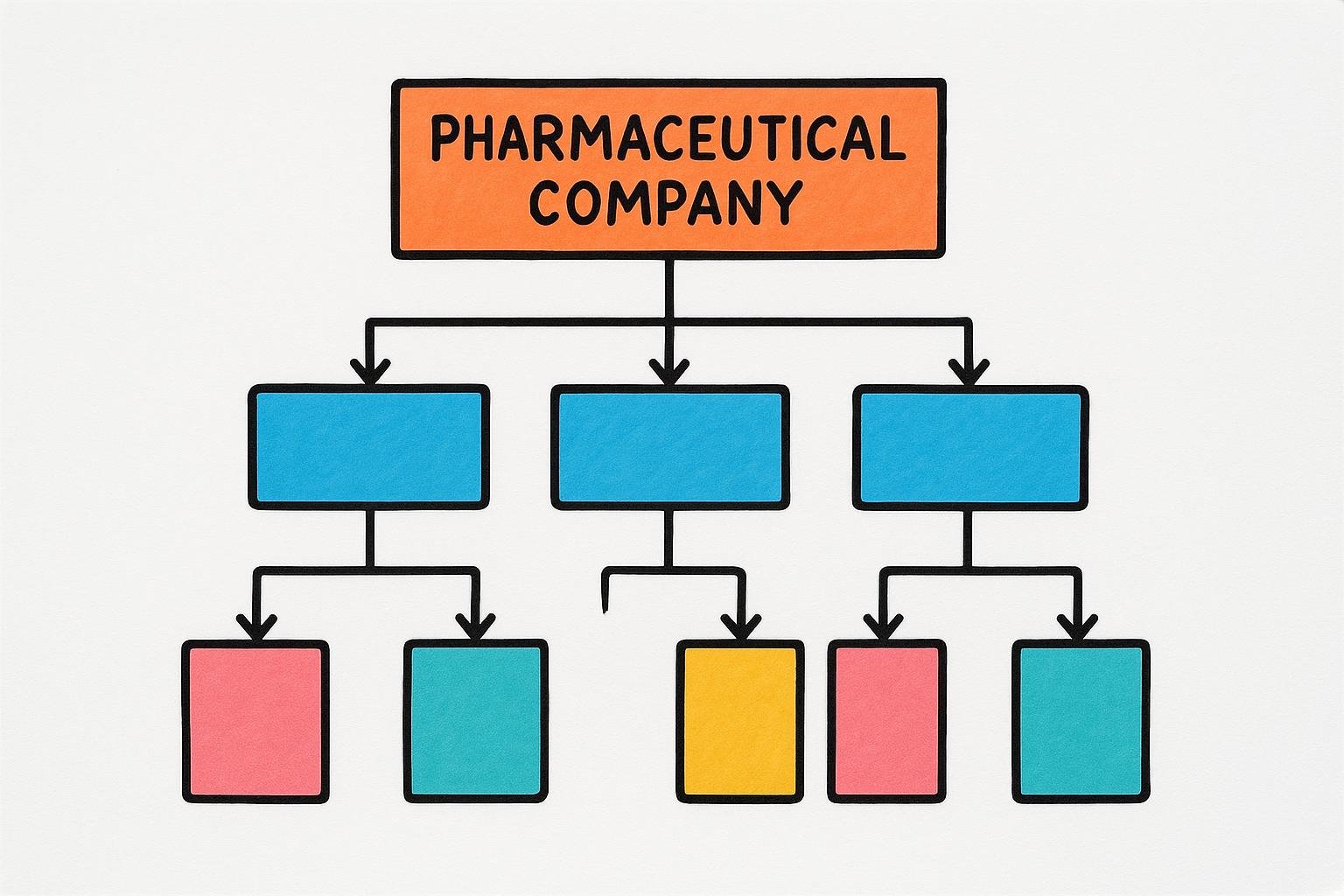
A shift from traditional committees towards clearer decision architecture and team-based models enables pharma companies to speed up portfolio decisions, improve scientific discipline, and bring medicines to patients more efficiently.

The pharmaceutical industry’s capacity to convert scientific discovery into patient access depends as much on governance as it does on science. The orthodox model, multiple overlapping committees, sequential sign-offs and diffuse account...
Continue Reading This Article
Enjoy this article as well as all of our content, including reports, news, tips and more.
By registering or signing into your SRM Today account, you agree to SRM Today's Terms of Use and consent to the processing of your personal information as described in our Privacy Policy.
The diagnosis is familiar: committee proliferation creates a governance paradox. Structures intended to ensure diligence instead bake in delay because decision rights are unclear, advisory layers multiply handoffs and functional accountability is diffused. The result is repeated rework, stale information by the time approval is reached and decisions that reflect who happened to be in the room rather than an explicit owner’s judgement. The lead article argues that the cure is not more committees but clearer decision architecture, explicit escalation triggers and embedded cross‑functional ownership.
A three‑tier decision model is emerging as an operational standard among progressive organisations. Strategic decisions, entry into new therapeutic areas or major modality bets, sit with a top‑level portfolio committee that sets boundaries and cadence. Day‑to‑day asset choices are devolved to core project teams that include the programme head, lead clinical scientist, CMC specialist, regulatory representative and commercial strategist. Pre‑defined escalation criteria determine when issues move up the hierarchy. According to the World Pharma Today piece, embedding advisory expertise directly on asset teams eliminates sequential reviews and allows routine choices to be taken at pace while reserving portfolio‑level scrutiny for the genuinely consequential decisions.
McKinsey’s body of work, synthesised across several recent reports, reinforces and expands these prescriptions. McKinsey highlights consolidation of decision bodies and the practice of integrating advisory discussions into asset teams as accelerants of speed and quality. The consultancy points to real‑world precedent during the COVID‑19 vaccine effort, noting that Pfizer and other organisations adapted governance and resource deployment to make rapid, high‑stakes decisions, an example of how temporary flexibility can be codified into lasting operating‑model improvements. McKinsey also advocates dynamic, at‑risk and parallel resource deployment so organisations can pivot investment quickly as trial data or market intelligence shifts.
Agility and data are central to successful modernisation. McKinsey’s work on agile transformations emphasises devolving decision authority to the team level and creating daily or weekly cadences that replace episodic committee reviews. Industry examples show organisations devolving up to 80% of decisions to team meetings within months of starting agile changes, increasing throughput without proportionate headcount growth. Complementary investments in data, analytics and portfolio dashboards are crucial; teams must have real‑time visibility of trial metrics, manufacturing yields and external competitive signals so decisions are defensible and timely.
Implementation is pragmatic rather than doctrinaire. The lead article recommends beginning with decision mapping: auditing the set of significant portfolio choices, categorising them by frequency and impact, and assigning the optimal decision owner for each. A typical organisation can reduce governance bodies by 30–40% while preserving decision quality if it redistributes authority and documents expectations clearly. Establishing cadence‑based reviews, standard monthly asset meetings, quarterly portfolio reviews and annual strategic sessions, creates predictable rhythms that reduce last‑minute scramble and encourage proactive information assembly.
Addressing the common concern that speed might undermine scientific integrity, both the lead article and McKinsey contend that clarified decision rights strengthen, not weaken, scientific discipline. When ownership is explicit, the leader of an asset team carries accountability for advancing or terminating a programme and is judged against recorded assumptions and outcomes. Embedding the lead scientist within the decision‑making team ensures that those with the deepest domain knowledge, rather than part‑time overseers, shape trial designs and go/no‑go calls. Organisations that build targeted scientific review into cadence reviews, inviting internal or external advisors only where their input materially changes the decision, preserve rigorous scrutiny while avoiding overreach.
Governance reform also requires cultural and technical enablers. Change typically takes six to 12 months and succeeds most often when piloted in one or two therapeutic areas before enterprise roll‑out. Clear, repeated communication about why roles are changing mitigates the perception that streamlining excludes stakeholders. Technology investments, portfolio management platforms, integrated dashboards and automated reporting, convert governance redesign into operational reality, enabling decision makers to act on current, trusted data rather than lagging slide decks.
Measuring the impact of governance modernisation is straightforward and essential. Decision cycle time is the primary operational metric; the lead article reports common improvements of 30–50%. Cost per decision falls as executive time is conserved. Decision reversal rates and portfolio outcomes, return on invested capital, success rates and time to market, provide downstream validation. McKinsey’s research links faster, more transparent decision processes to improved R&D capacity, higher‑quality prioritisation and accelerated regulatory submissions when combined with digitisation and automation.
There are trade‑offs and risks. Rapid decision cycles demand rigorous documentation to preserve learning and accountability; they also require carefully drawn escalation criteria to prevent important issues being under‑escalated. Strategic alignment must be maintained through clear company‑level frameworks so autonomous asset teams make choices that reinforce, rather than fragment, corporate priorities. The lead article underscores transparency: when portfolio decisions are communicated with rationale, the broader organisation can act in ways that align with strategy.
In an industry where scientific advances are hard‑won and competitive advantage is often fleeting, governance is a durable lever. According to the World Pharma Today analysis and corroborating McKinsey reports, companies that replace committee bloat with decision‑rights governance, embed cross‑functional expertise into asset teams, invest in data‑driven operating models and measure the right outcomes can both speed decisions and strengthen scientific discipline. For organisations seeking a sustained edge, governance modernization is not an administrative nicety but a strategic imperative that shapes which medicines reach patients, and how quickly they do so.
Source: Noah Wire Services
Subscribe to Industry Updates

