


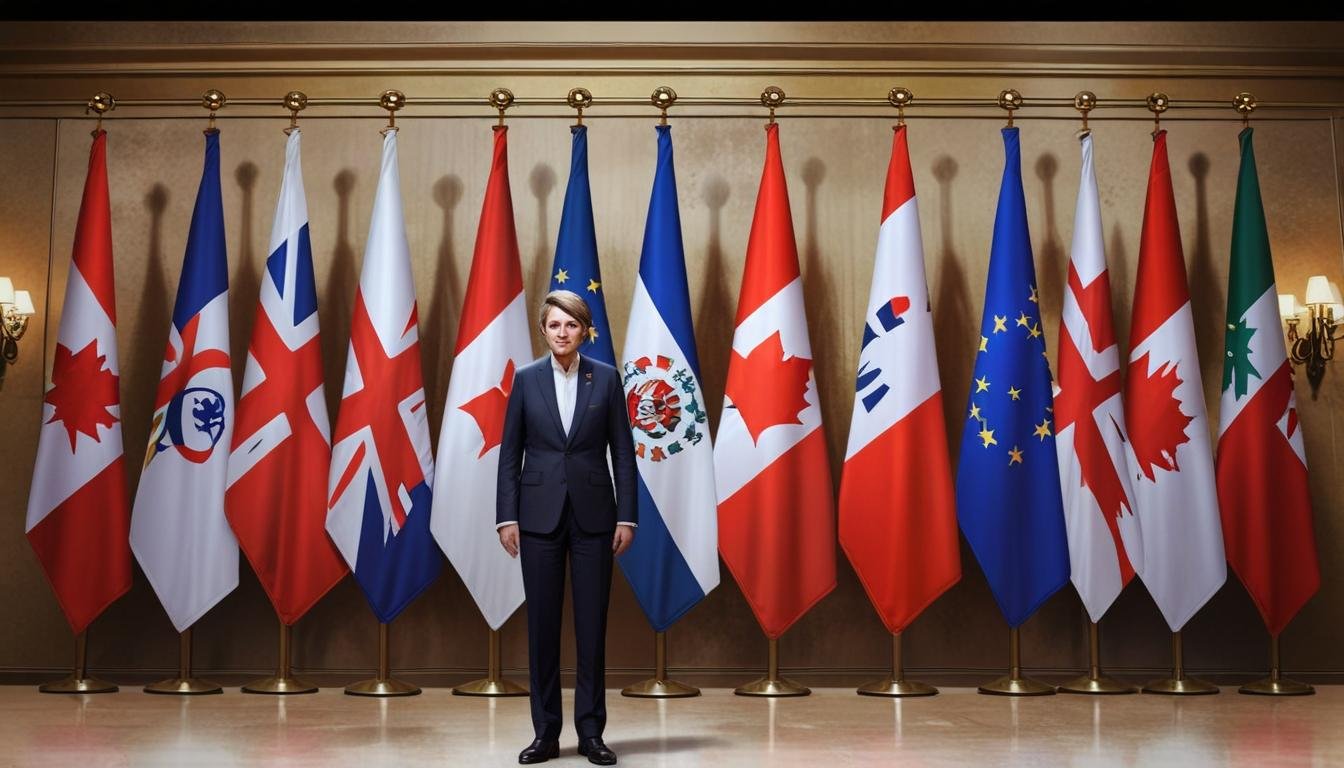
**London**: During his first overseas trip as Premier, Mark Carney emphasises reducing Canada’s reliance on the US, meeting with leaders in Europe amidst rising trade tensions. Carney highlights the need for expanded trade and security ties, while addressing upcoming challenges and public sentiment in Canada.
During his inaugural overseas trip as Canadian Premier, Mark Carney emphasised the importance of reducing Canada’s dependence on the United States while seeking to strengthen ties with European allies. The trip, which took place shortly after Carney succeeded Justin Trudeau, included meetings with British Prime Minister Keir Starmer and French President Emmanuel Macron in London and Paris.
The backdrop to Carney’s discussions is a heightened tension in trade relations with the US, characterised by President Donald Trump’s recent threats to impose tariffs on trading partners, including Canada. In remarks made to reporters, Carney highlighted the necessity for Canada to diversify its trade and security relationships. He stated, “What is clear is that our trade and our security relations are too reliant on the United States. We must diversify,” attributing the rationale for his first visits to Paris and London to this imperative.

In a meeting with Starmer, Carney was commended for his “approach to Ukraine.” This discussion followed Carney’s participation in a video conference aimed at bolstering support for Ukraine, hosted by Starmer just two days prior. Carney remarked on Canada’s unique position, describing it as the “most European of non-European countries,” and underscored the significance of fortifying connections with European nations while attempting to maintain a constructive relationship with Washington.
Carney’s administration faces multifaceted challenges, including escalating tensions in trade with the US, Trump’s contentious rhetoric regarding Canadian sovereignty, and approaching federal elections within Canada. The ongoing trade dispute, marked by Trump’s introduction of increasing import tariffs on Canadian goods, poses a potential risk of recession for Canada, which has historically relied on a robust partnership with its southern neighbour.
Amid these challenges, public sentiment in Canada appears to lean against Trump’s viewpoint, with opinion polls indicating that a significant majority of Canadians reject the notion that the country would fare better as the “51st state of the United States.” These developments highlight the complexities of Canada’s diplomatic landscape as it seeks to navigate its future amid shifting global alliances and internal pressures.
Source: Noah Wire Services

