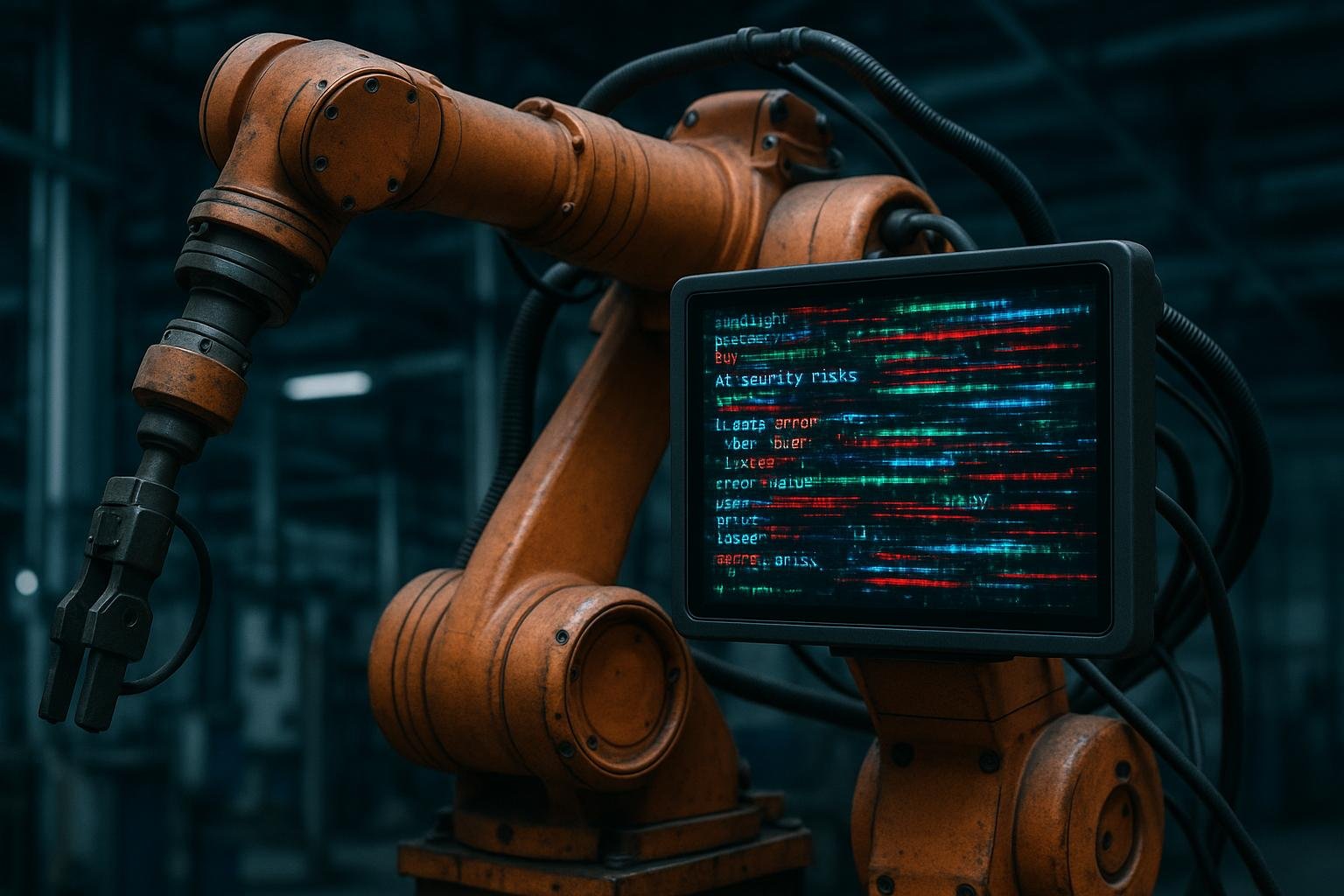
As digital transformation accelerates in manufacturing, industry leaders face growing cyber threats amplified by AI and third-party vulnerabilities, demanding urgent strategic shifts to protect sensitive data and maintain competitive advantage.
Unseen AI Data Threats in Modern Manufacturing: Why Digital Innovation Now Demands Stronger Defense
Special Report by Tim Freestone, Chief Strategy Officer at Kiteworks,

Manufacturing’s rapid push toward digital transformation is delivering extraordinary gains, but it’s also exposing the industry to unprecedented levels of risk. Verizon’s most recent breach analysis shows the sector suffered 1,607 confirmed incidents last year, nearly double the 849 cases from 2024. The 2025 Ponemon Report further highlights a critical vulnerability: 42% of manufacturing breaches now originate through third-party access points. With the average breach costing $5.5 million, 13% above the global average, manufacturers find themselves navigating a high-stakes environment where efficiency and exposure grow in tandem.
As 77% of manufacturers deploy AI to increase productivity, these systems create powerful but complex connections, ones that attackers are eager to exploit. Nearly half of manufacturing leaders admit that remote access remains their weakest security control, and the jump in espionage-motivated attacks from 3% to 20% suggests that competitors and state-backed actors are increasingly targeting AI-enabled workflows. In an industry where unplanned downtime can exceed $125,000 per hour, the intersection of AI, third-party dependencies, and escalating cyber pressure has become a defining risk.
This article explores what manufacturers stand to lose, how AI intensifies long-standing security challenges, and which strategies can fortify data ecosystems in an era where every digital connection matters.
Manufacturing’s Expanding Data Exposure
Modern manufacturers no longer protect just equipment, they safeguard massive volumes of high-value data that influence products, supply chains, customers, and competitive advantage.
Intellectual Property: The Core of Competitive Advantage Product designs, chemical formulas, and precision production methods represent decades of investment. IBM reports a 27% rise in IP theft, with each compromised record costing $173. A single breach exposing proprietary processes or breakthrough technologies can instantly erode market leadership.
Operational and Supply Chain Intelligence Production schedules, quality records, supplier agreements, and pricing details reveal sensitive operational insights. If exposed, competitors can undercut contracts, mimic capacity strategies, or disrupt vendor relationships. Defects or quality issues revealed through leaked records can trigger reputational crises overnight.
Strategic and Financial Data Board materials, forecasts, M&A documentation, and confidential strategy files increasingly pass through AI systems. This creates new exposure points for information that can influence major deals or reveal long-term business plans.
Personal and Regulatory Data With 46% of breaches involving personal data, manufacturers must comply with strict requirements under GDPR, HIPAA, and regional data protection laws. Fines and penalties multiply breach costs, often significantly.
How AI Intensifies Traditional Security Risks
AI does not simply add new risks, it magnifies weaknesses that previously existed within manufacturing environments.
Explosion of External Connections Eighty-three percent of manufacturers now have undocumented external connections across edge devices, VPNs, and cloud systems, targets that increased from 3% of vulnerabilities to 22% in a short period. AI models frequently require external data flow, introducing openings that bypass traditional industrial isolation practices.
Shadow Data: The Unmanaged Threat Nearly one-third of breaches involve shadow data, and 57% of organizations cannot track external file sharing. AI tools often ingest sensitive information stored in unmanaged locations like shared folders or email attachments. Worse, 60% of companies cannot monitor employee use of generative AI, enabling accidental uploads of proprietary data into public systems.
Third-Party Access: Risk Multiplied With 42% of breaches tied to third-party access and 35% caused by excessive privileges, AI integrations raise the stakes. Many organizations still skip basic vendor security evaluations, 54% of manufacturers perform no formal assessments, despite AI tools often requiring deep access to production systems and data.
The Black-Box Security Challenge AI’s internal processes lack transparency, making intrusion detection significantly harder. Security teams already averaging 47+ hours per week on risk analysis struggle to uncover malicious behavior hidden inside machine-learning pipelines.
The Real Price of a Breach: What the Numbers Don’t Show
Headline breach numbers only scratch the surface of the damage manufacturers face.
Financial Fallout The average breach in manufacturing lands at $5.5 million, with 75% of costs driven by lost business and response efforts. Smaller firms are particularly vulnerable, 88% of their breaches involve ransomware, with median payments of $115,000.
Operational Disruption Precision manufacturing environments are uniquely sensitive to downtime. Seventy percent of affected organizations report major operational disruption, and full recovery typically requires more than 100 days, a delay that can derail customer timelines and supply chain commitments.
Long-Term Competitive Harm Lost IP provides permanent advantage to competitors or state-backed actors, shrinking markets and weakening innovation pipelines. Even after systems are restored, customer confidence and brand reputation often take years to rebuild.
Regulatory Costs Regulatory actions are intensifying. Nearly 23% more organizations now face fines above $50,000, while GDPR violations can reach 4% of annual revenue.
Effective Mitigation Strategies for Manufacturing Leaders
Manufacturers need realistic, scalable solutions that fit operational constraints and budgets.
Technology: Modernize the Security Foundation AI-powered security tools reduce breach costs by $2.2 million on average. Key investments include: – Zero-trust architectures for all critical data repositories – Secure data gateways between production systems and AI tools – Enhanced identity controls, adopted by only 27% of manufacturers
Governance: Turn Structure into Strength Security governance doesn’t slow innovation, it accelerates it by reducing risk. – Build granular data classification frameworks – Apply role-based and attribute-based access controls – Implement consistent vendor evaluation processes – Limit excessive privileges, a cause of 35% of breaches
People: Strengthen the Human Layer Staffing shortages affect 26% more organizations than before, yet fully staffed teams save $1.76 million per incident. – Train employees specifically on AI-related risks – Maintain and regularly test incident response teams (saving $1.49 million per breach)
Quick Wins for Under-Resourced Teams – Patch edge devices weekly instead of monthly – Enforce MFA for all external and vendor access – Conduct monthly AI-focused tabletop exercises – Automate vulnerability scanning – Use continuous monitoring and full audit trails to keep sensitive data visible and controlled
Securing the Future of AI-Powered Manufacturing
AI promises extraordinary opportunities for manufacturers, but the industry must prepare for a world where data flows freely, adversaries move quickly, and competitive advantage can be stolen in minutes. Forward-leaning organizations are already forming cross-functional security groups, creating governance models before deployment, and participating in industry information-sharing networks that level the playing field between global manufacturers and well-resourced threat actors.
Every investment in securing AI and third-party access delivers compounding value. AI-driven security tools yield some of the strongest returns in the manufacturing tech stack, while managed service providers offer a practical bridge for organizations building internal expertise.
The priority now is clear: Audit AI systems and third-party connections this quarter, secure your most sensitive data repositories under zero-trust principles, and join collaborative intelligence networks to stay ahead of emerging threats. Those that build resilient AI operations today will be the manufacturers defining competitiveness tomorrow.
Tim Freestone, the chief strategy officer at Kiteworks, is a senior leader with more than 17 years of expertise in corporate strategy and marketing leadership, including demand generation, brand and market strategy, and process and organizational optimization.