


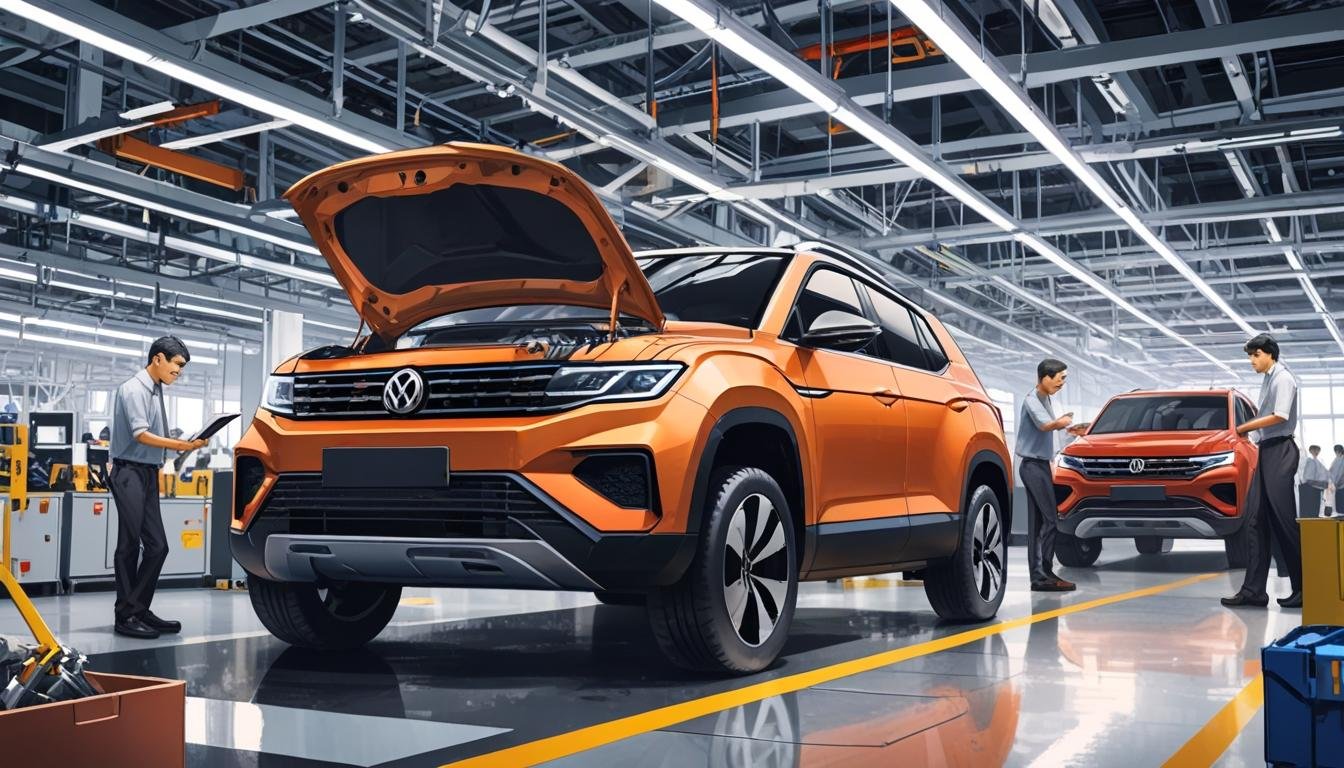
**Czech Republic**: Mahindra & Mahindra launches electric vehicle production with Volkswagen’s MEB platform, aiming at affordable models. Despite management challenges at Škoda, the collaboration seeks to produce over one million vehicles by 2030, while Škoda reported revenue growth amid internal struggles.
Mahindra & Mahindra, one of India’s largest automotive manufacturers, has commenced the production of electric vehicles utilising the Modular Electric Drive Matrix (MEB) platform developed by the Volkswagen Group. This development signals a potential shift in the landscape of affordable battery-powered vehicles, especially concerning Škoda, the Czech subsidiary of Volkswagen, as work on the “Mahindra project” intensifies in Mladá Boleslav.
The collaboration between Mahindra and Volkswagen aims to address the challenges surrounding the mass electrification of vehicles in Europe, which has faced hurdles due to high production costs, stringent regulations, and the complexities inherent in a large conglomerate structure. Škoda’s involvement in this project could pave the way for an affordable electric Škoda model, capitalising on Mahindra’s expertise in designing robust SUVs.

The Czech publication, Škodovácký odborář, has highlighted that the Indian automotive giant, primarily known for its off-road models, is working closely with Škoda on this initiative as part of a longstanding partnership between the two companies. Mahindra’s foray into electric vehicles began in 2022 with their plans to develop SUVs under two new brands, BE and XEV, which incorporate components from the MEB platform.
In a previous statement, Autoweek reported that Volkswagen and Mahindra announced plans to collaborate on various electric SUVs aimed at the Indian market, leveraging technology from the MEB platform. While Mahindra will build its electric vehicles using certain elements from this platform, it will maintain its proprietary electric powertrain systems developed alongside Volkswagen components.
The broader vision for this collaboration includes the ambitious goal of producing over one million vehicles based on the INGLO platform by 2030, with Mahindra predicting that electric versions of their SUVs will make up 20 to 30% of total sales by 2027.
However, the situation at Škoda is not without its challenges. Recent reports indicate that management issues within the Volkswagen Group are jeopardising investments in Škoda’s plant. The Škodovácký odborář has expressed concerns over mismanagement leading to financial constraints, which hinder the company’s ability to fund local projects, even basic ones like the construction of a new cafeteria.
This follows a significant penalty imposed by the European Commission, which recently fined the Volkswagen Group and other manufacturers a total of 458 million euros in relation to a cartel agreement concerning vehicle recycling. The union’s analysis suggests that the ongoing financial obligations to Volkswagen’s headquarters leave little room for Škoda to invest in its operations effectively.
Union leader Jaroslav Povšík has issued cautions about Škoda’s recent expansion efforts, particularly in the Vietnamese market. He highlighted concerns regarding potential financial pitfalls similar to those experienced in former operations in Russia and Aurangabad. The Vietnamese facility, set to assemble Škoda models such as the Kushaq and Slavia, is seen as a crucial step in entering the ASEAN market.
Despite these challenges, Škoda Auto reported a 4.7% revenue increase last year, amounting to 27.8 billion euros, and a substantial 30% rise in operating profit to 2.3 billion euros. In contrast, the Volkswagen Group faced a decline in net profit, leading to questions about the conglomerate’s internal strategies moving forward.
As electric vehicle development continues to evolve, the collaboration between Mahindra and Škoda may offer vital insights into creating a broader range of affordable electric vehicles, potentially reshaping the market dynamics in Europe and beyond.
Source: Noah Wire Services

