


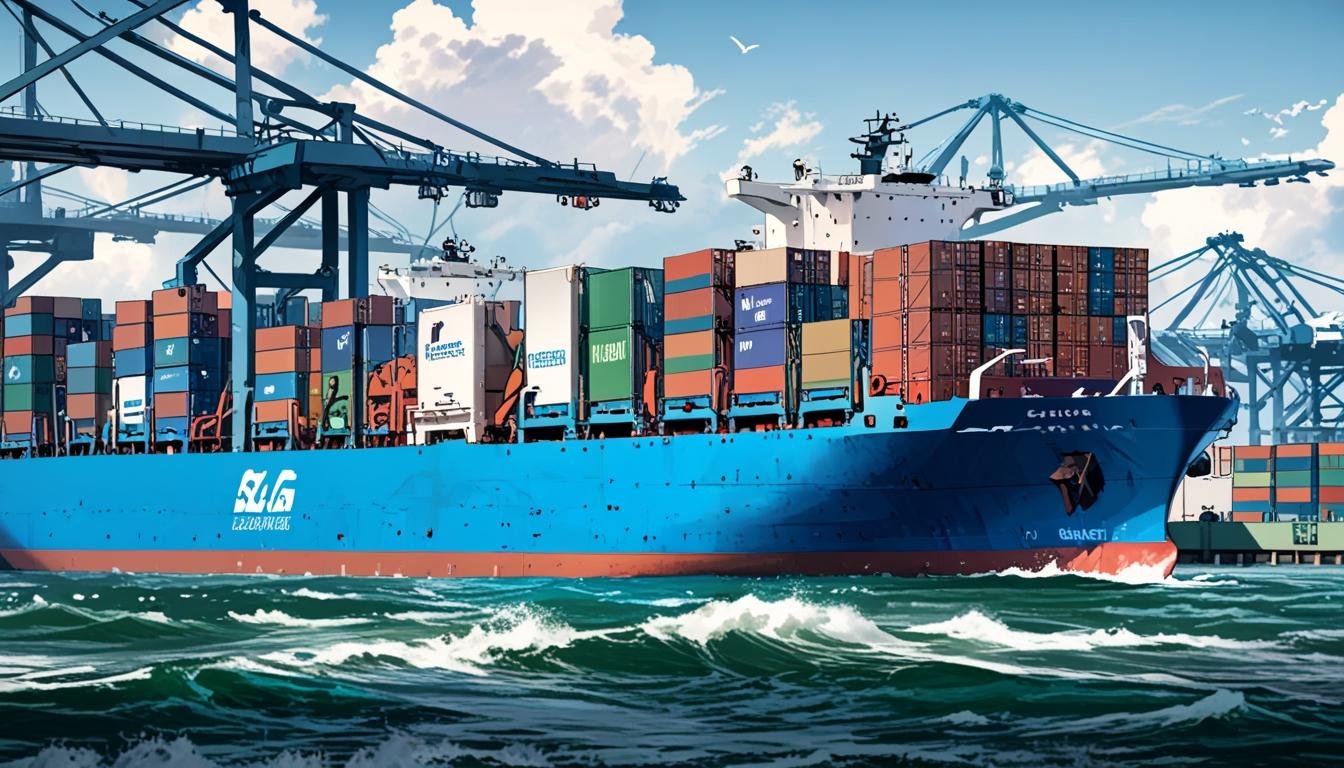
**London**: Maersk has secured a decade-long contract with Castlery, aiming to strengthen its logistics services. The company reports significant financial growth and strategic advancements, including a new push for environmentally friendly logistics and a focus on Southeast Asian markets amidst ongoing geopolitical challenges.
In a significant strategic move, Maersk has solidified its commitment to the logistics and shipping sector by signing a 10-year contract in February 2025 with Singaporean furniture company Castlery. This agreement encompasses a comprehensive end-to-end logistics solution that includes ocean freight, intermodal transport, distribution, and warehousing, reflecting Maersk’s ambition to create a more integrated vertical supply chain.
Throughout 2024, Maersk’s Chief Executive Officer, Vincent Clerc, has been advancing a strategy to streamline services across land and sea, enhancing the company’s offerings in warehousing and various supply chain links. Despite facing challenges in an unpredictable global context, Maersk reported growing momentum, achieving key financial milestones during the tumultuous year. An analyst report from Investing.com highlighted “significant financial achievements and strategic advancements,” noting that Maersk has amassed a substantial cash reserve of US$22.3 billion, poised to support future acquisitions.

Analysts have observed a transformation within Maersk, especially as the company divested several non-core business interests, including energy and towing operations. Investment analyst Morningstar remarked that Maersk “is now a focused global shipper and logistics company,” concentrating its efforts on strengthening its logistics and services segment, which the company anticipates will eventually generate equal revenue to its maritime operations.
Financially, Maersk reported impressive growth in 2024, with revenues reaching US$55.48 billion, an increase of approximately US$4.5 billion compared to the previous year. The earnings before interest and tax (EBIT) also saw a significant rise, amounting to US$6.5 billion. The robust performance reflects Maersk’s adept navigation through various geopolitical disruptions that challenged supply chains, which Clerc acknowledged, stating, “Our ability to navigate shifting circumstances and ensure steady supply chains for our customers was put to the test throughout 2024.”
Notably, Maersk’s operations were also influenced by external factors, including extreme weather conditions that nearly depleted the Panama Canal, tensions in the Red Sea, and resultant freight rate hikes. Yet, the firm still managed to record its third-best annual financial performance. The company’s annual report indicated improvements in profitability primarily driven by elevated freight rates coupled with effective cost management strategies.
Additionally, Maersk has expanded its logistics footprint with the recent opening of a 35,000 square metre cold storage facility in Rotterdam, designed to handle temperature-sensitive cargo such as fresh produce and pharmaceuticals. This warehouse, strategically located adjacent to a Maersk-owned terminal, exemplifies the company’s integrated approach to logistics.
With a new focus on large-scale logistics, Maersk forged the Gemini alliance with Hapag-Lloyd in February. This partnership, expected to solidify by mid-2025, incorporates a fleet of 340 vessels and is designed to enhance operational efficiency through improved scheduling across container shipping services.
As part of its environmental initiatives, Maersk has pioneered decarbonised logistics, including the pilot project for electric truck deliveries, connecting inland sites to port facilities. Birna Odefors, managing director of Maersk Area Nordics, remarked on the ambitious nature of this endeavour, stating, “This is a gigantic task, but we must not be intimidated by it.” The pilot launched in late 2024 aims to transport 600 to 800 containers annually using battery-powered vehicles.
In alignment with these innovations, Maersk’s ECO Delivery Ocean service, which employs alternative marine fuels, seeks to achieve an estimated 80% reduction in emissions compared to traditional shipping methods.
Looking ahead, Maersk maintains a positive outlook, particularly regarding opportunities in Southeast Asia, which is anticipated to fuel global economic growth in 2025. The group sees itself poised for continued profitability, while still acknowledging persisting risks associated with geopolitical instability, particularly in the Red Sea region. In February, Maersk expressed cautious optimism about ongoing peace talks, but it also noted that “the security risk for commercial vessels in the Red Sea and Bab-el-Mandeb Strait remains high.” The company has committed to using alternative routes until it can assure the safety of its operations in these waters.
Source: Noah Wire Services

