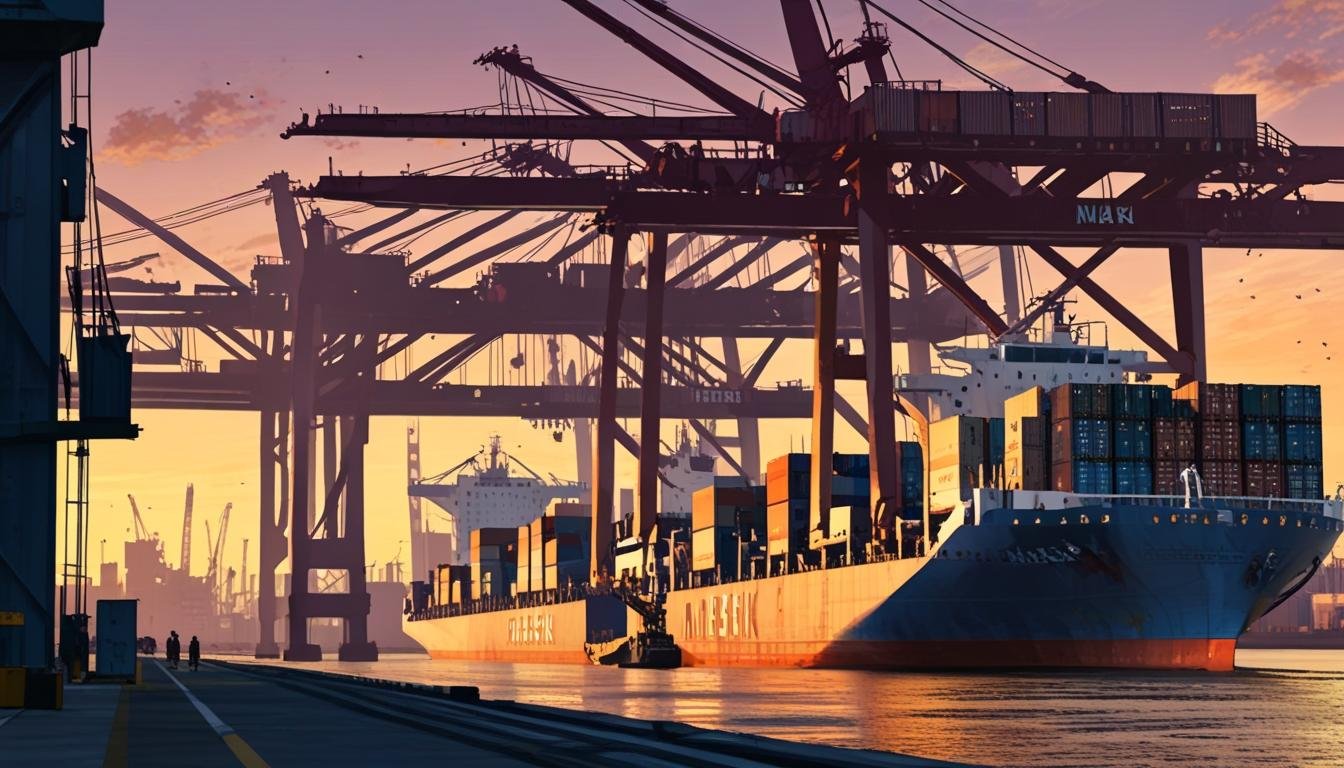
**New Delhi**: A.P. Moller-Maersk has unveiled a $5 billion investment strategy aimed at upgrading India’s port and logistics infrastructure, focusing on Pipavav and Vadhavan ports, to improve supply chain efficiencies and reduce logistics costs across the nation.
Global shipping leader A.P. Moller-Maersk has announced plans to invest $5 billion in India’s port terminals, logistics, and inland infrastructure, signifying a substantial commitment to enhancing the nation’s supply chain capabilities. This announcement was made by Keith Svendsen, the CEO of APM Terminals, during an exclusive interview with The Economic Times on Thursday.
Maersk’s investment strategy includes significant developments, particularly at the Pipavav terminal and the establishment of a container terminal at the imminent Vadhavan Port in Maharashtra. In addressing the need to reduce logistics costs, Svendsen stated, “We see a $5 billion investment pipeline in ports, terminals, and inland infrastructure. Our goal is to reduce logistics costs by providing customers with an integrated supply chain solution that covers transportation, port handling, warehousing, and distribution.”

Nearly half of the allocated funds will be directed toward the enhancement of the Pipavav Terminal, which is crucial for accommodating larger vessels through dredging. This upgrade is necessary to maintain competitiveness amid increasing trade volumes. Additionally, Maersk is awaiting the commencement of the bidding process by the government to develop one of the container terminals at Vadhavan Port. Located around 150 km north of Mumbai, Vadhavan is a key governmental initiative featuring a natural 20-metre draft and direct connectivity to the National Highway network and the Dedicated Freight Corridor. Once functional, the port is projected to solidify India’s status as a pivotal global trade hub.
In conjunction with port infrastructure investments, Maersk is expanding its warehousing capabilities across India. Christopher Cook, Managing Director for South Asia, remarked on the company’s evolution, indicating it has transformed from a limited market participant to being among India’s top seven logistics providers. Currently, Maersk manages 26 facilities that cover over 300,000 square metres and oversees 7,000 weekly railway movements. The firm is now targeting tier 2 and tier 3 cities for further growth.
Furthermore, Cook indicated that Maersk is exploring potential ventures in dedicated air freighters and partnerships for green fuel initiatives in India, though specific plans have yet to be established.
Through this significant investment, Maersk is positioning itself as a vital player in supporting India’s trade ambitions and enhancing the logistics framework necessary for future growth.
Source: Noah Wire Services