


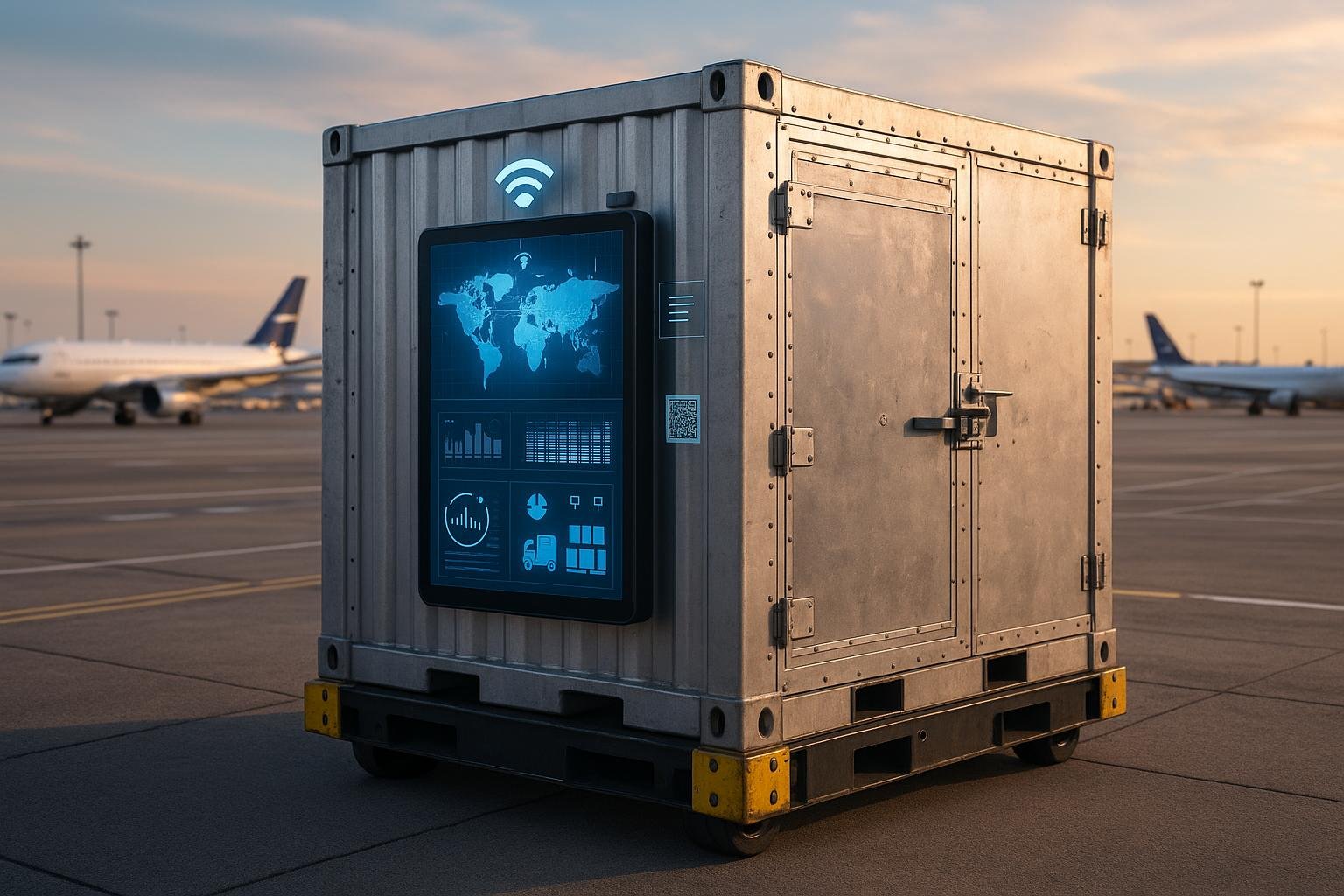
A recent survey indicates that logistics companies across Europe and the Middle East are prioritising modular digital solutions to overcome integration challenges and reduce manual errors, signalling a pragmatic shift towards technology-driven resilience in the freight sector for 2026.

Most logistics companies across Europe and the Middle East now view digital tools as essential to their operations, yet comprehensive adoption across day-to-day workflows remains limited,...
Continue Reading This Article
Enjoy this article as well as all of our content, including reports, news, tips and more.
By registering or signing into your SRM Today account, you agree to SRM Today's Terms of Use and consent to the processing of your personal information as described in our Privacy Policy.
Deep Current’s research, conducted in the first half of 2025 among freight forwarders, third-party logistics providers (3PLs), and mid-sized carriers, reveals a clear shift in how the industry approaches technology adoption. Rather than opting for costly and risky large-scale platform overhauls, nearly half of logistics professionals favour modular tools that integrate into existing systems, reflecting a practical “integrate, don’t replace” mindset that aims to balance ambition with operational feasibility. Tamim Fannoush, founder and CEO of Deep Current, summarised this approach as a defining trend for 2026, noting the need to augment human expertise with smart, interoperable technology solutions.
The survey highlights a significant disparity between customer-facing technologies and internal operational workflows. While 55% of companies already leverage digital tools for shipment tracking and visibility, and 41% use systems for document auditing and compliance, only 24% have fully digitised internal document handling such as bills of lading and invoices. Moreover, an astonishing 61% still rely on outdated methods like emails and spreadsheets to manage communication with overseas partners, underlining the persistence of manual, error-prone processes behind the scenes.
This lag in digitisation carries real consequences. Over half of logistics executives surveyed reported shipment delays linked directly to document errors over the past year. These seemingly minor mistakes, missing stamps, incorrect HS codes, or invoice format errors, can cause cascading delays affecting entire supply chains. Financially, 42% of respondents identified lost revenue opportunities due to slow client onboarding or operational bottlenecks caused by manual workflows, while 36% admitted to incurring compliance fines and penalties, highlighting the costly risks of regulatory missteps.
Deep Current’s survey pinpoints several major barriers to technology adoption. The leading obstacle, cited by 47% of executives, is integration with legacy systems, including cumbersome ERP and transportation management platforms that businesses find costly and risky to replace. Cost concerns and unclear return on investment were noted by 39%, while 34% emphasised resistance to change among staff as a drag on implementation. Additionally, 31% confessed to lacking in-house logistics and technology expertise necessary to drive and maintain digital projects, and 27% highlighted a mismatch between vendor solutions and the nuanced realities of logistics workflows.
Despite these hurdles, the industry’s outlook is resolutely forward-looking. With 72% of logistics leaders intending to ramp up investment in document automation tools, it is clear that the sector is prioritising the elimination of repetitive paperwork and the reduction of errors as a strategic imperative. Leaders recognise the value of artificial intelligence (AI) as a supportive tool, with 61% believing AI can enhance document checking and data extraction, though they insist on retaining human oversight to interpret context and manage decision-making.
This pragmatic stance on technology mirrors broader market research. A survey co-sponsored by Hyperscience found that an overwhelming 98% of logistics leaders see AI as vital for back-office operations, with 70% ready to invest in AI-optimised systems. Nevertheless, challenges such as manual document processes, compatibility issues, and reliance on paper-based workflows persist across the sector, underscoring the need for targeted, adaptable solutions.
Industry data also reveals external pressures: U.S. freight businesses are running near full operational capacity amid surging demand and significant labour shortages, intensifying the urgency for efficient digital tools that can streamline workflows and reduce operational strain. Meanwhile, supply chain strategy is increasingly influenced by trade policy changes, with 91% of operations leaders in the U.S. acknowledging substantial adjustments due to shifting geopolitical landscapes. Yet despite these pressures, 92% report that recent technology investments have yet to fully yield anticipated benefits, pointing to the ongoing challenge of balancing immediate needs with sustainable transformation.
In this complex landscape, Deep Current positions itself as an innovator crafting modular, operations-ready software designed specifically for freight forwarders’ unique needs. Their tools focus on replacing manual, high-error tasks with scalable automation that accelerates throughput, improves reliability, and supports commercial growth without adding headcount. By enabling seamless integration with existing systems and reinforcing the role of expert operators, their approach aims to build stronger supply chain resilience, reduce waste, and promote smarter, greener global trade.
Ultimately, as the logistics sector enters 2026, the path forward appears to rest on embracing modular digital tools that complement human expertise, rather than pursuing wholesale system replacements or overreliance on AI to cure entrenched inefficiencies. This nuanced embrace of technology could well be the key to unlocking operational consistency, reducing costly errors, and enhancing competitiveness in a rapidly evolving global market.
Source: Noah Wire Services
Subscribe to Industry Updates

