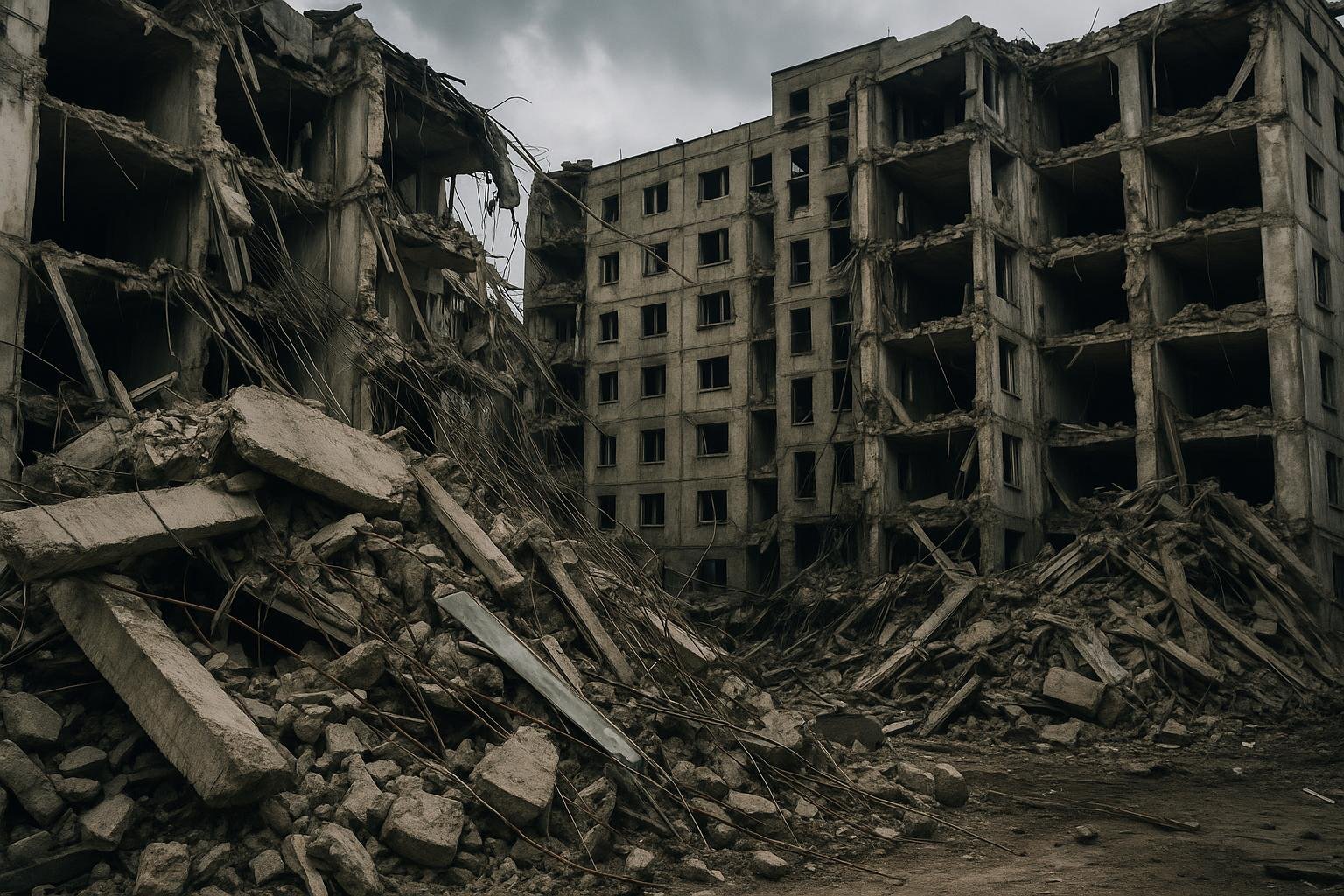
A Russian ballistic missile strike destroys a residential block in Kharkiv, injuring at least 30, as Ukraine faces escalating military assaults and controversy over frozen UK assets for recovery efforts.
Russian ballistic missile strike in Kharkiv injures at least 30 and flattens apartment block
A Russian ballistic missile strike on January 2, 2026, flattened a five‑storey residential building in Kharkiv’s Kyivskyi district and injured at least 30 people, loc...
Continue Reading This Article
Enjoy this article as well as all of our content, including reports, news, tips and more.
By registering or signing into your SRM Today account, you agree to SRM Today's Terms of Use and consent to the processing of your personal information as described in our Privacy Policy.
al officials and rescue services said.
According to Anadolu Agency, two Iskander ballistic missiles struck the block, completely destroying the structure and leaving emergency teams searching for survivors amid the rubble. Kharkiv Mayor Igor Terekhov confirmed the casualties and “significant damage”, while Oleh Synyehubov, head of the Kharkiv Regional State Administration, said the building had been entirely destroyed. Rescue workers remained at the scene attempting to find and recover those still missing.
The strike came amid an intensification of Russia’s offensive, which Kyiv says advanced more in 2025 than in the previous two years combined, seizing roughly 1% of Ukrainian territory. Ukraine has ordered the evacuation of 3,000 children and their parents from frontline regions, bringing the total number evacuated from the frontlines since 1 June to 150,000, Kyiv officials told The Independent.
The attack also intersected with renewed diplomacy and political pressure over frozen Russian assets held in the UK. President Volodymyr Zelensky said in a post on X that he had discussed with UK Labour leader Keir Starmer “the need for a fair decision regarding the frozen proceeds from the sale of Chelsea – £2.5 billion that can and must significantly help protect lives and support Ukraine’s recovery after all the Russian strikes.” He added his gratitude to Starmer and the United Kingdom for supporting Ukraine’s resilience.
UK government moves announced in December 2025 have thrust those frozen proceeds back into the spotlight. According to The Guardian and Euronews, on December 17, 2025, Prime Minister Keir Starmer announced a licence allowing funds from Roman Abramovich’s sale of Chelsea FC to be used for humanitarian purposes in Ukraine, and said the government would transfer £2.5 billion (reported by Euronews as about €2.8 billion). Starmer warned Abramovich to honour previous commitments or face legal action, saying, “The clock is ticking,” according to ITV.
The juxtaposition of the Kharkiv strike and the political manoeuvring over frozen assets highlights the twin pressures facing Ukraine: an intensifying military threat and urgent humanitarian needs. Industry and humanitarian groups have repeatedly stressed that prompt access to financial resources will be critical to supporting civilian evacuations, medical care and reconstruction in areas affected by recent strikes.
Local authorities in Kharkiv urged residents to follow emergency instructions and said health services were treating the wounded. International and Ukrainian rescue teams continued clearing debris while investigators sought to document the attack and its impact on civilians.
Source: Noah Wire Services