


**Dublin**: In response to global security shifts, the EU is increasing defence spending with a €800 billion plan. Ireland contemplates revising its military neutrality policy, eyeing heightened investment in local companies and addressing capability gaps in national security amidst evolving geopolitical threats.
In a significant shift in response to evolving global security dynamics, the European Union is ramping up its defence spending, a move that has implications for member states, including Ireland. This shift follows the recent changes in the United States’ foreign policy under President Donald Trump, who has adopted a markedly different stance towards international allies and conflicts, particularly in relation to Russia’s invasion of Ukraine.
The European Commission has unveiled a comprehensive plan, the ReArm Europe Plan/Readiness 2030, which earmarks €800 billion for various defence and security initiatives. European Commission President Ursula von der Leyen characterised this moment as a departure from the era of the peace dividend, stating, “the security architecture that we relied on can no longer be taken for granted.” The proposal aims to close capability gaps and foster a robust defence industrial base across member states.

Ireland’s government is reconsidering its long-standing policy of military neutrality in light of these developments. Under current regulations, Irish Defence Forces can only deploy a limited number of peacekeepers overseas contingent on a UN Security Council mandate. However, the growing presence of geopolitical threats, notably from Russia, has prompted discussions about revising these restrictions. Simon Harris, Ireland’s Tánaiste and Minister for Defence, indicated plans to elevate military spending to reach approximately €3 billion annually, a significant increase from the current budget of about €1.35 billion.
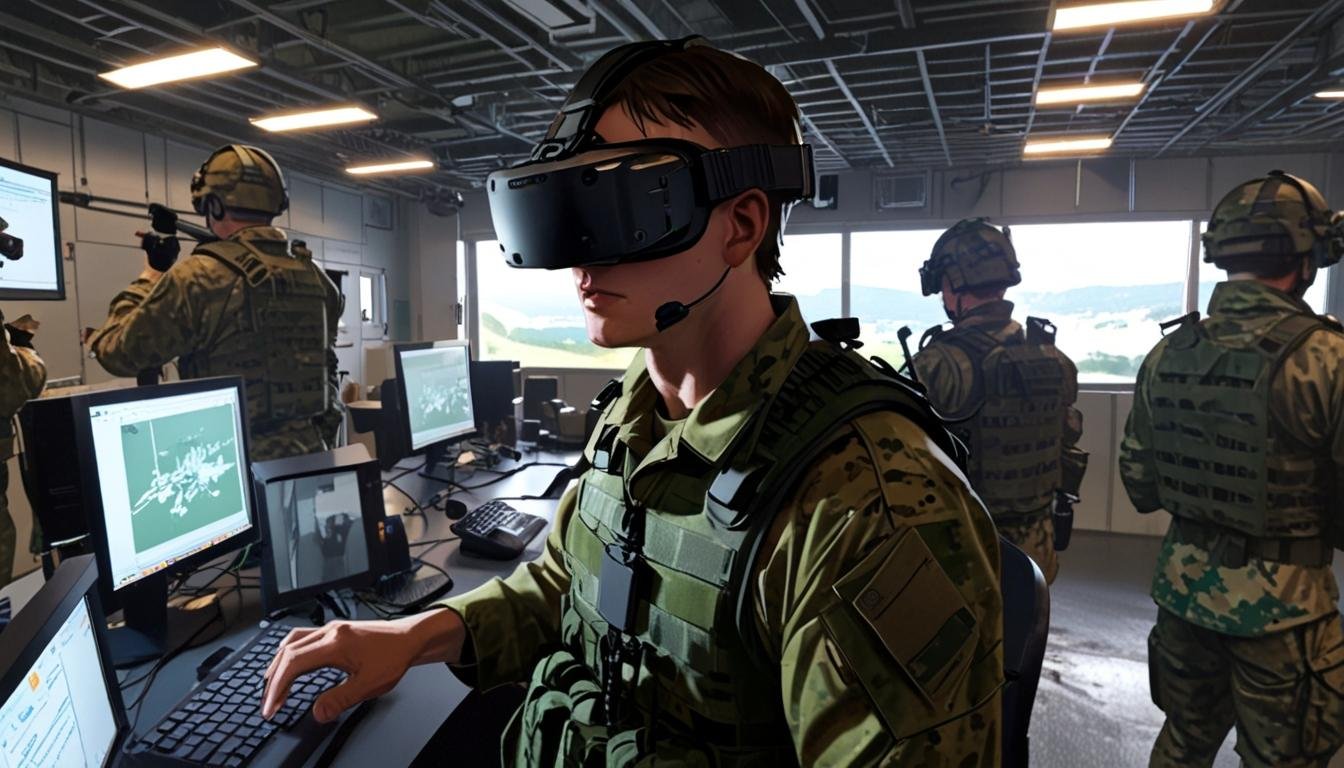
The evolving defence landscape presents opportunities for indigenous companies in Ireland, particularly in the realm of technology and software. Pat O’Connor, co-founder and managing director of the Irish firm VRAI, highlighted the potential benefits of this increased funding. VRAI focuses on virtual reality and simulation technologies to train personnel across various sectors, including defence. O’Connor suggested that a substantial portion of the projected defence budget should be allocated to local companies rather than being spent abroad, stating, “if Ireland is going to spend €3bn a year on defence and security… wouldn’t it be better to invest that money in indigenous Irish companies rather than send it abroad.”
Another notable player in the sector, Timothy Kelly, managing director of Corballis Technologies, which develops enterprise software for aviation and defence, echoed similar sentiments regarding under-investment in the Irish defence industry. He noted that the state has historically struggled with adequate investment, which has hindered the effectiveness of its defence infrastructure.
The Irish Defence and Security Association (IDSA), comprising various businesses engaged in the defence sector, has also voiced concerns over the need for a clearer government strategy to enhance national defence capabilities. This association has encouraged the government to foster stronger engagement with industry stakeholders, thereby ensuring that both local enterprises and small to medium-sized enterprises can address strategic security challenges.
With Ireland historically reliant on established alliances, particularly with the United States, the recent indications of a shift in U.S. foreign policy have compelled Irish leaders and businesses to confront the realities of an increasingly volatile global security environment. The National Risk Assessment 2024 warns that Ireland’s low level of defence spending could exacerbate risks related to armed conflict and terrorism. Despite its reputation as a neutral country, a recent study revealed that Ireland spends the least on defence relative to its economic output of 38 European nations, a fact that has raised concerns about national security.
As Ireland navigates these changes, there is significant focus on leveraging increased defence spending to bolster local technology firms and strengthen national security capabilities, amid a backdrop of shifting alliances and emerging threats in Europe.
Source: Noah Wire Services

