


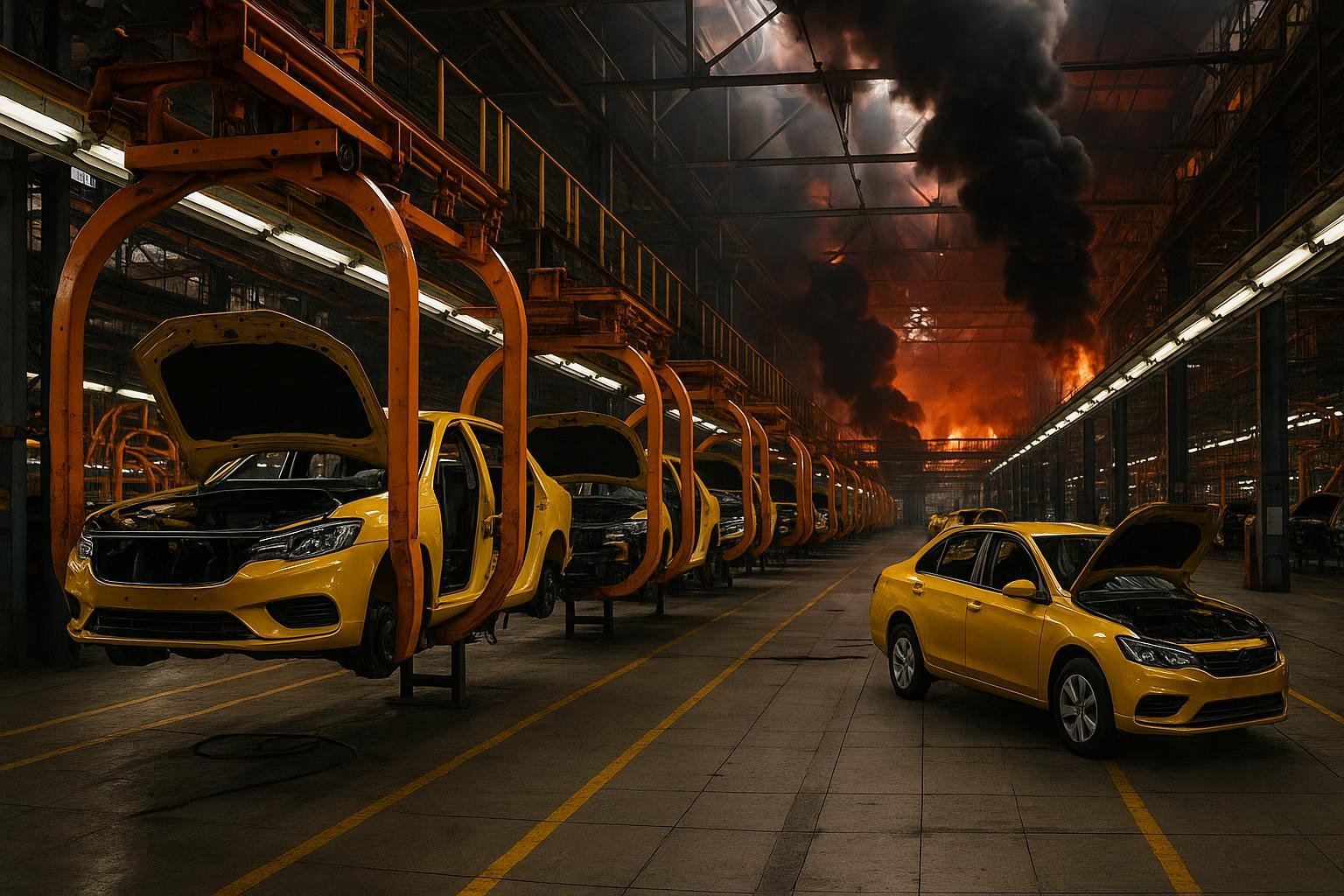
When Automotive Manufacturing Solutions first assessed the fallout from strikes on Iran on 1 March 2026, much of the analysis treated the immediate consequences as elevated risks. Three weeks on, those risks have hardened into measurable shocks across energy, metals, chemicals and critical-gas markets, forcing an abrupt reappraisal of production plans, input costs and demand prospects across the global car industry.
The initial price signal was stark. Brent crude, which closed ...
Continue Reading This Article
Enjoy this article as well as all of our content, including reports, news, tips and more.

By registering or signing into your SRM Today account, you agree to SRM Today's Terms of Use and consent to the processing of your personal information as described in our Privacy Policy.
Aluminium stands out as the most immediate material vulnerability for vehicle makers. A typical mid-size car incorporates around 200 kilograms of the metal across structure, closures, suspension and cast components, so interruptions in primary supply translate directly into manufacturing cost shocks. Gulf Cooperation Council producers account for roughly nine per cent of global primary aluminium; excluding China, that share rises above 20 per cent. Alba, the world’s largest single-site smelter with about 1.6 million tonnes of annual capacity, has declared force majeure and trimmed output by 19 per cent, citing the inability to load shipments through the Strait of Hormuz. Qatalum has announced controlled shutdowns after natural gas shortages. Combined, those disruptions affect roughly 570,000 tonnes of capacity.
Market signals reflect the shortage. Three-month LME aluminium futures moved sharply higher and the cash-to-three-month spread inverted into backwardation, a classic indicator of near-term tightness. Industry analysts at CRU have cautioned that, should the conflict persist, prices could approach $4,000 per tonne. As Guillaume Osouf of CRU Group put it, “a prolonged conflict will likely drastically change our market outlook for the rest of the year.” His colleague Ross Strachan warned that given current stock levels and limited ability to restart idled plants, “supply disruption could lead to prices pushing towards $4,000 per tonne.”
Energy-cost inflation is amplifying the operational squeeze. At roughly $112 a barrel, crude elevates not only logistics and transportation costs but the expense base for plants that rely on electricity and thermal energy for paint ovens, die-casting furnaces, press lines and surface treatments. European natural gas benchmarks have surged amid reduced LNG flows from the Gulf and low storage levels after a harsh winter. The Dutch TTF has about doubled since the conflict began, forcing suppliers across chemicals and steel to levy surcharges of up to 30 per cent to recoup input and power costs. Those levies flow through tiered supply chains and typically reach assembly lines within a month or two.
The petrochemical channel compounds the problem. The Gulf supplies a significant share of crude for naphtha production, the feedstock for ethylene, propylene and aromatics that underpin polymers, resins, synthetic rubbers and adhesives used throughout vehicle build. Disruptions to naphtha and downstream chemical production therefore threaten the availability and price of hundreds of kilograms of polymer content in each vehicle. Logistics interruptions through the Strait of Hormuz and wider shipping disruption have already affected chemicals, sulphur and fertilizer shipments, and industry observers warn that prolonged halts will deepen operational stress across manufacturers and suppliers.
Semiconductors, too, face fresh exposures. Qatar supplies roughly a third of global helium, an irreplaceable gas in many chip fabrication processes. Early in the crisis spot helium prices rose steeply as Qatari output was disrupted. Automotive manufacturers retain painful institutional memory of the 2021–23 chip shortage; a sustained helium shortfall risks higher semiconductor fabrication costs and constrained chip availability just as vehicle electrification and advanced driver-assistance system adoption increase automotive chip demand. Dan Hearsch, Global Co-Leader of the Automotive and Industrial practice at AlixPartners, emphasised the systemic nature of these interlocking bottlenecks: “Since Covid, some very fundamental things seem to have broken.”
Operational evidence of the transition from risk to reality is already emerging. Toyota has cut output for vehicles bound for Middle Eastern markets by nearly 40,000 units over two months, citing insurance, scheduling and port-disruption costs that made alternative routing uneconomic. Nissan has announced similar schedule reductions. Those moves highlight how fragile logistics and insurance economics have become and how rapidly production decisions can shift from market-led optimisation to risk mitigation.
Demand effects are an additional, under-appreciated vector. High oil prices reshape consumer choices, a dynamic particularly consequential for manufacturers concentrated in pickup and large-SUV segments. Dan Ives of Wedbush Securities warned that sustained higher fuel costs could depress demand for such vehicles, reintroducing the kind of rapid consumer pivot seen when US petrol prices topped $4 per gallon in 2008. US automakers that have rebalanced portfolios toward high-margin trucks and SUVs may therefore face renewed exposure if elevated fuel prices persist alongside stretched consumer credit and rising vehicle prices.
Premium European brands are also vulnerable, both to supply-chain disruption and to regional demand shocks. Volkswagen Group chief executive Oliver Blume flagged weakening premium demand in the Middle East, and Porsche warned it is “continuously assessing the current situation and possible influences on the company” and acknowledged that “the current situation in the Middle East could have a negative impact on supply chains and demand in the future.” For Porsche and others, the region has become a major, high-margin market; a contraction there would bite into profitability.
Macro-financial channels magnify the strain. Central banks are already reacting to the worsening inflation outlook: the European Central Bank postponed planned rate reductions and raised inflation forecasts in mid-March, with officials signalling that further tightening is possible should price pressures endure. Higher borrowing costs come at a moment when automakers are reevaluating capital-intensive electrification programmes amid what some commentators have termed the Great $60bn EV Reset. Economists at the Ifo Institute and modelling from Oxford University warn that prolonged maritime blockade risks pushing parts of Europe toward technical recession, an environment inimical to big-ticket automotive investment.
Outside the metals and energy spheres, suppliers face acute material-price volatility. Prices for specialist metals and high-temperature materials used in chip and component manufacture have jumped amid broader geopolitical friction and export restrictions from China on gallium. Analysts note that some chipmakers may prioritise high-margin production lines, AI chips, for example, further constraining supply for automotive-grade semiconductors.
Taken together, the shocks are not additive but multiplicative. Energy, metals, petrochemicals, logistics, helium and semiconductor constraints interlock with demand shifts and tighter financing to create a compound stress test for global carmaking. Short-duration disruptions could be disruptive but manageable; a protracted blockade or sustained attacks on Gulf infrastructure would force deeper recalibration of sourcing strategies, production footprints and product portfolios.
Industry surveillance now focuses on three questions: how long the Strait of Hormuz remains effectively closed to normal commercial flows; the extent of permanent damage to Gulf energy and chemical facilities; and how quickly idled smelters, refineries and fabrication plants can restart at scale. The answers will determine whether the present episode resolves as a sharp, painful correction or becomes a structural reordering of input markets and manufacturing economics.
For now, manufacturers are responding in real time, trimming production, absorbing losses where insurance and logistics options are too costly, and reassessing near-term investment plans. If past crises are any guide, the ripples will persist long after active hostilities end, and some of the structural changes already under consideration may become the industry’s new baseline.
Source: Noah Wire Services
Subscribe to Industry Updates

