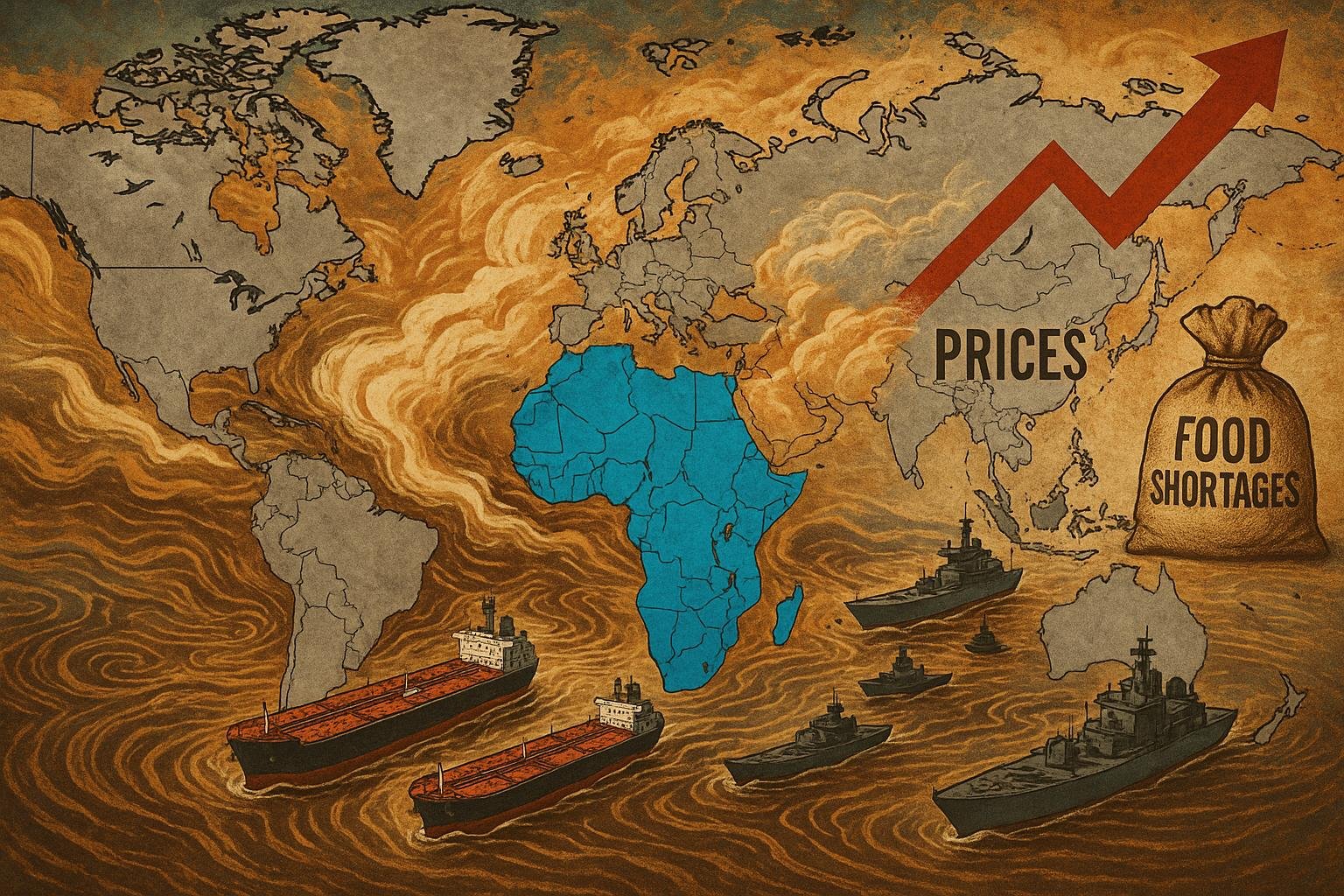
The conflict centred on Iran has shifted rapidly from a regional confrontation into a global supply‑chain crisis, and its first, most acute economic fallout is being felt across Africa.
The immediate trigger is the Strait of Hormuz, the chokepoint linking the Persian Gulf to the Gulf of Oman. Industry and security reporting places the share of seaborne oil and liquefied natural gas transiting the strait at roughly one‑fifth to one‑quarter of global flows. Since late Febru...
Continue Reading This Article
Enjoy this article as well as all of our content, including reports, news, tips and more.
By registering or signing into your SRM Today account, you agree to SRM Today's Terms of Use and consent to the processing of your personal information as described in our Privacy Policy.
ary the waterway has been rendered effectively unusable by sustained military action, attacks on vessels and the diversion of shipping, leaving scores of tankers stalled and many cargos stranded. ASIS Online reported that at least five tankers were hit and about 150 ships were immobilised around the strait, while FleetPoint and ABN AMRO research estimate daily shortfalls measured in the tens of millions of barrels when crude and refined products are aggregated.
The market response has been swift. Global benchmarks have surged; analysts and reporting from Axios and The Atlantic suggest scenarios in which Brent could trade well above previous peaks , with some forecasts flagging $150–$200 per barrel if disruption endures for weeks. Policymakers are already tapping emergency measures: ABN AMRO notes coordinated releases of strategic stocks planned by IEA‑linked countries, but such buffers are finite.
For African economies the consequences are not limited to headline fuel costs. The strait carries not only crude and LNG but a wide array of petrochemical feedstocks, fertiliser components and plastics inputs. Industry sources warn that rerouting vessels around the Cape of Good Hope, the already observed response by major carriers, can add weeks to transit times and materially raise freight expenses. Axios and FleetPoint emphasise the logistical penalties: longer lead times, elevated working‑capital requirements and the heightened risk of inventory shortfalls.
Fertiliser, in particular, represents a fast‑moving risk for the continent. Multiple briefs indicate that a substantial share of the fertiliser used across East and Southern Africa originates in the Gulf or transits Hormuz. Prices for key products such as urea have already climbed markedly since hostilities escalated, and analysts cited by The Atlantic and Axios warn that planting cycles could be disrupted within weeks. The knock‑on will be higher food costs, weaker yields and renewed inflationary pressure in economies where households spend a large portion of income on food.
Secondary shortages are emerging across sectors dependent on petrochemical inputs: packaging materials, industrial chemicals and even pharmaceutical ingredients face increased scarcity and price volatility. FleetPoint and ABN AMRO both caution that a disruption of this scale produces ripple effects rather than a single, isolated shortage, with manufacturing and retail margins squeezed as transport surcharges and longer inventories bite.
Governments and businesses in Africa are already moving: reports indicate emergency interventions such as subsidies, strategic releases and adjustments to import policy in countries including Kenya, Tanzania, Ethiopia and Zambia. But the structural exposure remains high. Security analysts and logistics experts stress there is limited domestic leeway for many African states to offset a sustained external shock to energy and agricultural inputs.
For firms operating on the continent the immediate calculus is pragmatic. Locking in supplies now, even at higher cost, may preserve continuity; splitting consignments across origins and ports can reduce single‑point failure. Freight planners should model multiple timelines , measured in weeks and months , and link each to procurement, pricing and customer communications. Building selective buffer inventories for critical fuels, agricultural inputs and high‑margin SKUs will pressure working capital but reduce the probability of costly stockouts. And companies should be candid with customers and suppliers about revised delivery expectations as longer voyages and port congestion become common.
The broader macro picture remains contingent on how long the strait is unusable. If the disruption proves short, markets may recalibrate once flows resume. If it persists, the disruption could accelerate inflation globally, prompt structural shifts in trade routes and energy sourcing, and force a reconfiguration of supply chains on a scale several observers compare to the economic shockwaves last seen during the COVID pandemic. Axios and The Atlantic both warn that short‑term policy tools will be tested and that the United States and other large energy players are not equally exposed , a divergence that will shape diplomatic and market responses.
Africa’s position is stark: as a net importer of fuel and many petrochemical‑derived goods, the continent is a price taker. The most effective choices available now are those that manage risk and preserve continuity rather than chase near‑term savings. The coming weeks will determine who has hedged effectively and who will face supply interruptions, margin erosion and, in some countries, mounting food insecurity.
Source: Noah Wire Services