


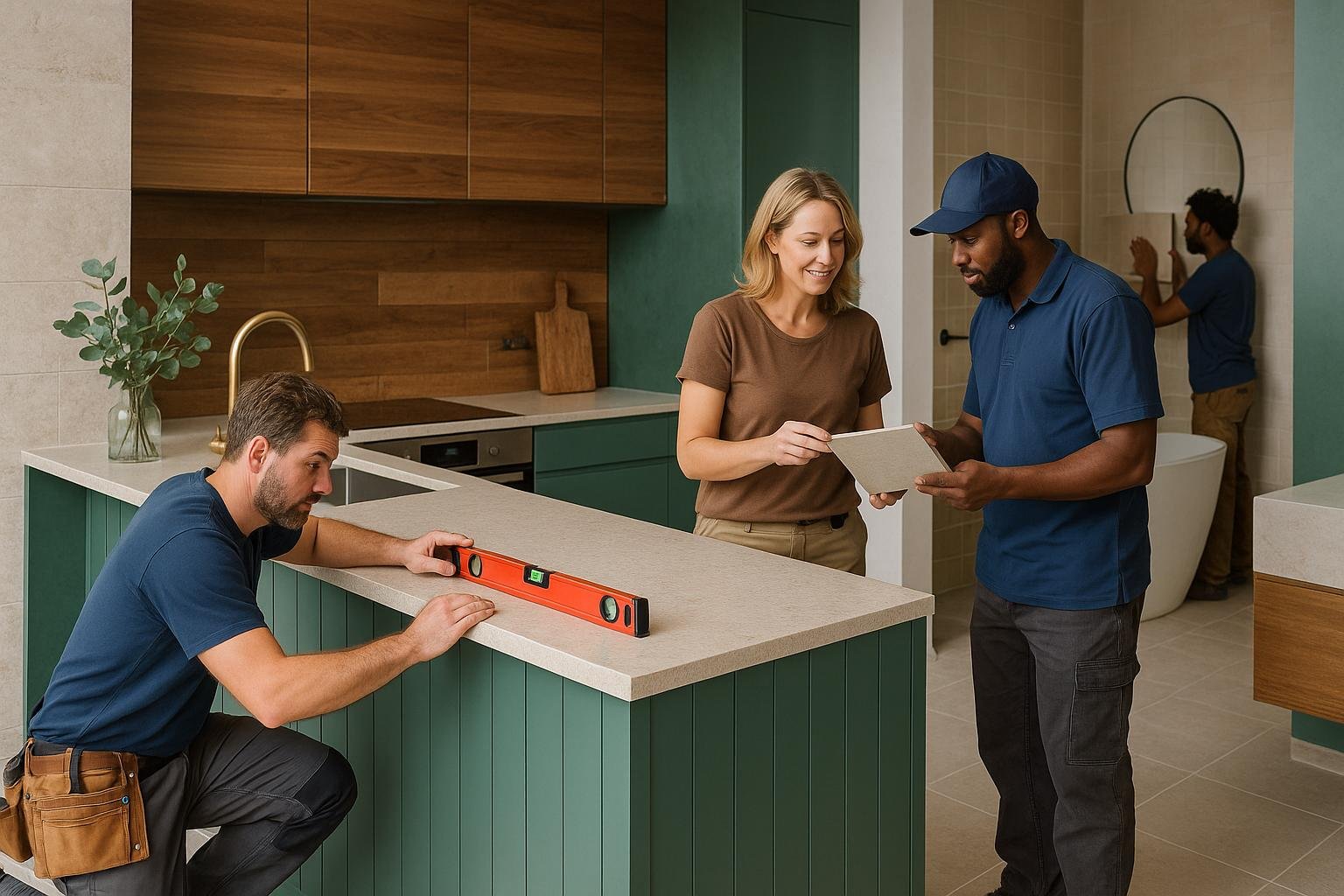
As installation environments become more demanding, installers and suppliers are increasingly fostering collaborative partnerships to reduce costs, prevent delays, and enhance customer satisfaction, transforming traditional transactional models.

Installers working in kitchens and bathrooms now operate in a far more demanding environment than a decade ago. Rising input costs, increasingly complex integrated systems, tighter schedules and customers who arrive armed with d...
Continue Reading This Article
Enjoy this article as well as all of our content, including reports, news, tips and more.
By registering or signing into your SRM Today account, you agree to SRM Today's Terms of Use and consent to the processing of your personal information as described in our Privacy Policy.
The most commercially resilient installers treat suppliers as partners rather than vendors. Those partnerships deliver practical advantages: early technical advice on loadings, ventilation, electrics and system compatibility can prevent time-consuming on-site problems and the reputational damage they bring. According to a trade association briefing, fostering strong supplier relationships can also drive innovation, lower costs and improve operational efficiency by unlocking supplier-led solutions and collaborative problem-solving.
Training and technical support from suppliers protect margins as well as schedules. From appliance commissioning and hardware calibration to digital templating and software-enabled workflows, supplier-led education reduces the likelihood of costly callbacks. Industry commentary notes that suppliers who offer structured training programmes, CPD sessions or on-site demonstrations are effectively investing in the installer’s long-term competence , and in their own brand’s consistency of delivery.
Aftercare is another area where partnership pays dividends. Installers are often the first port of call when faults occur; suppliers that provide clear warranty terms, direct customer technical helplines or rapid spare-part pathways remove friction and preserve installers’ time. In practice, reliable post-sale support can turn a potential service failure into a neutral, or even positive, customer interaction.
Feedback loops between installers and manufacturers are an overlooked source of product and process improvement. Installers see firsthand where designs, packaging or instructions impede efficient fitting. Forward-looking suppliers solicit that input and feed it into product development and logistics planning. Conversely, where installers are not asked for structured feedback, suppliers lose cheap and highly relevant research and development insight.
The calculus of supplier choice is therefore more than price alone. While cost remains a factor, an apparently lower purchase price can prove false economy if it results in delays, extra labour, service calls or damaged client relationships. Several industry guides argue that stable, repeat business with trusted suppliers reduces risk, increases predictability and can unlock preferential delivery windows and bulk-purchase savings.
Strategic supplier partnerships also open access to new product lines, early releases and joint marketing opportunities that can boost turnover and differentiation in a crowded market. Commentary from renovation-sector specialists highlights that long-term collaborations with suppliers, contractors and designers deliver better project outcomes and improved return on investment, while enabling firms to respond faster to emerging trends and technologies.
For suppliers, recognising the installer as the final brand ambassador is commercially sensible. When manufacturer and fitter align on standards, training and support, every hinge adjustment and appliance hookup reinforces the producer’s reputation as much as the installer’s. Industry observers urge suppliers to move beyond the assumption that installers are purely transactional customers, recommending they ask installers what effective support looks like and develop packages that include technical guidance, training and robust aftercare.
Amanda Hughes, contributing to Installer’s kitchens content for InstallerSHOW 2026, argues that both sides benefit when relationships evolve beyond simple buying and selling. InstallerSHOW will take place on 23–25 June; for those engaged in the sector, the event is being presented as an opportunity to explore these kinds of supplier–installer collaborations further.
Source: Noah Wire Services
Subscribe to Industry Updates

