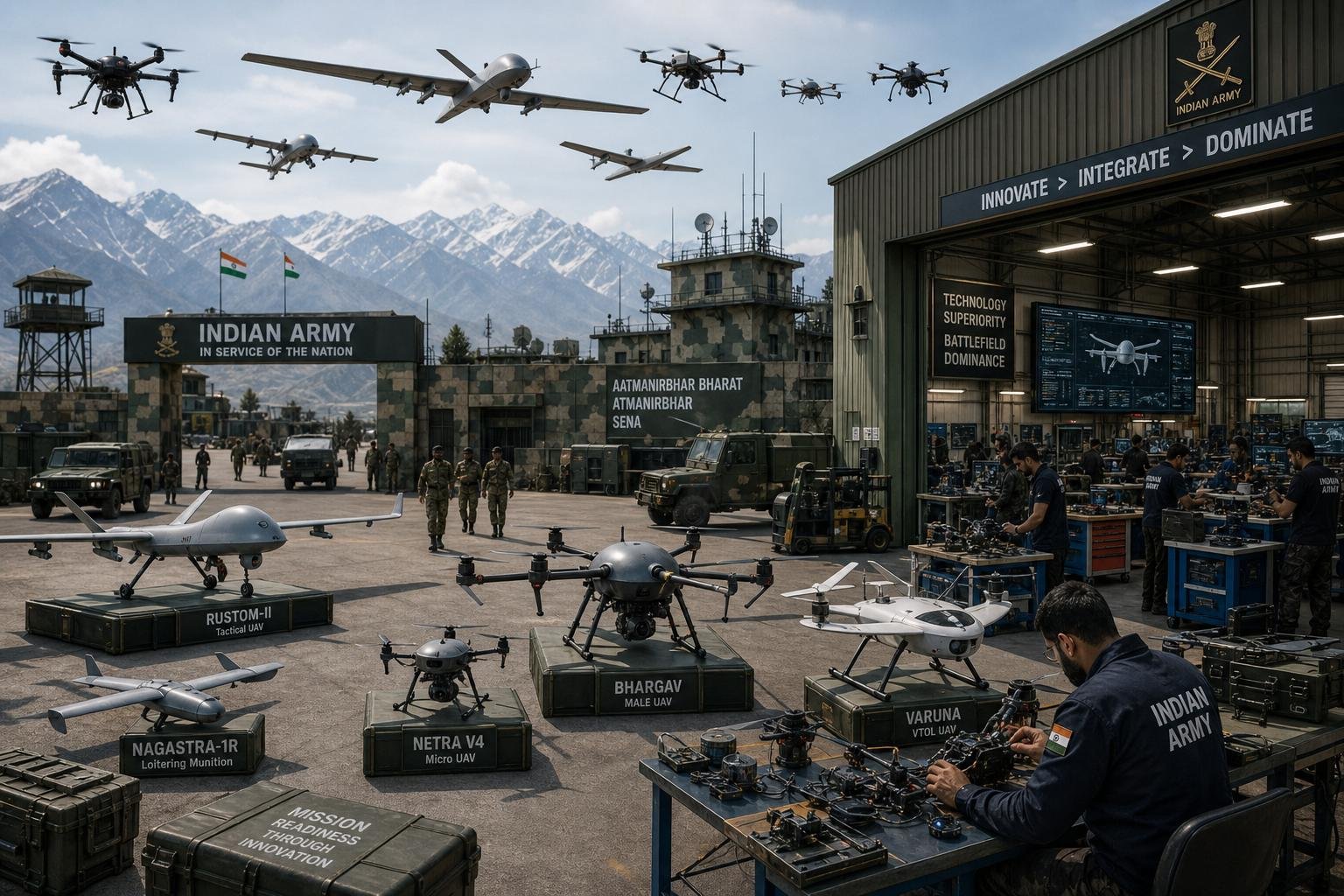
India’s armed forces are preparing to move away from ad hoc drone purchases and towards larger, more methodical procurement programmes, a change that industry executives say could reshape the country’s unmanned systems market over the next two years.
According to businessline, forthcoming orders for tactical drones, loitering munitions and other unmanned platforms could together top $2 billion in the next 18 to 24 months. If realised, that would place the planned buying cyc...
Continue Reading This Article
Enjoy this article as well as all of our content, including reports, news, tips and more.
By registering or signing into your SRM Today account, you agree to SRM Today's Terms of Use and consent to the processing of your personal information as described in our Privacy Policy.
le among India’s biggest domestic unmanned systems programmes to date.
The shift reflects both changing battlefield realities and the rapid expansion of India’s own drone-making base. Drones have become central to modern warfare, with recent conflicts underscoring their ability to reach targets at distance while reducing the risk to personnel. For countries with smaller defence budgets or less advanced conventional forces, that has made unmanned systems a particularly important asymmetric capability.
Smit Shah, president of Drone Federation India, told businessline that the new phase marks a structural change in how the military approaches procurement. He said the sector had largely been sustained by emergency orders and smaller, urgent purchases over the past five to six years, but that the next stage appeared to be built around longer-term demand.
That matters, he argued, because defence manufacturing requires more than isolated contracts. Companies need confidence to invest in production lines, supplier relationships, engineering teams and component development, and that kind of planning is far easier when procurement is predictable.
The wider supply chain is also likely to benefit. As volumes rise, orders should flow not only to drone assemblers but also to producers of payloads, communications gear, navigation tools, propulsion systems, batteries and other critical subsystems. Industry participants say this could become one of the most important growth periods yet for India’s unmanned systems ecosystem.
The country now has hundreds of firms working across drone manufacturing and component supply, but many have operated with limited visibility on future demand. Larger contracts could change that, encouraging fresh investment in factories, skilled labour and product refinement.
Another lesson drawn from recent conflicts is the need for systems that can survive in heavily contested environments. Future tenders are expected to place greater emphasis on electronic warfare resistance, redundant navigation and secure communications, making resilience as important as range or payload.
The procurement cycle may also speed up consolidation in the sector. Large defence programmes tend to favour companies that can prove scale, quality control and sustainment capability, which could push smaller start-ups into partnerships with established manufacturers and subsystem specialists.
Source: Noah Wire Services