


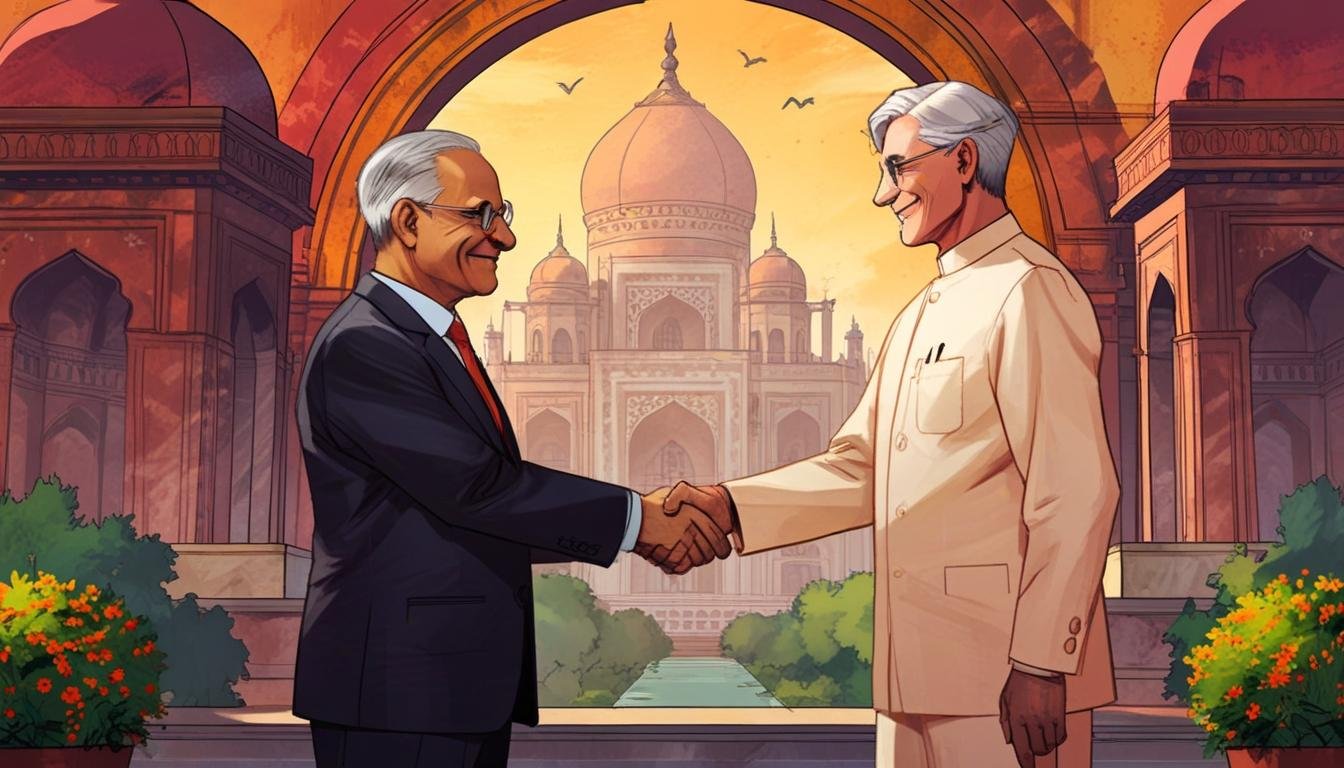
**New Delhi**: Indian and U.S. officials recently met to address tariffs and non-tariff barriers, seeking progress on a bilateral trade agreement ahead of impending tariffs. The discussions also highlighted cooperation in defense and technology, aiming to expand bilateral trade and investment relations.
In a significant development for international trade relations, Indian and U.S. officials engaged in discussions focused on reducing tariffs and easing non-tariff barriers from March 26 to March 29 in New Delhi. The talks aimed to facilitate progress towards a bilateral trade agreement (BTA) between the two nations. The discussions were led by India’s commerce ministry in collaboration with a U.S. trade delegation under the leadership of Brendan Lynch, the assistant U.S. trade representative for South and Central Asia.
During these negotiations, Christopher Landau, the U.S. Deputy Secretary of State, engaged in separate talks with Indian Foreign Secretary Vikram Misri. Their discussions concentrated on not only trade barriers but also enhancing defense and technology cooperation to improve regional security. The U.S. Department of State noted that Landau expressed gratitude to India for its measures addressing illegal immigration and emphasised the importance of ongoing collaboration in this area.

These discussions unfolded against the backdrop of U.S. President Donald Trump’s upcoming plans to impose reciprocal tariffs on various trading partners, set to take effect on April 2. India is actively seeking an exemption from these tariffs, leveraging the context of the bilateral talks. The Indian government aims to initiate the first tranche of the BTA by autumn of this year.
India’s commerce ministry reported, “The successful conclusion of the discussions reflects progress in efforts to expand India-U.S. bilateral trade and investment relations to promote prosperity, security and innovation in both countries.” Prime Minister Narendra Modi’s recent visit to Washington reinforced commitments to enhance U.S. energy and defence product purchases, with both nations setting ambitious targets to achieve a bilateral trade volume of $500 billion by 2030.
The ongoing discourse has also seen criticism from the U.S. administration, with President Trump labelling India a “tariff king.” The U.S. has called for reductions in tariffs on a range of products including agricultural goods, alcoholic beverages, and automobiles, while promoting greater market access for American businesses.
Piyush Goyal, India’s trade minister, had previously visited Washington to discuss trade matters with U.S. Trade Representative Jamieson Greer and Commerce Secretary Howard Lutnick. Following the recent negotiations, it has been planned that sector-specific expert engagements for the BTA will commence virtually in the coming weeks, setting the stage for subsequent in-person meetings.
According to World Trade Organization data, the U.S. is currently facing a $45.6 billion trade deficit with India, compounded by a stark contrast in average tariff rates. The U.S. trade-weighted average tariff is approximately 2.2%, whereas India’s average tariff is significantly higher at 12%.
Overall, both Indian and U.S. officials are optimistic about the trajectory of these trade discussions, anticipating that future engagements will align with their mutual goals of prosperity, resilience, and shared economic benefits.
Source: Noah Wire Services

