


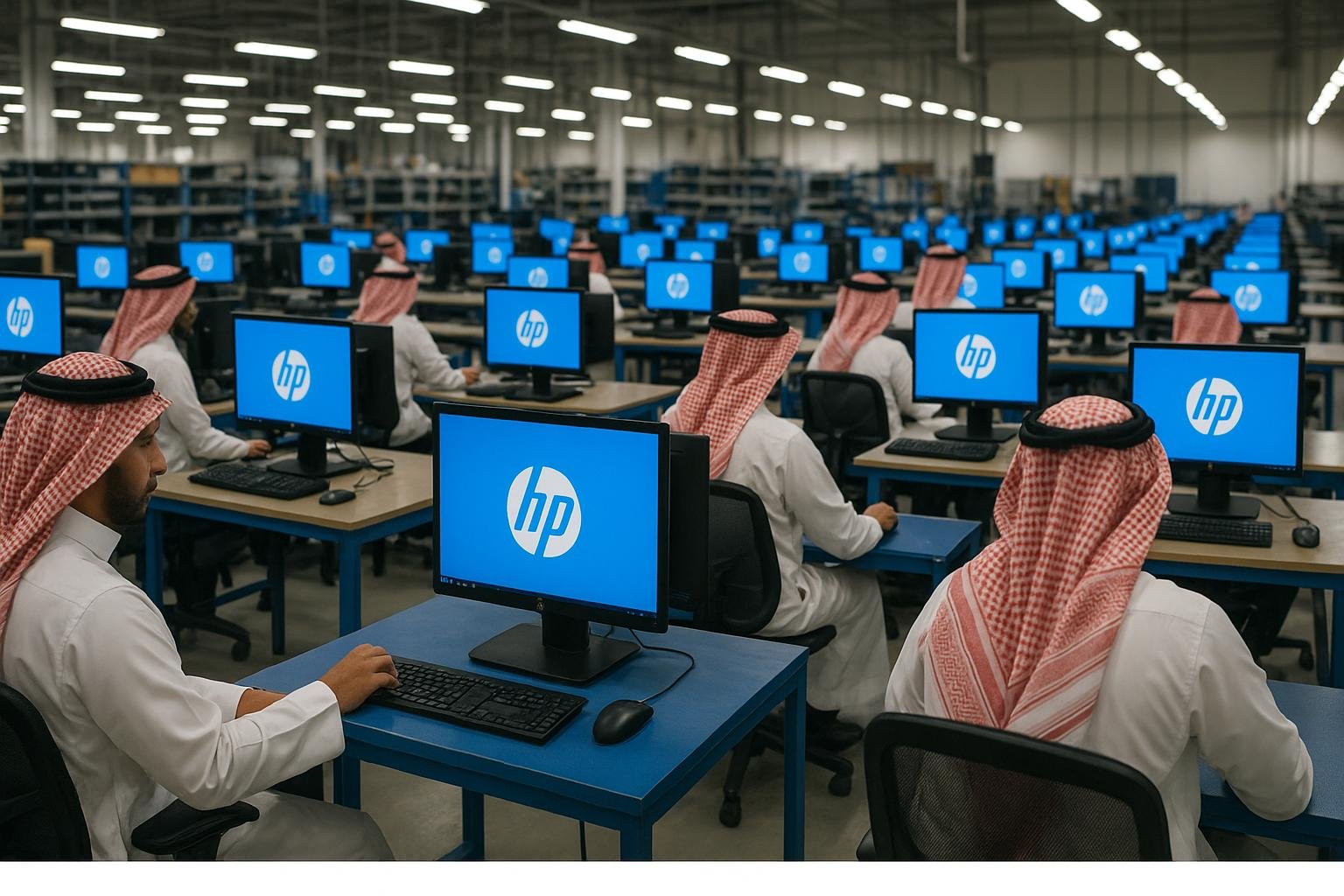
HP commits to Saudi Arabia’s rapid economic change with new manufacturing and AI centres, fostering local talent and integrating with Vision 2030 goals amid fierce competition for skilled workers.

Two days before our conversation, Fadle Saad was back on a golf course, but not for leisure. He was celebrating his channel partners at HP’s annual awards ceremony , a fitting metaphor for how the managing director of HP MENA Regional Headquarters approaches business: stra...
Continue Reading This Article
Enjoy this article as well as all of our content, including reports, news, tips and more.
By registering or signing into your SRM Today account, you agree to SRM Today's Terms of Use and consent to the processing of your personal information as described in our Privacy Policy.
According to the original report, that opportunity is Saudi Arabia’s rapid economic transformation. Saad told The CEO Magazine: “There are very few countries out there that are transforming at the speed and size of Saudi Arabia. The shifts here are tectonic to a level where we are still impressed and surprised with what’s happening.” That conviction has underpinned HP’s multi‑year commitment to the Kingdom.
Industry and company announcements show HP has moved from rhetoric to significant local investment. The firm has launched its first global technology manufacturing facility in Riyadh and opened an AI research and development Centre of Excellence in Dhahran. The Riyadh site will produce desktop PCs and other devices to improve delivery times, customisation and supply‑chain resilience for the Middle East, while the Dhahran hub aims to develop AI‑powered solutions for sectors including energy, healthcare, logistics and smart cities.
Saad emphasises the rationale: Saudi Arabia combines strong consumer demand, a fast rate of new company formation, large tourism flows and major infrastructure spending. “The opportunities are multi‑layered and everything feeds into the other,” he told The CEO Magazine. That interlocking growth, coupled with government investment under Vision 2030, makes the market one of a select group HP views as critical to its future.
Yet rapid expansion brings operational challenges , chief among them competition for skilled people. Saad noted: “Everybody in Saudi Arabia is trying to attract top talent, just like we are.” Rather than limit capability‑building to HP alone, the company is extending skills development across its channel ecosystem, integrating partners into planning, supply‑chain discussions and training so the broader market can scale to meet demand.
The company’s internal research also shapes its strategy. Saad cited HP’s Work Relationship Index, which found that roughly 20 percent of employees are content with how they work , a statistic that prompted reflection on workforce impact and productivity. He argued the adoption of AI presents an avenue to improve employee experience and organisational performance, noting broader reports that most organisations are already using AI in at least one function and are scaling it to boost productivity and innovation.
HP’s cultural approach complements its investments. Saad describes a workplace that rewards initiative and tolerates experimentation: “HP is a place where people are encouraged to try, learn and grow,” he said. That mindset, he argues, has enabled the company to be bolder in its Saudi plans and to bring partners into a shared mission rather than treating them as mere distributors.
The result is a model that ties local industrial capability and R&D with skills development and partner integration. According to announcements from HP and regional industry observers, the Riyadh manufacturing facility and Dhahran AI centre are intended to create jobs, foster local talent and position the Kingdom within HP’s global supply chain , all while aligning with Saudi Arabia’s broader economic diversification goals.
If the last few years are any guide, HP’s strategy in the Kingdom is about more than faster delivery or larger market share; it is an argument for embedding technology, talent and partners into a national transformation agenda. As Saad put it when discussing partnership: “They’re fully integrated into our operations and strategy. We grow together, and the way we work with them feels like we’re all on one team.”
Source: Noah Wire Services
Subscribe to Industry Updates

