


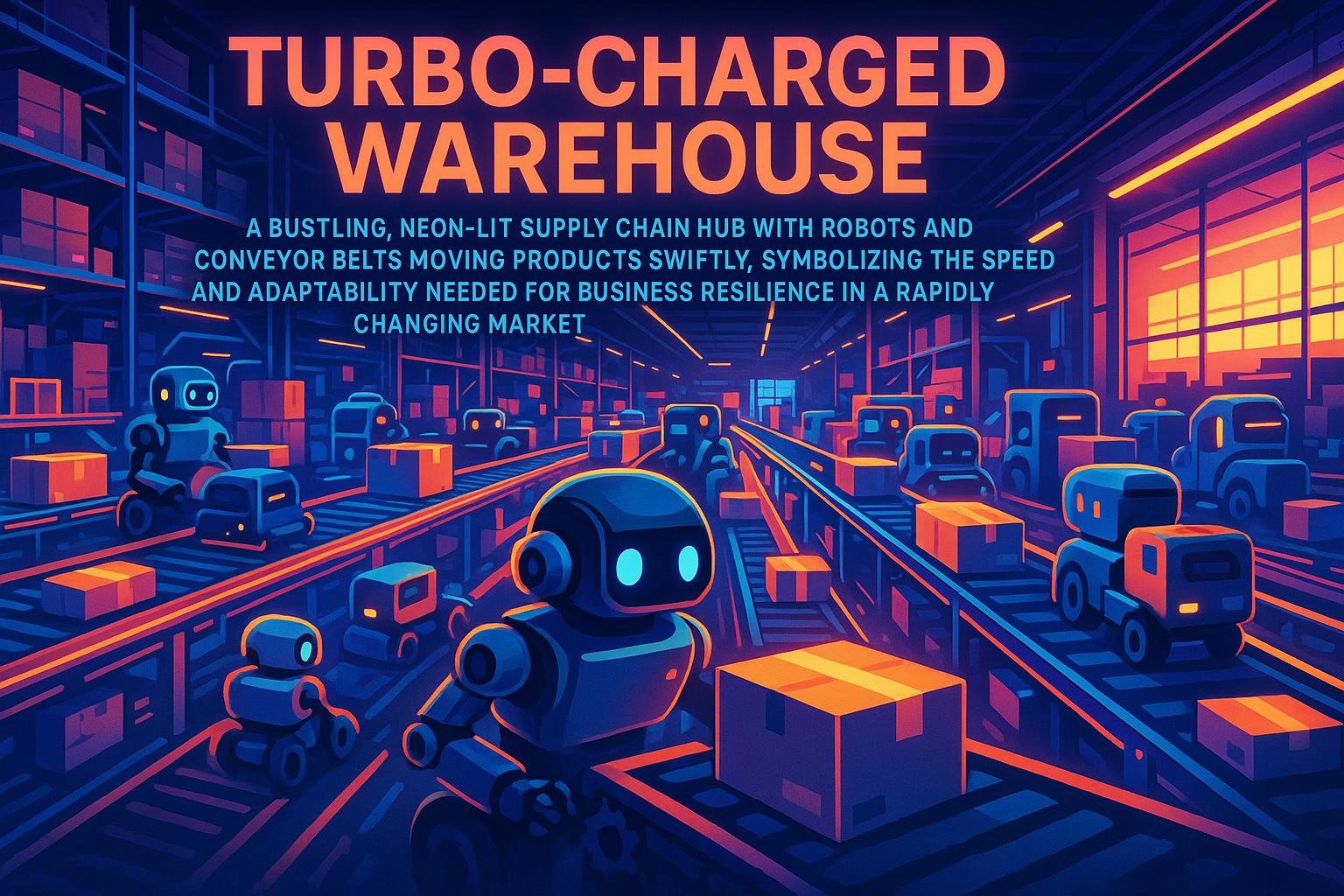
As market dynamics accelerate, companies like Somos Foods demonstrate that agility in supply chains, enabled by advanced technology and strategic flexibility, becomes essential for customer satisfaction and competitive edge amid constant disruption.

In today’s fast-evolving business environment, the agility of a supply chain is vital for organisations aiming to stay competitive and responsive to changing market demands. From the rise of advanced technologies like ...
Continue Reading This Article
Enjoy this article as well as all of our content, including reports, news, tips and more.
By registering or signing into your SRM Today account, you agree to SRM Today's Terms of Use and consent to the processing of your personal information as described in our Privacy Policy.
Laura Schwabe, vice president of supply chain at Somos Foods, exemplifies this agility. When a key retailer requested a last-minute recipe change for Somos’s Birria Taco Simmer Sauce, eliminating seed oil and switching to avocado oil, Laura and her team successfully completed the reformulation, production, and delivery in just over a week. Such rapid response not only met the client’s needs but also improved the product. This case underscores how agility is more than crisis management; it is a strategic enabler for maintaining relevance in a fluid market.
An agile supply chain is essentially a flexible system for procuring materials, manufacturing, and delivering products that can quickly adjust to both internal and external disruptions. Unlike traditional models that may rely heavily on rigid structures and minimal inventory, agile supply chains leverage real-time data analytics and empowered teams to adapt production, inventory, and delivery strategies effectively. For instance, when faced with delays in raw material procurement, an agile team uses integrated software systems to coordinate alternatives swiftly across manufacturing, warehousing, and distribution channels.
While agility and lean principles overlap in pursuit of efficiency, they also have distinct differences. Lean management focuses on reducing waste by minimising inventory and streamlining operations to lower costs, whereas agile supply chains maintain flexible inventory levels to buffer against sudden demand surges. Somos Foods balances this by fostering agility without burdening itself with excessive stock; their approach combines rapid responsiveness with efficient inventory through well-organised processes and teams.
Building an agile supply chain involves several critical steps. Data analysis forms the foundation, enabling companies to forecast demand fluctuations and promptly adjust production and logistics. For example, recognising seasonal spikes in product demand allows for strategic planning of inventory and shipping routes. Training teams to decentralise decision-making is essential so frontline members can act decisively during urgent situations, supported by clear guidelines on when to escalate decisions. Moreover, diversifying manufacturers and suppliers builds redundancy into the system, allowing scale-ups for large retail opportunities without bottlenecks.
Selecting flexible warehouse and logistics partners is another pivotal aspect. Somos’s recent shift to a single full-service warehouse that also manages deliveries illustrates how reducing touchpoints can improve control and efficiency. Trusted partnerships with reliable logistics providers help maintain inventory accuracy and reduce variances, critical for rapid response times.
Technological adoption underpins this agility, with tools spanning advanced planning and optimisation platforms like Anaplan, SAP, and Oracle, alongside real-time visibility solutions such as Project 44 and Blue Yonder. These technologies help track products throughout the supply chain, identify recurring issues, and enable seamless coordination across functions.
Industry leaders such as Cisco, Tesla, Nike, and Apple have demonstrated the power of agile supply chains through innovative use of technology, diversified sourcing, and adaptive logistics. Their successes highlight how agility contributes to enhanced customer satisfaction, resilience against disruptions, cost efficiencies, and faster time to market.
Beyond operational benefits, agile supply chains also drive financial and environmental advantages. They reduce inventory carrying costs, minimise wastage and storage expenses, and improve working capital use. Agility also facilitates stronger supplier relationships and smoother continuity, lowering risk and emissions associated with overproduction and idle inventory.
In sum, an agile supply chain is no longer a niche advantage but a critical business capability. It equips organisations to navigate uncertainty, capture emerging opportunities, and deliver superior value to consumers, all while managing cost and complexity. Companies embracing agility position themselves not just to survive changes but to thrive amid relentless market evolution.
Source: Noah Wire Services
Subscribe to Industry Updates

