


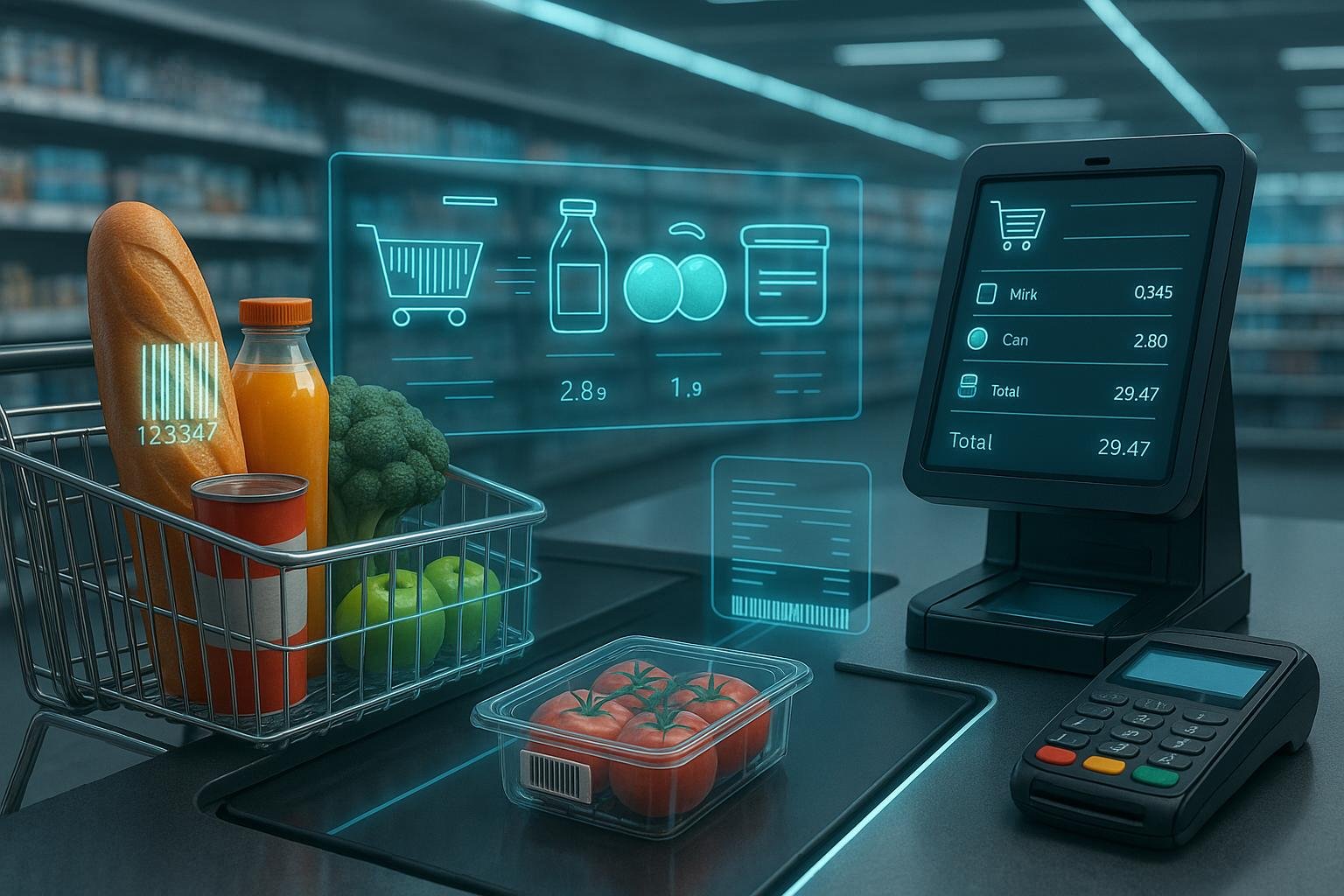
Unified order management systems are revolutionising retail by integrating inventory, fulfilment, and customer data across channels, delivering faster, more reliable service and boosting customer loyalty.

Omnichannel order management is the operational backbone that turns a multi-touch shopping experience into reliably delivered commerce. A seamless front end can entice customers across websites, social apps, marketplaces and physical stores, but without a unified syste...
Continue Reading This Article
Enjoy this article as well as all of our content, including reports, news, tips and more.
By registering or signing into your SRM Today account, you agree to SRM Today's Terms of Use and consent to the processing of your personal information as described in our Privacy Policy.
At its core, an omnichannel order management system (OMS) aggregates order data from every sales channel and applies centralised logic to route, fulfil and reconcile orders across warehouses, stores and third-party logistics partners. According to Shopify, such systems provide real-time inventory visibility, intelligent order routing, automation to improve order accuracy, support for fulfilment options like buy online, pick up in-store (BOPIS), standardised processes and a centralised returns workflow. Those capabilities reduce oversells and stockouts, speed delivery and drive operational efficiencies across the commerce ecosystem.
Why unified order management matters
Multichannel retail, where each channel is managed in isolation, leads to fragmented customer data, duplicated effort and inconsistent experiences. The common failure modes include frequent stockouts, manual returns handling, poor ship‑from‑store execution and the inability to route orders intelligently to the best fulfilment source. Industry guidance shows that these breakdowns erode customer trust and inflate costs; by contrast, an integrated OMS turns inventory and storefronts into distributed fulfilment assets that can be orchestrated for speed and cost.
Signs you’ve outgrown a legacy OMS include persistent oversells, lack of available-to-sell (ATS) visibility, manual or error-prone returns, and slow or unreliable ship‑from‑store processes. Shopify’s guidance stresses that real-time synchronisation between point-of-sale (POS), warehouse management systems (WMS), ERPs and carrier integrations is essential to support modern consumer expectations for fast, flexible delivery and easy returns.
Pillars of a robust omnichannel order management strategy
-
Enterprise-grade inventory visibility. Accurate ATS across locations prevents overselling and lets retailers reduce excess safety stock while maintaining service levels. The footwear brand Allbirds is cited as an example: Micah Nelson, the brand’s director of product management, described how seasonal transfers of slow-moving stock and warehouse-only allocations undermined both service and cost-efficiency. After adopting Shopify’s unified commerce platform, Allbirds was able to show store-level availability online, schedule store operating hours for ship-from-store and limit POS shipping volumes, improving customer choice and reducing waste. “With our sales channels unified on Shopify, we’re able to provide a consistent shopping experience between retail and ecommerce customers,” Micah says. “We have more opportunities to delight our customers while providing greater flexibility to corporate teams. Our customers have benefitted from faster shipping, a wider assortment both online and in stores, and the convenience of buying and returning in either direction.”
-
Distributed order management and smart routing. As fulfilment footprints expand, through additional warehouses or regional 3PL partners, smart routing applies business rules that prioritise cost, speed or inventory concentration. Typical logic includes preferring the closest warehouse, falling back to nearby retail stock, splitting shipments where required, or sending wholesale orders to dedicated fulfilment centres. Plug-and-play automation templates can help codify these rules at scale.
-
Store fulfilment as micro-fulfilment. Retail stores can function as micro-fulfilment centres, cutting transit time and shipping cost and enabling next‑day delivery or BOPIS. Parachute’s implementation illustrates the point: SVP of operations Meg Marsh says leveraging Shopify’s BOPIS features lets online customers discover stores and schedule pickups at locations with available stock. The result has been substantial: BOPIS generated 1,300 orders in a single quarter, representing a material share of the brand’s BOPIS revenue.
-
360-degree customer service. Centralised customer data empowers support agents to see order histories, returns, loyalty status and prior tickets regardless of channel, enabling edits, partial refunds or reroutes before fulfilment completes. Shopify recommends a native customer data platform (CDP) to compile shopper data without extensive custom coding. That unified view is credited by jewellery retailer Astrid & Miyu with a fivefold increase in repeat omnichannel buyers and a 40% higher lifetime value among omnichannel repurchasers. “Shopify’s big singular view of our customer is the secret power to scaling fast and managing international growth,” senior ecommerce manager Molly Allen says.
Building the tech stack and operating model
Effective omnichannel fulfilment requires tightly integrated systems: OMS, WMS, POS, carrier APIs, ERP and returns management, along with a CDP to tie customer identity and behaviour into fulfilment decisions. According to Shopify’s enterprise guidance, unified commerce goes further than a conventional OMS by merging inventory, customer and sales data into a single business brain that supports marketing automation, peak‑period scaling and ERP integrations via programmes such as Shopify’s Global ERP partnerships.
Retailers should prioritise:
- End‑to‑end real‑time synchronisation to maintain ATS across channels.
- Prebuilt automation to accelerate routine tasks, hiding out‑of‑stock SKUs, generating packing slips and enforcing fulfilment limits.
- Clear, trained workflows for store associates handling ship‑from‑store and BOPIS to avoid handoff delays.
- Returns orchestration that updates inventory and triggers refunds or reshipments efficiently.
Editorial note on vendor claims
Much of the practical advice and case studies come from Shopify’s published materials and customer examples. The company claims its unified commerce platform reduces fragmentation, improves fulfilment speed and enables the omnichannel behaviours described above; independent assessment should verify how those outcomes map to a specific retailer’s scale, integration complexity and geography.
Operational trade-offs and next steps
Adopting omnichannel order management is a transformation that touches technology, store operations and customer service. The payoff is measurable: faster delivery, fewer stockouts, lower shipping costs and higher lifetime value from omnichannel shoppers. But success requires disciplined data hygiene, investment in integrations and clear operational ownership for store-based fulfilment.
For retailers facing repeated stockouts, inconsistent customer experiences across channels, or a cumbersome returns process, the evidence suggests a centralised OMS or unified commerce platform is the natural next step. Implementations that prioritise real‑time inventory visibility, smart routing and the store-as-fulfilment-centre model are most likely to convert omnichannel investments into better margins and stronger customer loyalty.
Source: Noah Wire Services
Subscribe to Industry Updates

