


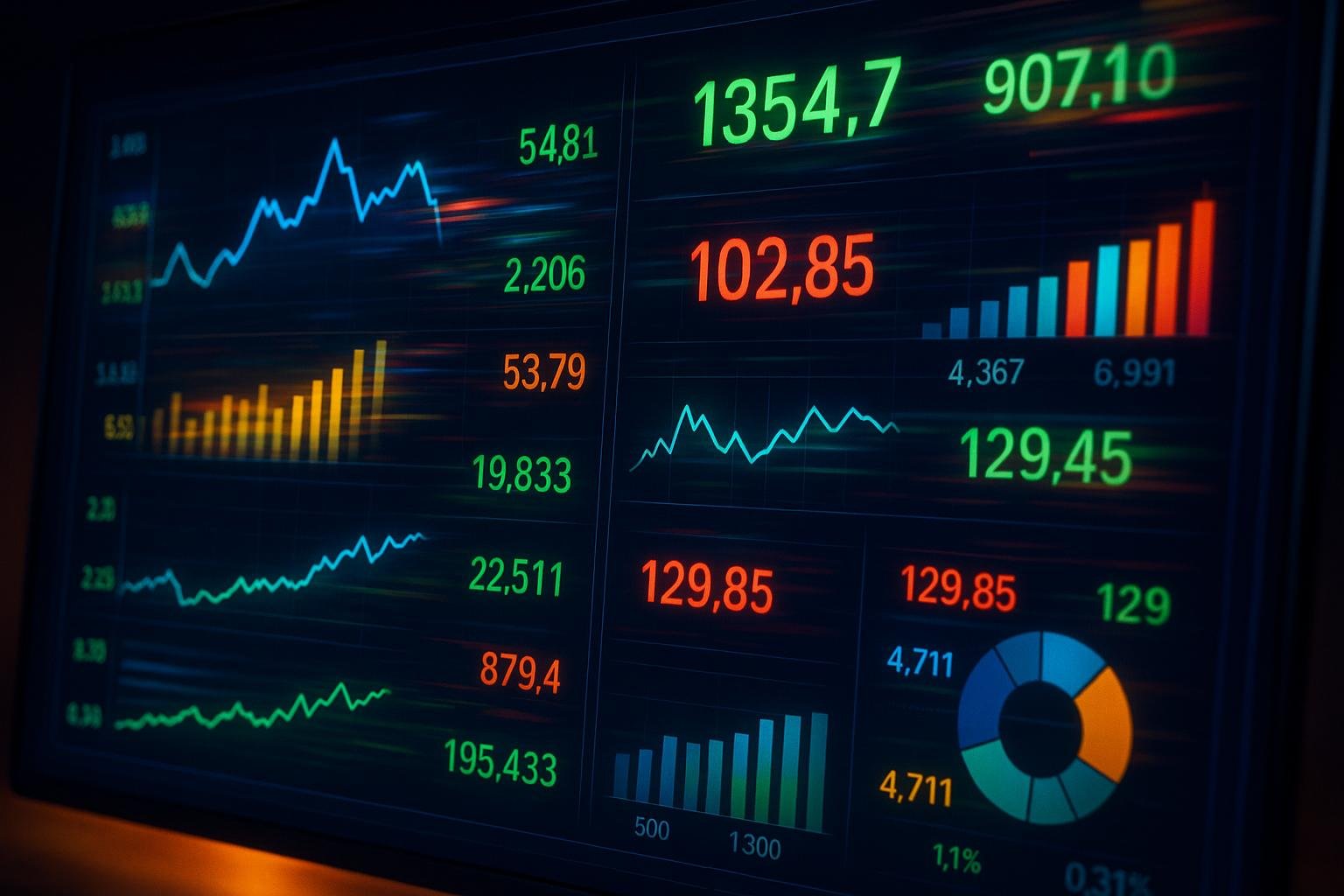
As commerce accelerates, organisations are turning to real-time ERP and embedded analytics to bridge the gap between events and insight, enabling immediate operational responses and strategic agility.

Boardrooms still patterned around monthly slide decks are increasingly misaligned with the pace of modern commerce. What looks satisfactory on a report generated days or weeks after the fact can be at odds with operations that shift by the hour: shipping lanes clog, priority orders stall, and best-selling stock can disappear before a finance chart even registers the change. That disconnect between the moment and the metric is not merely inconvenient; it erodes decision quality, imposes avoidable costs and amplifies organisational stress.
The fundamental problem is not scarcity of information but its timeliness. Several industry observers argue that timely visibility into transactions and operations is as crucial as data accuracy. According to NetSuite, real-time data delivers a consistent view of people, processes and technology across an organisation, enabling leaders at different levels to act from the same facts. When reporting cadence lags behind business cadence, leaders are forced to manage by history rather than by what is actually unfolding now, turning many meetings into post-mortems rather than opportunities to steer outcomes.
Lagging KPIs create three related failures. First, static summaries conceal momentum. A monthly total does not reveal whether sales are steady, spiking or collapsing in the last few hours. Second, aggregation hides distribution: a healthy-looking headline margin can mask a single high-volume SKU that is suddenly loss-making because input costs rose and pricing was not updated. Third, delayed information breeds decision drift, teams reallocate budget or resources based on yesterday’s reality and inadvertently optimise for conditions that no longer exist.
The operational implications are concrete. Finance teams traditionally act after month-end reconciliations; operations respond to weekly scorecards; procurement reacts when stockouts appear on a reorder report. In contrast, a continuous stream of transaction-level events allows for immediate interventions: automated payment reminders reduce days sales outstanding the moment an invoice becomes overdue; alerts on rising material prices enable prompt pricing or sourcing adjustments; capacity dashboards allow sales to commit to delivery dates with confidence rather than guesswork. Industry pieces on ERP analytics note that embedding business intelligence in transactional systems shortens the path from data to action and increases the likelihood that front-line staff and executives are aligned on the same, current state.
True real-time is event-driven. It treats each scan, shipment, sale or payment as the signal that triggers recalculation across inventory, cost-of-goods, cash forecasts and margin projections. That shift transforms metrics from passive measurements into operational signals that can nudge behaviour: if throughput at a packing station slows, managers receive an immediate exception notice and can reassign labour within minutes; if demand surges for a product, procurement can be automatically prompted to expedite orders to avoid stockouts. As a result, the decision loop becomes continuous rather than episodic.
Consolidated ERP systems are presented by vendors and practitioners as the logical platform for this evolution. NetSuite and other commentators argue that dashboards built into a unified ERP remove the latency caused by exporting, cleansing and stitching data between systems. When sales, inventory and finance live in the same system, the transaction itself becomes the update. Pre-built reports and embedded analytics based on industry best practice can further accelerate insight-to-action cycles, particularly for organisations without large analytics teams.
However, speed alone is not a panacea. Analysts warn of two common pitfalls. First, poorly tuned alerting creates fatigue: if every minor event triggers a notification, users will ignore the stream and the system will fail to influence behaviour. Second, technology without complementary process change produces frustration: giving teams live data while preserving bureaucratic approval chains simply accelerates pain. Practical adoption requires attention to governance and empowerment, defining which thresholds matter, who can act and which interventions are authorised at what level.
Designing KPIs for speed means prioritising leading indicators and tying each metric to an explicit action. A good real-time dashboard focuses on a small set of predictive measures that guide behaviour and have clear operational responses when thresholds are crossed. As recommended by ERP practitioners, each KPI should pass a “so what?” test: if a change occurs, the dashboard should make it obvious what to do and who should do it. Contextualising metrics, showing current values alongside short-term and year-on-year baselines, makes them actionable rather than merely attention-grabbing.
The cultural impact is as significant as the technical one. When front-line workers, managers and executives view the same live data, the space for inter-departmental dispute narrows and trust can grow. Conversely, organisations that cling to infrequent reporting risk escalating stress: managers may overreact to stale figures, dismiss constructive daily adjustments, or revert to intuition rather than evidence. Several commentators emphasise that real-time systems must be paired with empowerment: trusted employees should be able to make in-the-moment choices without being throttled by archaic authorisation processes.
For many firms the goal is not simply to show more dashboards but to move from measurement to momentum, to have systems that prescribe the next best action. The promise is prescriptive business processes that combine current sales velocity, supplier lead times and external signals such as weather or logistics disruptions to recommend sourcing or promotional moves now, not next quarter.
In sum, the most underestimated performance metric may be timing itself. Organisations that shorten the gap between events and insight gain the ability to turn emergent crises into opportunities and to allocate resources where they will have immediate effect. Real-time ERP and embedded analytics can supply that capability, but only if alerting is disciplined, governance is adjusted and teams are empowered to act. Otherwise, faster data will simply make organisations faster at documenting their mistakes rather than preventing them.
Source: Noah Wire Services

