


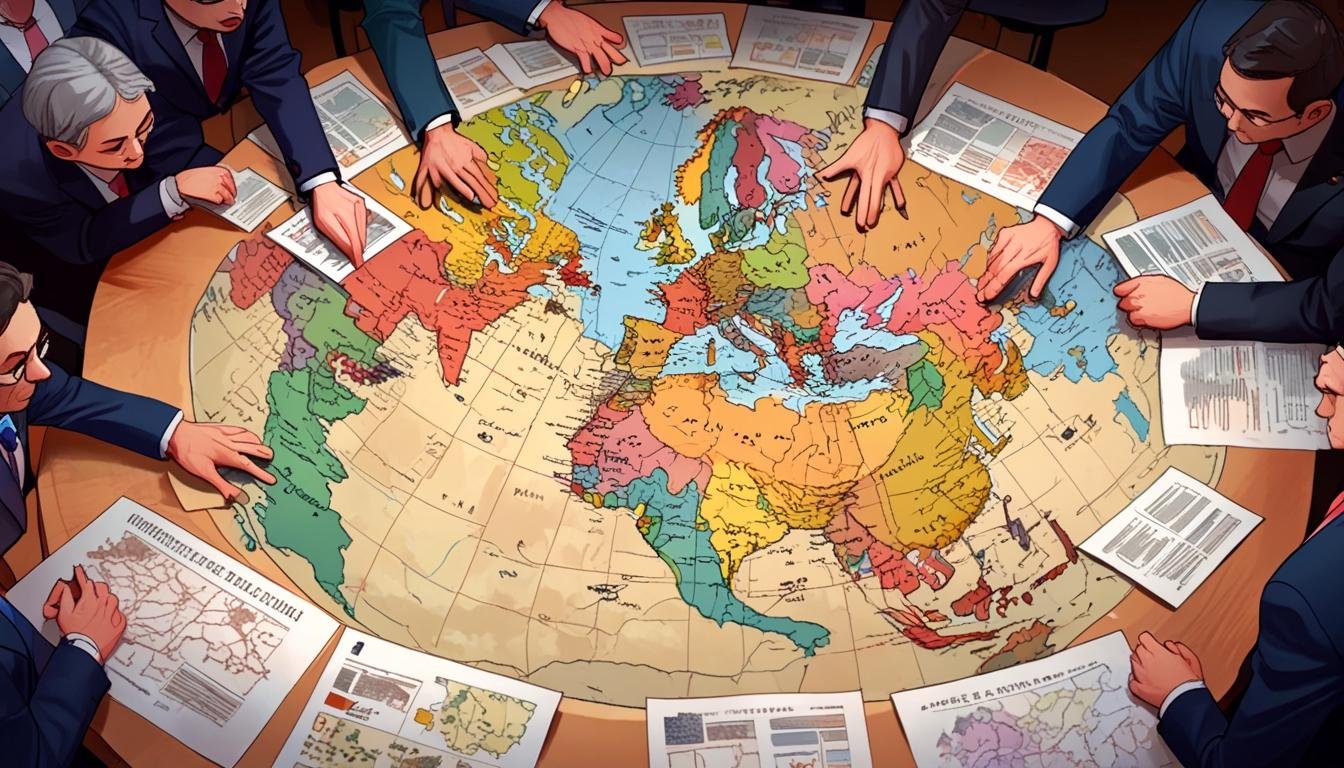
**Berlin**: Recent geopolitical tensions have led to rising concerns in Germany regarding the reliability of the US as a partner, prompting discussions on military autonomy, alternatives to the F-35 fighter jets, and the need for greater independence in various strategic sectors.
Concerns regarding the reliability of the United States as a partner are growing in Germany, particularly following recent geopolitical developments. The initial focus was on whether the US can disable the F-35 fighter jets that Germany has ordered, raising questions about military autonomy. With Washington’s abrupt cessation of intelligence information to Ukraine earlier in March, some in Berlin are now considering the possibility of cancelling the F-35 order in favour of European-produced alternatives.
This uncertainty has led to discussions in Berlin and Brussels about “de-risking,” a term that denotes reducing dependency on nations perceived as unreliable. While this concept has primarily revolved around China, there is a burgeoning sentiment that Europe should similarly de-risk from the US. Christine Lagarde, President of the European Central Bank (ECB), recently spoke to France Inter, advocating for a “march toward independence” in defence, energy, economic, and digital policies in light of the current political climate.

Monika Schnitzer, Chair of the Council of Economic Experts, emphasised the necessity of enhancing independence from the US, stating that “a greater independence from the USA, especially in technological terms, is urgently needed in light of Trump’s blunt threats to terminate the transatlantic alliance.” Schnitzer suggests that completing the digital single market and capital markets union must be prioritised while also expanding trade relations adversely affected by US measures.
Meanwhile, Moritz Schularick, President of the Institute for the World Economy, has proposed that Europe form an “Open Market Alliance” with countries like Canada, Mexico, and Japan to engage Biden’s administration collectively. Schularick has urged for a robust strategy to approach challenges posed by both China and the US.
Amid these discussions, there are reminders of past incidents, such as Adobe’s 2019 announcement to suspend accounts in Venezuela, which did not materialise. Currently, European cloud providers are witnessing an increase in requests from firms hesitant to store data with US companies. While shifting towards European providers may appeal to local politicians, it carries the risk of pushing businesses back towards reliance on Chinese services.
The efforts of the German government to de-risk from China have encountered challenges, with outgoing Economic Minister Robert Habeck limiting investment guarantees for the nation. However, significant delays in export licences for sensitive products continue to frustrate businesses, signalling that de-risking from China has not yet evidenced substantial progress. Jürgen Matthes, head of international economic policy at the Institute of the German Economy in Cologne, remarked that new direct investments in China remain stable, with many major companies choosing to maintain strong ties, reflecting a complex balancing act where global competition necessitates engagement in the Chinese market.
In response to these evolving risks, medium-sized enterprises are exploring alternative international markets to lessen their dependence on China. Jürgen Matthes highlighted the critical role of raw materials and precursor products sourced from China, warning that any significant disruption could stall production in Germany. This concern prompts the need for the next federal government to address the intricate dependencies present in the economy, particularly evident as German car manufacturers continue to derive approximately a third of their revenue from China.
As trade relations come under scrutiny, Berlin and Brussels are also considering new free trade agreements. Current discussions appear more focused on the EU’s long-negotiated yet undratified trade deal with Mercosur, as well as accelerated negotiations with India, rather than expecting concessions from the US regarding tariffs, notably in light of the political landscape under former President Trump and ongoing negotiations.
Source: Noah Wire Services

