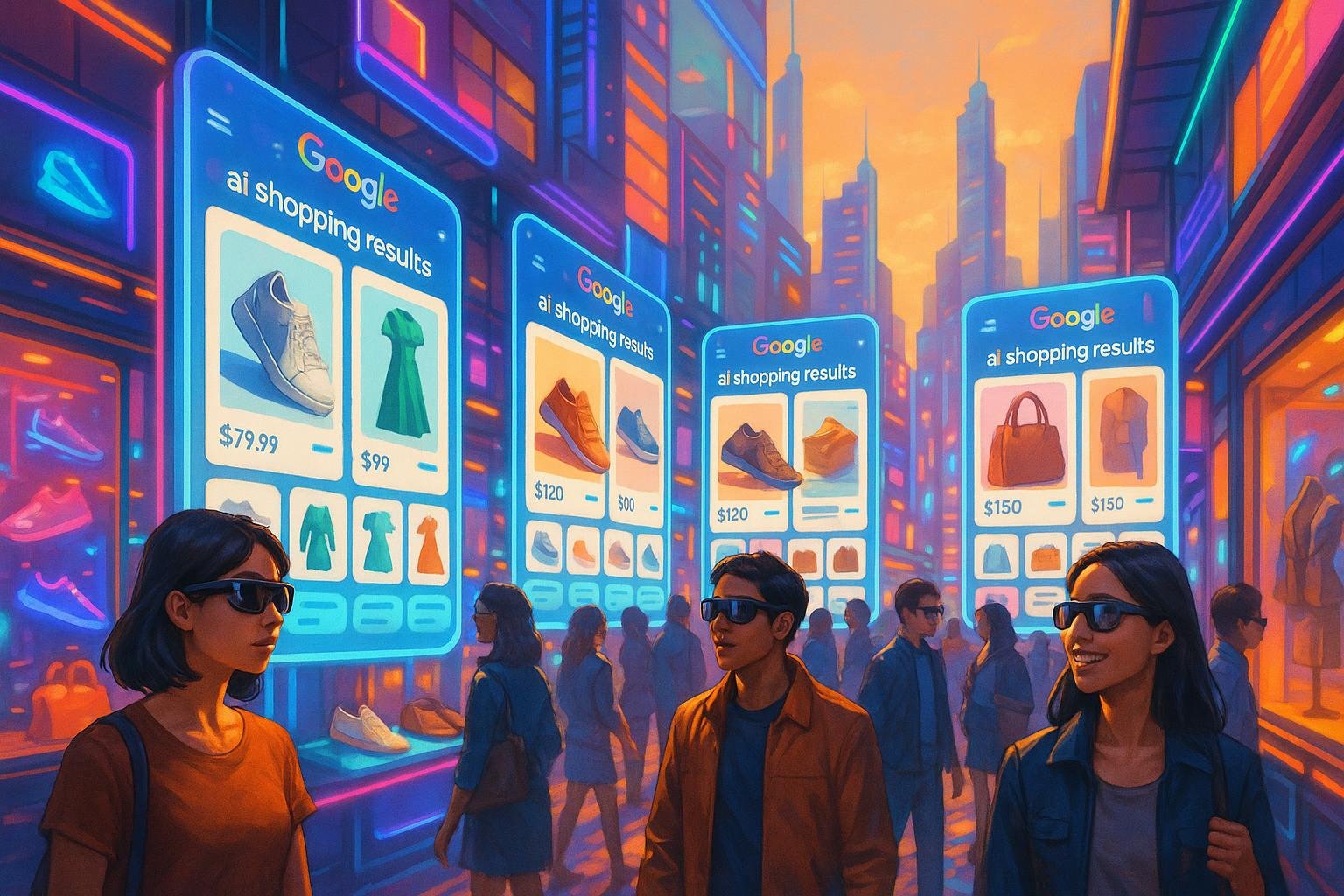
Google has begun incorporating sponsored shopping adverts into its AI-driven conversational search, advancing its vision of agentic commerce that blurs the line between discovery and purchase while raising privacy and competitive concerns.

Google has begun inserting shopping adverts into its AI Mode conversational search experience, a move that formalises the tech giant’s pivot toward what it calls agentic commerce and reshapes how marketers reach customers during dis...
Continue Reading This Article
Enjoy this article as well as all of our content, including reports, news, tips and more.
By registering or signing into your SRM Today account, you agree to SRM Today's Terms of Use and consent to the processing of your personal information as described in our Privacy Policy.
The rollout builds on Google’s broader roadmap set out in Vidhya Srinivasan’s third annual letter to the advertising industry and a same-day interview in which she argued that agentic commerce removes the longstanding trade-off between shopping speed and certainty. “For decades a person could either shop fast or shop smart,” she said. “And with agentic commerce you essentially don’t have to choose because this trade-off that one has to make between speed and certainty is being reduced with AI.”
Google frames AI Mode as a deeper, context-rich environment where queries are two to three times longer than in traditional search, producing stronger intent signals for targeting. The shopping ad format extends work the company began in October 2024 with ads in AI Overviews and follows the January launch of the Universal Commerce Protocol, a cross-industry standard Google disclosed on January 11 that it developed with partners including Shopify, Etsy, Wayfair, Target, and Walmart. According to PPC Land, UCP standardises interfaces so autonomous agents can discover products, negotiate checkout parameters, and complete purchases across merchants without bespoke integrations.
The UCP rollout has accelerated integrations enabling in-app checkout within Google’s Gemini application and AI Mode for some major retailers, but it has also provoked industry debate about the privacy and pricing implications of tightly coupling search history, conversational context, and merchant data. Critics have warned such systems could enable what they call “surveillance pricing.” Google has responded by pointing to merchant policies that bar displaying prices above those shown on retailers’ own sites while continuing to defend the benefits of a standardised commerce stack.
Srinivasan told advertisers Google is not merely transplanting legacy ad units into conversational experiences. “We aren’t just bringing ads to AI experiences in Search; we are reinventing what an ad is,” she said, according to the report by MediaPost. That reinvention includes Direct Offers, a pilot that surfaced personalised discounts to shoppers approaching purchase, and new creative generation tools powered by Gemini models. Google says Gemini underpins intent matching, creative production and campaign optimisation across its ad products, while features such as Nano Banana Pro supply advanced image generation to support brand-consistent creative at scale.
YouTube remains central to Google’s commerce strategy, with the company emphasising creator-driven influence as a conversion driver. Srinivasan’s letter highlights tools rolled out across 2024–25 that let brands find, partner with and measure creators more precisely, and Google points to substantial creator payouts, some $70 billion over three years, as evidence of the platform’s commercial reach. The company argues AI will improve creator discovery and match brands with communities most likely to convert.
Measurement and trust are presented as linchpins for the transition. Srinivasan warned that powerful campaign tooling depends on reliable data and attribution, and Google says it is re-engineering its measurement stack to give advertisers clearer signals across AI-mediated discovery, creator partnerships and traditional search. The company has also introduced conversational advisors for Ads and Analytics accounts that use Gemini models to provide optimisation recommendations and policy diagnostics.
For advertisers, the changes introduce both opportunity and complexity: AI Mode’s longer conversational journeys offer richer signals and new moments to influence purchasers, yet they also require fresh thinking about timing, context and creative so that promoted results enhance rather than interrupt user trust. As Google expands monetisation across AI-powered surfaces, the industry will be watching whether emergent standards such as UCP foster competition and interoperability, or whether they concentrate influence and commercial data within a smaller set of platforms.
Source: Noah Wire Services
Subscribe to Industry Updates