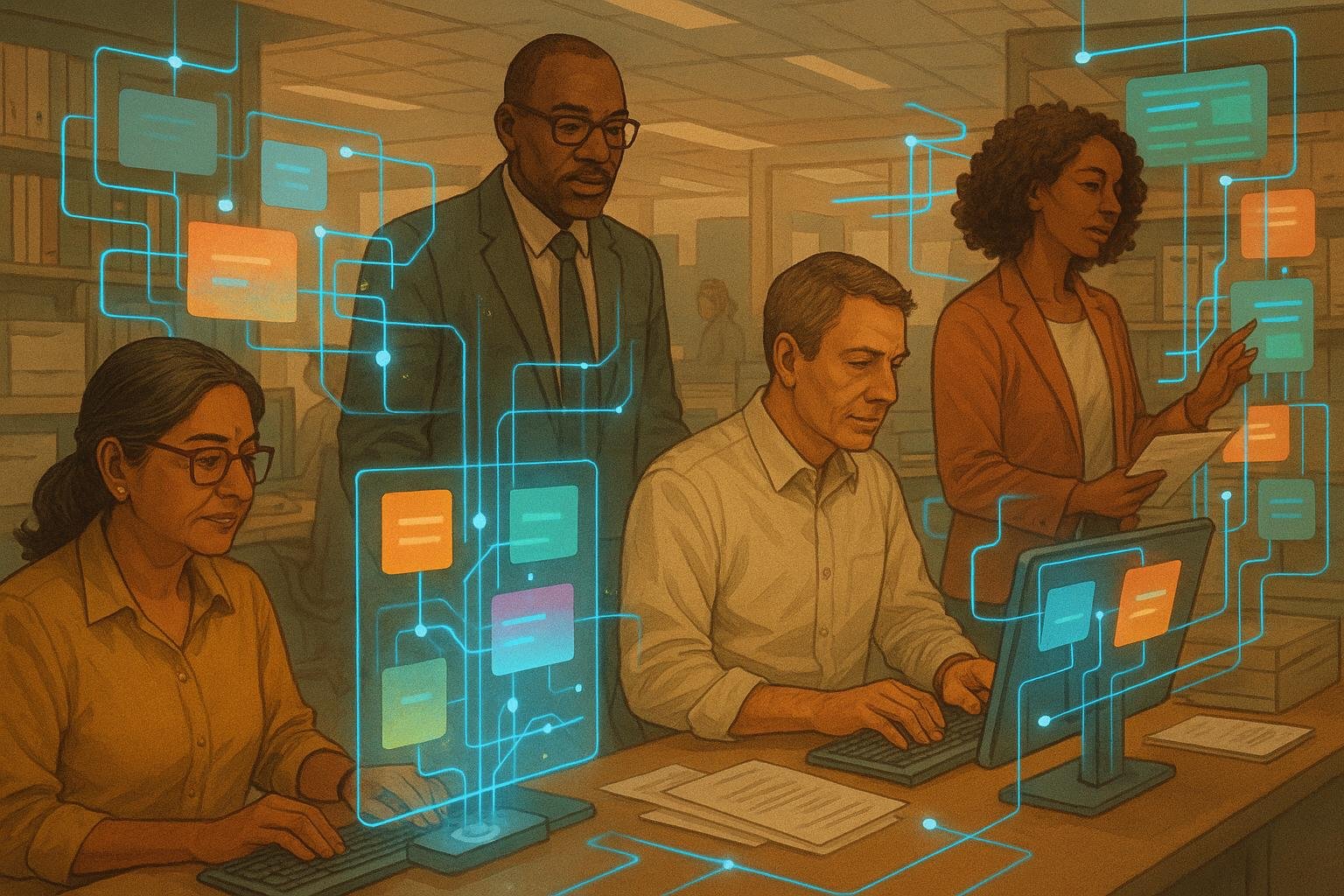
Goldman Sachs collaborates with Anthropic to create AI-powered and the bank aims to streamline operations such as trade processing, client onboarding, and compliance, potentially transforming back-office functions across finance.

Goldman Sachs has been quietly building what it describes as a new generation of autonomous AI employees, partnering with Anthropic to create agents intended to carry out some of the bank’s most repetitive, rules-driven operations. According to CNBC, the two organisations have spent the past six months embedding Anthropic engineers inside Goldman teams to co-develop systems based on Anthropic’s Claude model, with plans to roll the tools out shortly.
Marco Argenti, Goldman’s chief information officer, told CNBC the aim is to produce “digital co-workers” capable of collapsing the time taken for tasks such as trade and transaction accounting, client due diligence and onboarding. Early internal testing, as reported by MLQ.ai, suggests the technology has been trialled on processes covering roughly $2.5 trillion of assets under supervision and delivered measurable efficiency gains , including a reported 30% reduction in client onboarding time and more than 20% uplift in developer productivity during pilot phases. MLQ.ai also said the pilots have focused on reconciliation, KYC and AML workflows.
Goldman first experimented with an AI coding assistant, known internally as Devin, but teams found Claude’s combination of document-processing strength and capacity for rule-based judgement could extend usage beyond engineering into compliance, accounting and reconciliation work. CNBC and multiple business outlets say the bank is now exploring further AI-led applications, including employee support tools and assistance in preparing investment-banking pitchbooks.
The move is consistent with CEO David Solomon’s broader, multi-year strategy to reconfigure Goldman’s operating model around generative AI while restraining headcount growth as the firm modernises its infrastructure; the company has signalled it may also reduce reliance on third-party vendors if automation proves effective. Argenti told CNBC it is still “premature” to expect job losses, though observers note the technology could alter roles in back-office functions that today employ thousands.
The partnership arrives amid wider debate over white‑collar automation. Anthropic chief executive Dario Amodei has publicly warned of risks to professional roles from generative AI, and IBM’s CEO Arvind Krishna has said a substantial share of document-matching jobs , such as accounts payable , could ultimately be automated. Industry analysts caution that while pilots show promising time and productivity improvements, scaling such systems across complex, regulated finance operations will require careful validation, oversight and integration with existing controls.
Goldman and Anthropic have not published a detailed timetable for deployment or disclosed the full scope of tasks to be automated. The company statements to date emphasise potential efficiency gains and product development, while independent reports provide the first figures from trials. As with other financial institutions testing generative AI, the balance between operational savings, regulatory risk and workforce impact will determine how quickly these “digital co-workers” move from pilot programmes into routine use.
Source: Noah Wire Services