


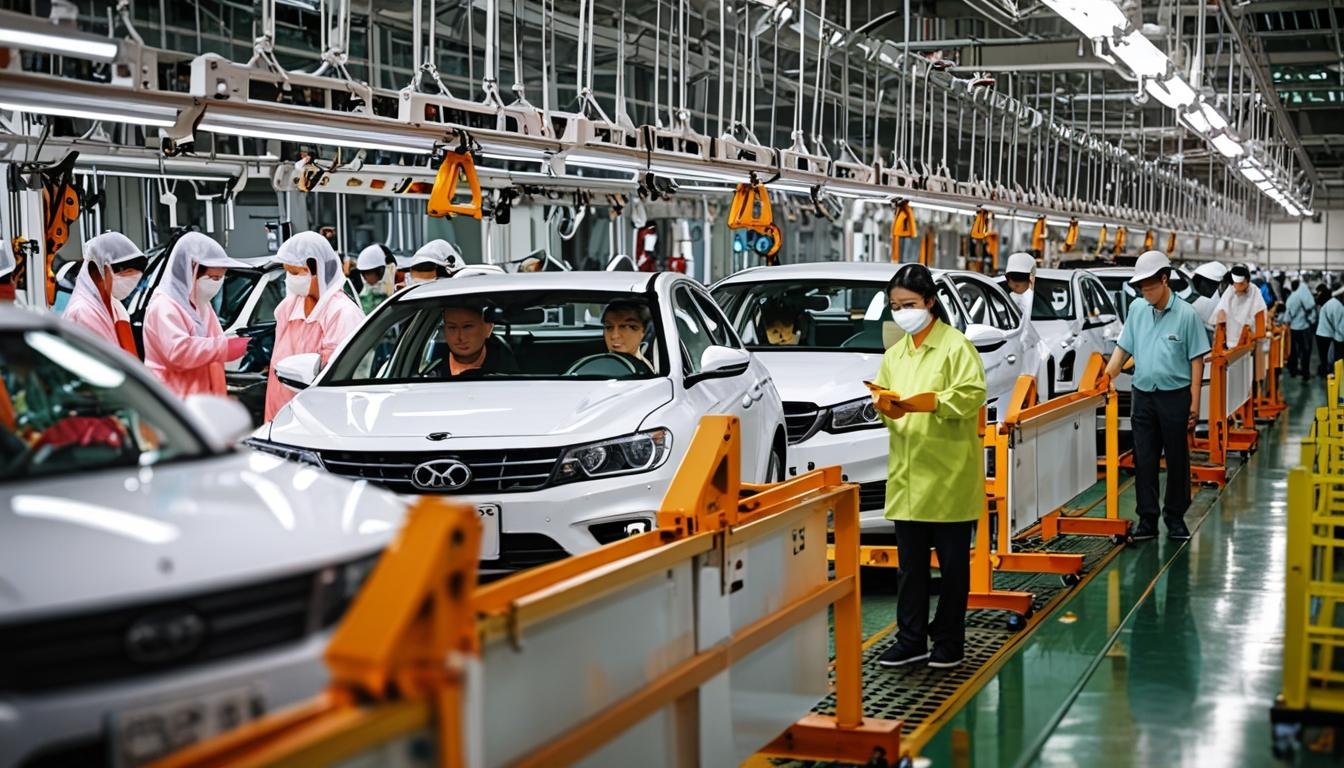
**Seoul**: General Motors Korea is under pressure as the US prepares to impose a 25% tariff on imported vehicles, risking significant job losses and potential withdrawal from Korea, prompting calls for government intervention to secure the company’s future in the domestic market.
General Motors (GM) Korea is confronting significant challenges as the United States announces plans to impose a 25-percent tariff on imported vehicles, which is set to take effect on April 3, 2024. This impending tariff, as highlighted by U.S. President Donald Trump, positions GM Korea at a precarious juncture, particularly as the company relies heavily on exports to the U.S. market for its survival.
In 2023, GM Korea’s exports to the United States constituted a staggering 83.8 percent of its total vehicle production. With the looming tariff potentially driving up costs, industry experts predict a swift decline in profitability for the automaker if the full tariff is implemented. Lee Ho-geun, an automotive engineering professor at Daeduk University, noted, “GM Korea will have to obtain a partial tariff exemption for a certain portion of its vehicles exported to the U.S.,” emphasising the critical nature of securing such an exemption to mitigate possible adverse effects.

The professor warned that without any exemptions, the company may find itself with no alternative but to withdraw from the Korean market and relocate its production facilities abroad, which could have wider implications for the Korean economy. He stated, “If the tariff is imposed without any exemptions, the carmaker has no choice but to withdraw its business and relocate its production lines to other countries.”
In terms of performance, GM Korea sold a total of 499,559 vehicles last year, predominantly driven by strong exports of its Chevrolet Trax Crossover. However, domestic sales suffered a notable decline, with only 24,800 vehicles sold in Korea, equating to around 5 percent of total sales. Additionally, a dramatic 35.9 percent drop in domestic sales was reported for 2024, heightening concerns that GM Korea could exit the South Korean market entirely.
Such a withdrawal would pose significant risks to the domestic economy, particularly regarding job retention. GM Korea operates manufacturing facilities located in Incheon’s Bupyeong District and Changwon in South Gyeongsang Province, employing approximately 11,000 workers.
Experts underline the necessity for the South Korean government to step in with strategic measures to ensure GM Korea’s continued operation within the country. Kim Dae-jong, a professor of business administration at Sejong University, asserted that “the government is advised to offer a set of tax or any other form of incentives to GM Korea,” indicating that a cooperative approach could benefit both parties involved.
In response to these challenges, GM Korea is likely to seek additional support from the South Korean government to offset the potential costs associated with production relocation. A company official commented, “We will examine various scenarios,” reflecting the seriousness with which GM Korea is approaching its future amid the tariff threat.
As businesses and officials prepare for the impending changes, Korea’s Ministry of Trade, Industry and Energy is expected to announce a series of emergency measures aimed at alleviating the impact of the U.S. tariff on local automakers, with further details anticipated in early April.
Source: Noah Wire Services

