


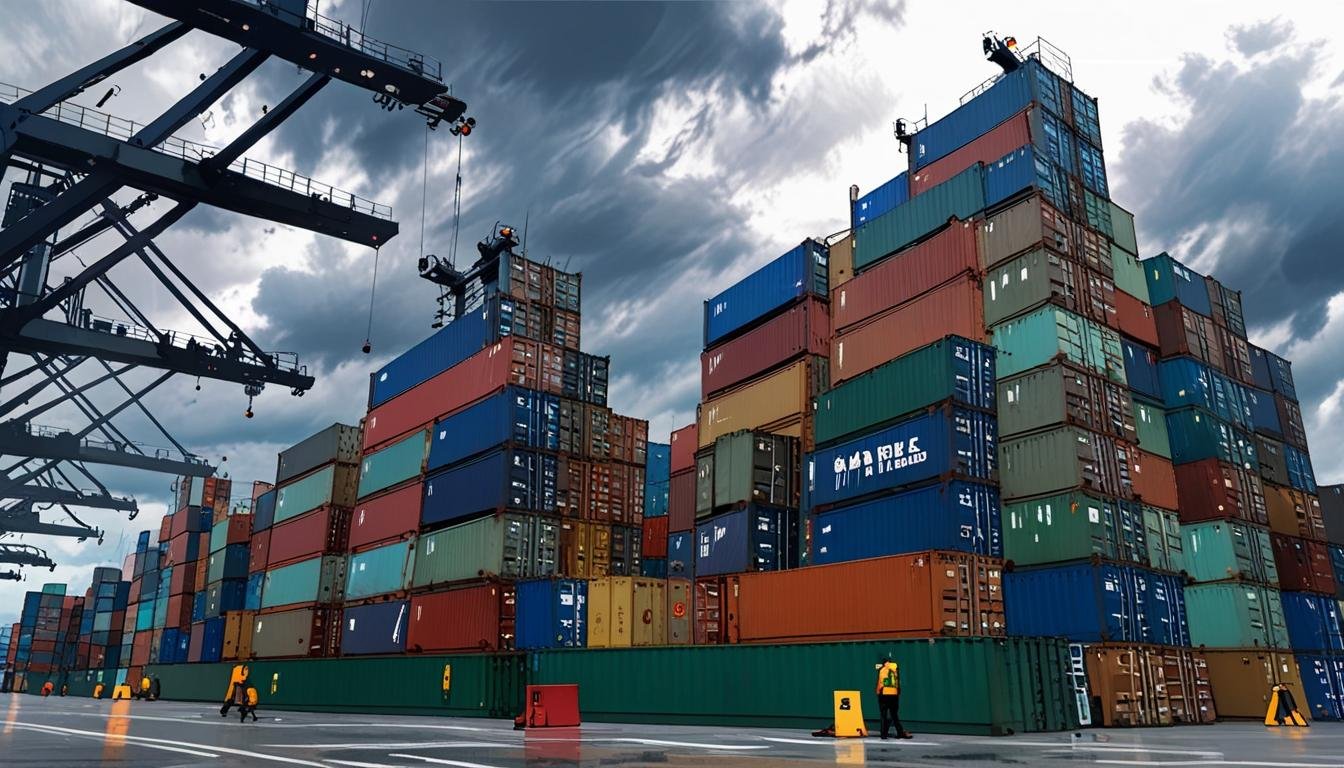
**London**: In 2025, international businesses face rising tariffs, trade barriers, and geopolitical instability, driving a need for strategic adaptation. Supply chain leaders highlight these challenges as key areas of concern, urging organisations to build resilience and compliance amid shifting trade regulations and potential disruptions.
In 2025, businesses operating on a global scale are confronted with a myriad of challenges concerning cross-border trade, predominantly driven by a surge in tariffs and trade barriers. These developments have been largely seen since 2020, as countries emphasise the need to safeguard national security, protect local industries, and advance foreign policy objectives. As such, high-tech, dual-use, and artificial intelligence technology, along with the necessary materials for their production, particularly semiconductors, have become focal points of increased trade tensions and tariffs.
The Descartes 2024 survey highlights that logistics and supply chain leaders identify rising tariffs and trade barriers as the most pressing issues they face today. This concern spans organizations of varying sizes, although it has proven to be a greater worry for companies experiencing rapid growth. In light of potential new tariffs on an extensive range of goods and countries, U.S. importers are preparing for the consequential impact, keenly aware that re-engineering sourcing strategies may be crucial to offsetting rising costs. Concurrently, China has begun implementing new trade controls affecting U.S. companies such as Raytheon, Boeing, and Lockheed Martin, recently adding 28 entities to an export control list, hinting at a willingness to counteract U.S. sanctions.

Historically, China has employed non-tariff barriers—such as administrative difficulties, inspections, and quotas—in trade conflicts. These barriers significantly contributed to a 50% reduction of imports from the U.S. during the height of U.S.-China trade tensions in 2018-2019. Thus, the possibility of similar disruptions returning has become a significant concern for businesses reliant on international trade.
Beyond tariffs, companies face additional threats to their supply chains. Factors such as extreme weather events, cyberattacks, labour shortages, and strikes are currently constraining the movement of raw materials and finished goods. The lingering impact of pandemic-induced supply chain chaos has prompted business leaders to consider how to best navigate new disruptions that may arise from geopolitical conflicts and natural disasters. Notably, larger organisations, with over 1,000 employees, have identified supply chain disruption as their leading trade challenge, according to the Descartes survey, further indicating that complexity engenders vulnerability when it comes to maintaining agile operations.
Geopolitical instability must also be factored into organisational strategies. The emergence of an informal alliance between China, Russia, Iran, and North Korea—collectively termed CRINK—coupled with Russia’s ongoing war in Ukraine and escalating tensions in the Middle East, has created an unpredictable environment for global traders. The survey revealed that not only larger but faster-growing companies consider geopolitical instability a significant challenge, suggesting that businesses must adopt rigorous strategies to identify and respond to volatility in key markets.
Compliance with evolving global trade regulations has become paramount as well. Increasing complexity surrounding customs and regulatory compliance—ranging from tariff updates to new sustainability standards—demands that supply chain leaders focus on adherence to emerging Environmental, Social, and Governance (ESG) requirements. The Descartes survey indicates that while mid- to large-size organisations view ESG compliance as a principal challenge in international trade, smaller businesses are also recognising its importance in their operational planning.
In response to these multifaceted challenges, many businesses are actively working to build resilient supply chains. They are employing strategies that integrate risk assessments and contingency planning to swiftly adapt to potential disruptions. The good news is that despite these hurdles, many companies continue to report steady growth and anticipate revenue acceleration in the forthcoming years.
Utilising trade and intelligence tools, these organisations are striving to maintain sustainable growth by staying abreast of tariff modifications, trade compliance regulations, and identifying vulnerabilities within their supply chains. As the complexities of international trade evolve, business leaders are recognising the necessity of adapting their operations to meet regulatory requirements while minimising the impacts of potential disruptions on their supply chains. Jackson Wood of Descartes has underscored the importance of leveraging technology and strategic planning to navigate the challenges the global trade environment presents.
Source: Noah Wire Services

