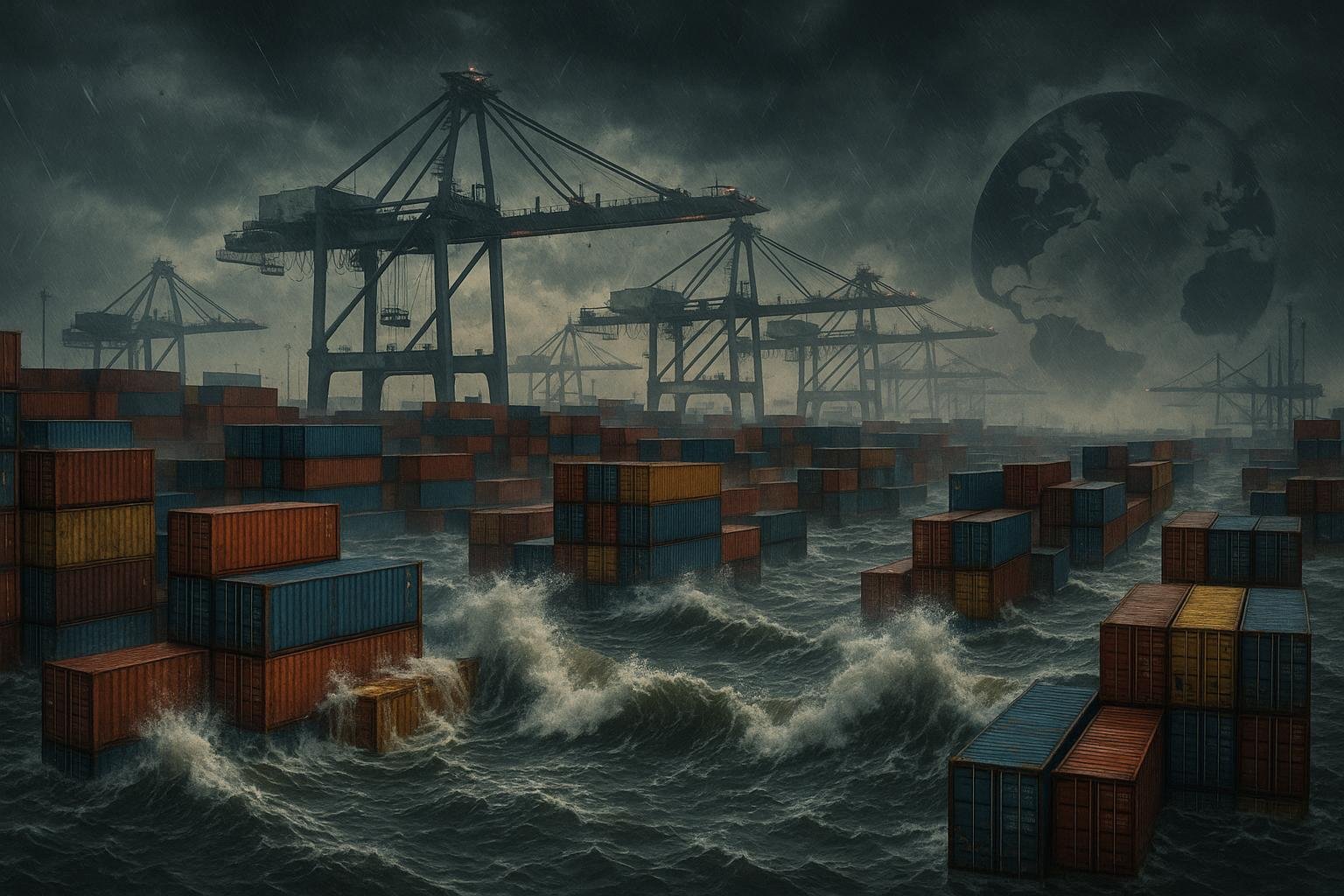
Businesses worldwide are confronting escalating challenges in supply chain resilience amid geopolitical tensions, logistical delays, and demand shifts ahead of the post-2025 peak period, prompting calls for organisational agility and strategic realignment.

In the evolving landscape of global supply chains, businesses face unprecedented challenges as they navigate shifting consumer demand, geopolitical tensions, and logistical disruptions. Looking ahead to the post-2025-...
Continue Reading This Article
Enjoy this article as well as all of our content, including reports, news, tips and more.
By registering or signing into your SRM Today account, you agree to SRM Today's Terms of Use and consent to the processing of your personal information as described in our Privacy Policy.
Economic slowdowns offer an opportunity for markets and companies to evolve. Ineffective products are phased out, existing lines are refreshed, and new offerings introduced. Such shifts inevitably disrupt inventory and supply chain forecasts, particularly as departments operating in silos struggle to share accurate demand signals. The interconnectedness of suppliers, especially beyond the primary tier, means that issues in one region or sector can ripple across entire supply networks.
These complexities have prompted calls from some quarters for firms to shorten supply lines through on-shoring or near-shoring manufacturing. However, for most businesses, the significant time and resource investment these strategies require make short-term implementation impractical. Moreover, there is growing scepticism about the presumptive benefits of adopting artificial intelligence (AI) as a catch-all solution for supply chain woes. Without clear and coherent strategy, processes, and organisational understanding, AI’s impact on supply chain performance remains limited.
A foundational step towards improvement lies in gaining a clear understanding of an organisation’s ‘supply chains’, a plural term that better reflects the multiple, varied flows of goods and data rather than a singular linear process. Employing conceptual tools such as the River of Demand, an analytical framework adapted from quality management methodologies, helps organisations visualise the barriers, delays, and distortions that skew demand signals as they propagate from customers through internal planning functions. Through this approach, companies can better plan capacity and streamline execution, aligning operational responsiveness with actual demand patterns.
Demand analysis, including the calculation of the Coefficient of Variation (CoV) across sales data, reinforces that different product lines may require distinct supply chain management techniques. This nuanced comprehension encourages collaboration and coordination across corporate functions, which is essential for successful planning and execution.
Compounding these internal challenges are broader global disruptions and geopolitical dynamics. For instance, Chinese export controls have prompted around one-third of surveyed European firms to explore alternative sourcing options, as delays in obtaining export licences have disrupted supply chains. Europe’s automotive sector has experienced production halts linked to these restrictions. Similarly, Western concerns about dependence on Chinese rare earth minerals and drone technology are fuelling efforts to diversify supply chains and bolster domestic manufacturing capacities, driven by tensions surrounding conflicts such as the war in Ukraine and potential Taiwan crises.
Despite such tensions, some major corporations, like Mercedes-Benz, report resilience in their supply chains amid these export restrictions, highlighting the value of rigorous supply chain visibility and risk preparedness.
Meanwhile, logistical disruptions persist worldwide. In the Red Sea, Houthi rebel attacks on cargo ships have forced the rerouting of shipments away from the strategically vital Suez Canal, lengthening transit times and increasing costs. Combined with drought-related constraints at the Panama Canal, these disruptions have hampered the flow of components crucial to industries ranging from automotive to fashion, causing temporary shutdowns in production lines for firms including Tesla and Volvo.
Additionally, infrastructure incidents such as the collapse of the Francis Scott Key Bridge in Baltimore have paralyzed the Port of Baltimore, a key US East Coast gateway. The closure has forced shipping firms to divert cargo to other ports, resulting in delays, elevated transportation costs, and logistical bottlenecks affecting diverse commodities including automobiles and industrial materials.
In the United States, small retailers reliant on imports from China continue to face holiday supply challenges amid tariff fluctuations. Attempts to shift production to Southeast Asia have often led to higher costs and delays, forcing many to return to Chinese manufacturing despite ongoing trade uncertainties.
Given this confluence of factors, demand variability, geopolitical pressure, logistical constraints, and internal organisational challenges, businesses must embrace a comprehensive and dynamic understanding of their multiple supply chains. This includes recognising the importance of cooperative behaviour across functions, transparent communication of changes in demand signals, and investing in capacity flexibility. Only through such integrated and adaptive approaches can companies hope to mitigate risks and capitalise on emerging opportunities in an increasingly complex global supply landscape.
Source: Noah Wire Services
Subscribe to Industry Updates