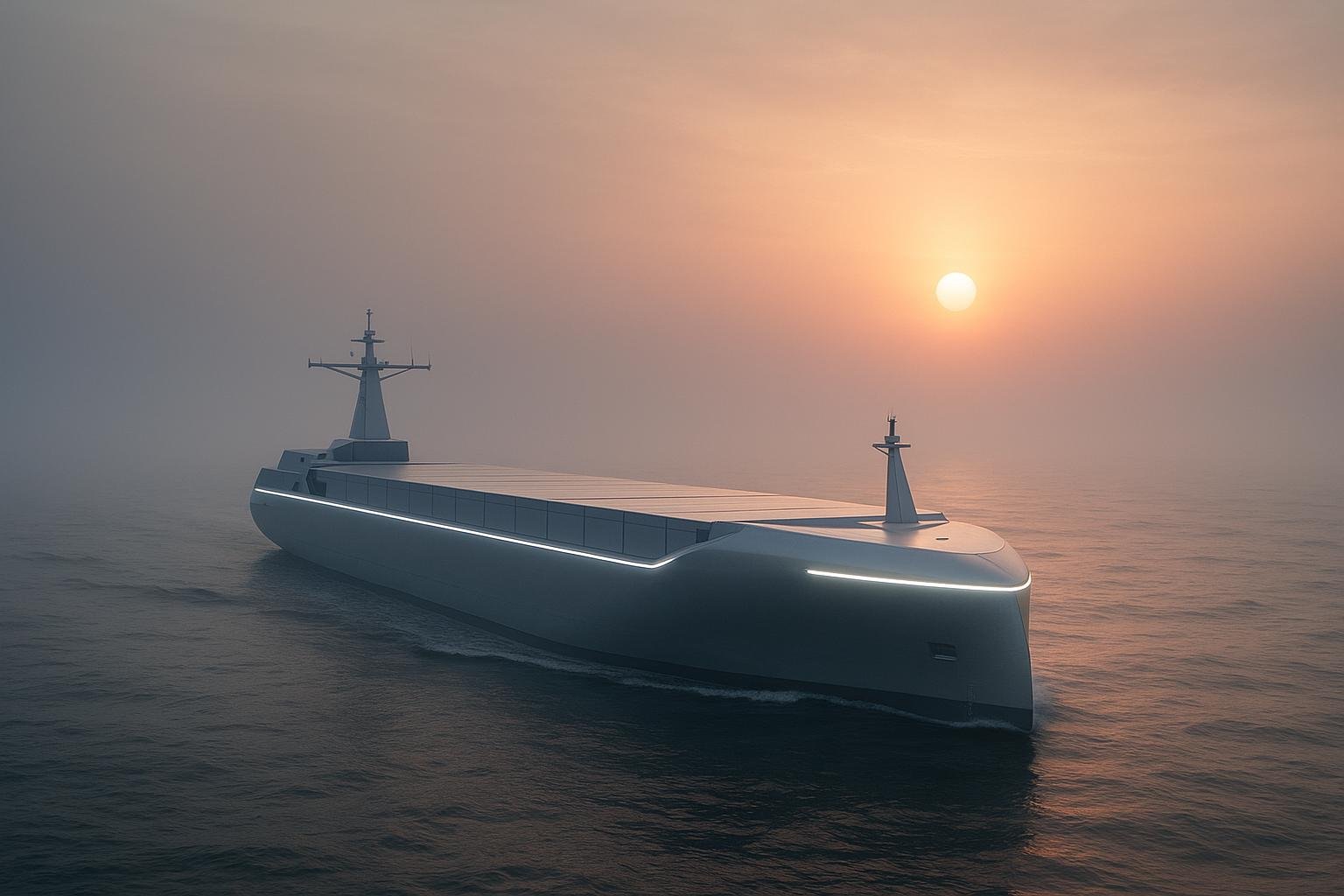
Advancements in IoT, AI, and green fuels are revolutionising international freight, with industry leaders pushing towards smarter, greener, and autonomous maritime operations amid regulatory and consumer-driven change by 2026.

Understanding the future trajectory of global shipping is crucial for businesses involved in international trade, as the industry prepares for significant shifts driven by technology, sustainability imperatives, and evolving consumer expectations....
Continue Reading This Article
Enjoy this article as well as all of our content, including reports, news, tips and more.
By registering or signing into your SRM Today account, you agree to SRM Today's Terms of Use and consent to the processing of your personal information as described in our Privacy Policy.
Technological innovation continues to serve as the primary engine transforming global shipping efficiency. Key advancements such as the Internet of Things (IoT) enable real-time shipment tracking, offering precise monitoring of cargo conditions including temperature and humidity. This capability is particularly vital for sensitive goods like pharmaceuticals and perishables, ensuring their safe and timely arrival. Artificial intelligence (AI) further bolsters operational effectiveness through predictive logistics that optimise routes, reduce fuel consumption, and enhance demand forecasting. These AI-driven models help mitigate bottlenecks and improve fleet utilisation, lowering both emissions and costs. Additionally, blockchain technology is emerging as a secure, tamper-proof solution for customs documentation and trade transparency, anticipated to be widely adopted at major ports by 2026.
An ambitious push towards sustainability underpins much of the industry’s evolution. The shipping sector, responsible for about 3% of global greenhouse gas emissions, is confronting mounting regulatory and market pressures to decarbonise. Shipping companies worldwide are investing heavily in alternative fuels such as biofuels, liquefied natural gas (LNG), ammonia, and hydrogen, which promise substantial emissions reductions. Advances in energy-efficient vessel design, employing hull optimisation, solar-assisted propulsion, and smart engines, complement fuel upgrades by lowering operational energy needs. Additionally, stricter international maritime regulations on sulfur emissions, ballast water discharge, and waste management compel firms to adopt robust environmental management systems.
Significantly, global governance structures are moving towards formalising these sustainability goals. The International Maritime Organization (IMO) has proposed a groundbreaking global tax on greenhouse gas emissions from ships, expected to commence in 2027 at a rate of $100 per ton of emissions exceeding established limits. Forecasted to generate up to $13 billion annually, this fund aims to finance cleaner shipping technologies and support developing nations in their transitions. Furthermore, the IMO’s ‘Net-zero Framework’ aspires to legally mandate net-zero emissions by 2050, setting fuel standards and implementing emissions pricing. While broadly supported by environmental advocates and numerous shipping entities, including nearly 200 companies endorsing the global fee, some nations such as the United States, Saudi Arabia, and Russia have voiced opposition or concerns about economic impacts. The adoption of the framework has recently faced a one-year delay, introducing uncertainty, yet the industry is urged to continue progress towards compliance. This global initiative contrasts with regional regulations like the European Union’s emissions trading scheme and the FuelEU Maritime regulation, which are independently advancing stricter standards.
Alongside regulatory change, technological breakthroughs in automation and AI are promising to redefine maritime operations. South Korea’s Hyundai Glovis, in cooperation with Avikus (part of HD Hyundai), is poised to launch the world’s first AI-controlled autonomous car carriers by mid-2026. These Level-2 Maritime Autonomous Surface Ships (MASS) will feature advanced AI systems capable of remote control and real-time route optimisation, significantly enhancing fuel efficiency and operational safety. Their flagship vessel, “Sunrise,” will be the largest AI-driven ship to date, heralding a new era where autonomous shipping could streamline long-haul ocean routes and reshape global logistics networks.
The sector also faces evolving consumer demands fueled by the rise of global e-commerce, which prioritises speed, transparency, and reliability. This transformation necessitates enhanced last-mile delivery solutions, integrating international freight operations seamlessly with automated, drone-assisted, and analytically optimised final-leg logistics. Real-time tracking dashboards leveraging IoT and AI provide customers with instant updates and predictive arrival information, thereby increasing satisfaction and trust.
The COVID-19 pandemic starkly exposed vulnerabilities within global supply chains, underscoring the importance of resilience and risk management going forward. Companies are increasingly adopting diversified sourcing strategies, flexible routing options, and AI-powered predictive analytics to anticipate disruptions from natural disasters, geopolitical tensions, or port congestion. Collaborations with experienced freight brokers and customs experts fortify supply chain robustness, ensuring continuity amid volatility.
In summary, the global shipping industry in 2026 will be characterised by its embrace of intelligent logistics, environmental stewardship, and consumer-centric innovation. Businesses poised to adapt through digital transformation, investment in green technologies, and resilient supply chain frameworks will gain a crucial competitive edge. While challenges remain, especially regarding regulatory harmonisation and fuel market uncertainties, the trajectory towards a sustainable, tech-driven maritime future is increasingly clear. As global trade intensifies, partnerships with knowledgeable logistics providers like Atlanta Customs Brokers, which combine technological expertise and regulatory compliance, will be essential for companies to navigate and thrive in this dynamic environment.
Source: Noah Wire Services
Subscribe to Industry Updates