


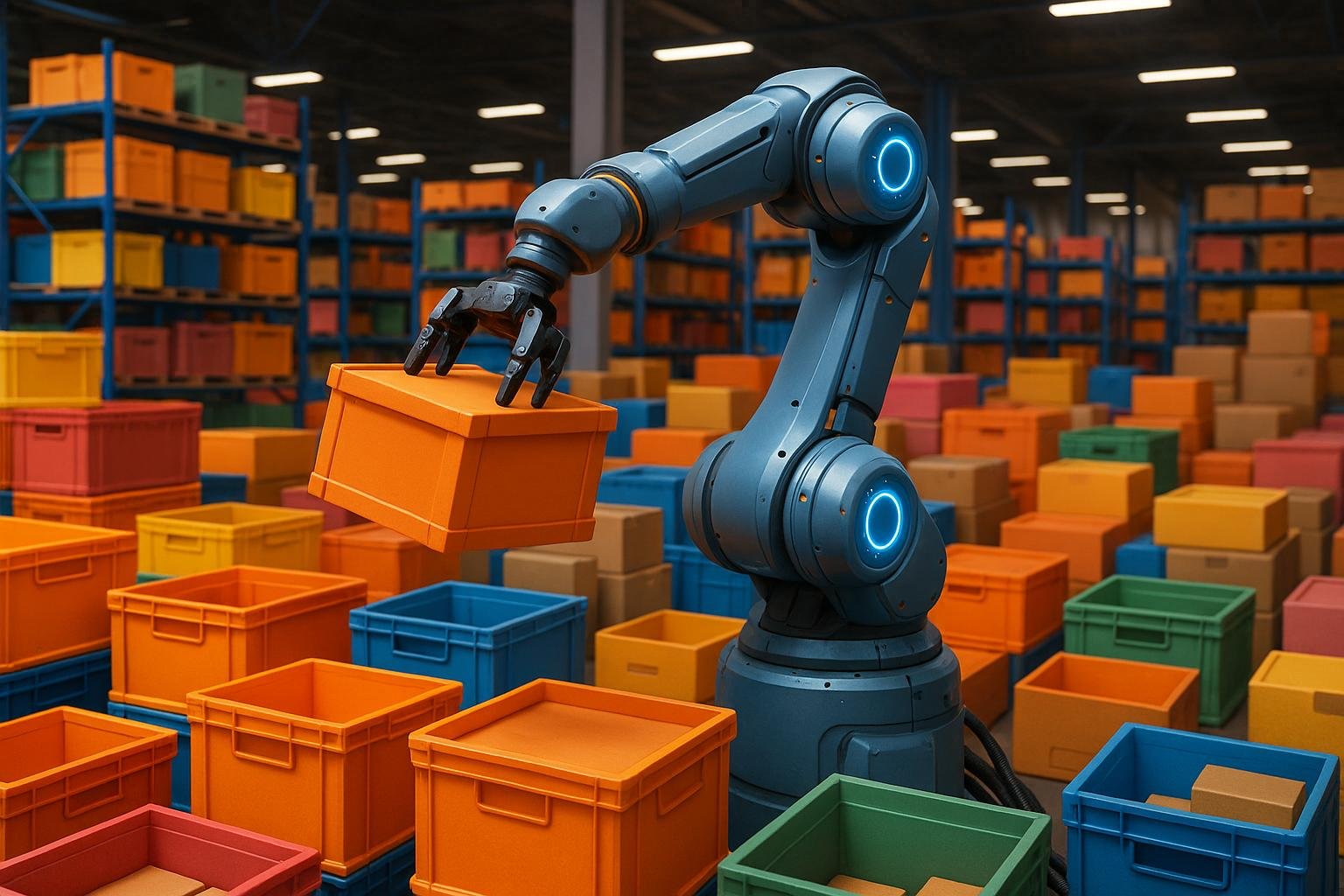
Shoppers and logistics managers are watching humanoid robots move from lab curiosities to real warehouse helpers, promising safer, faster handling where it matters most. From pallet work to pick-and-pack, these human‑form machines could change how distribution centres operate , and why that matters for costs, staffing and resilience.
Essential takeaways

- Adaptable to human spaces: Humanoid robots can use existing aisles, ladders and pallet setups,...
Continue Reading This Article
Enjoy this article as well as all of our content, including reports, news, tips and more.
By registering or signing into your SRM Today account, you agree to SRM Today's Terms of Use and consent to the processing of your personal information as described in our Privacy Policy.
Why humanoid robots are suddenly more than a gimmick
The striking thing about the latest humanoid platforms is how human they feel in motion , not just stiff arms and swivels, but a flowing gait and wrist dexterity that smells faintly of possibility. Advances in AI perception, lightweight actuators and safety sensing mean these machines can work where classic automation struggles: irregular objects, narrow aisles and ad‑hoc tasks that once demanded human judgement.
Supply chain leaders have long invested in conveyors and fixed robots for speed, but those systems expect neat inputs. Humanoids, by contrast, are being designed to cope with the chaos of real life: missing labels, odd shapes, temporary storage changes. That adaptability is why firms are piloting them in fulfilment centres and returns hubs rather than just testing in spotless labs [1][3].
How the backstory explains current momentum
The move toward humanoids isn’t sudden; it’s the result of stacked improvements. AI vision got better at recognising and localising items. Motors became lighter and more energy efficient. And a new generation of startups and established robotics firms attracted big capital, accelerating scale-up and manufacturing [3]. Meanwhile, markets in Asia and North America are investing heavily, so the supply and price points are evolving fast [4].
Importantly, analysts now expect robotics to become a routine part of supply chain staffing models. Gartner forecasts a shift where some managers will oversee robots as part of their teams by 2030, signalling an industrywide pivot to hybrid human–robot operations [7].
Where they beat classic automation , and where they don’t
Humanoids win when tasks are variable: picking soft or oddly shaped items, opening boxes, climbing short ladders, or handling returns that look nothing like a textbook SKU. They slot into existing workstations and use tools humans already work with, which cuts renovation costs.
On the flip side, for high‑speed, repetitive cycles , think hundreds of identical picks per hour on a conveyor , specialised arms still outperform humanoids on throughput and cost per pick. Energy use and maintenance complexity are also higher right now, so large deployments will be gradual and targeted rather than wholesale replacements.
Practical guidance for logistics teams thinking about pilots
If you’re running a warehouse, start small and specific. Pick a task where human variability causes most errors , for instance, returns processing or late‑night replenishment , rather than trying to automate every operation at once. Measure pick accuracy, cycle time and downtime, and compare those metrics to human-only shifts.
Consider these factors when choosing a system: payload and reach, battery life and swap logistics, IP for software integration, safety certification and the availability of local support. And plan for people , train teams for supervision, maintenance and exception handling. The best pilots turn employees into advocates by involving them early.
Regulatory, social and market pressures shaping adoption
Deploying humanoids touches on more than productivity. Safety standards, union negotiations and public perception matter. Regulators are catching up, setting rules for collaborative robot safety, while labour markets react to the promise of fewer heavy‑lifting roles and more technical posts. Investors and governments are also backing robotics manufacturing, notably in Asia and the US, which will influence supply and pricing over the next five years [3][4].
What to expect next , and when it’ll matter to your bottom line
Expect a patchwork rollout through the late 2020s: targeted deployments in high‑value or variable tasks first, broader use as costs fall and maintenance support matures. Firms that plan integration early and train staff to work with robots are likely to see better returns. For many operators, humanoids will be a complement, not a replacement, smoothing bottlenecks and letting humans focus on exceptions and optimisation.
It’s an exciting pivot , robotics that feel more human in a human environment, and logistics that become more flexible as a result.
It’s a small change that can make every shift safer and a lot more adaptable.
Subscribe to Industry Updates

