


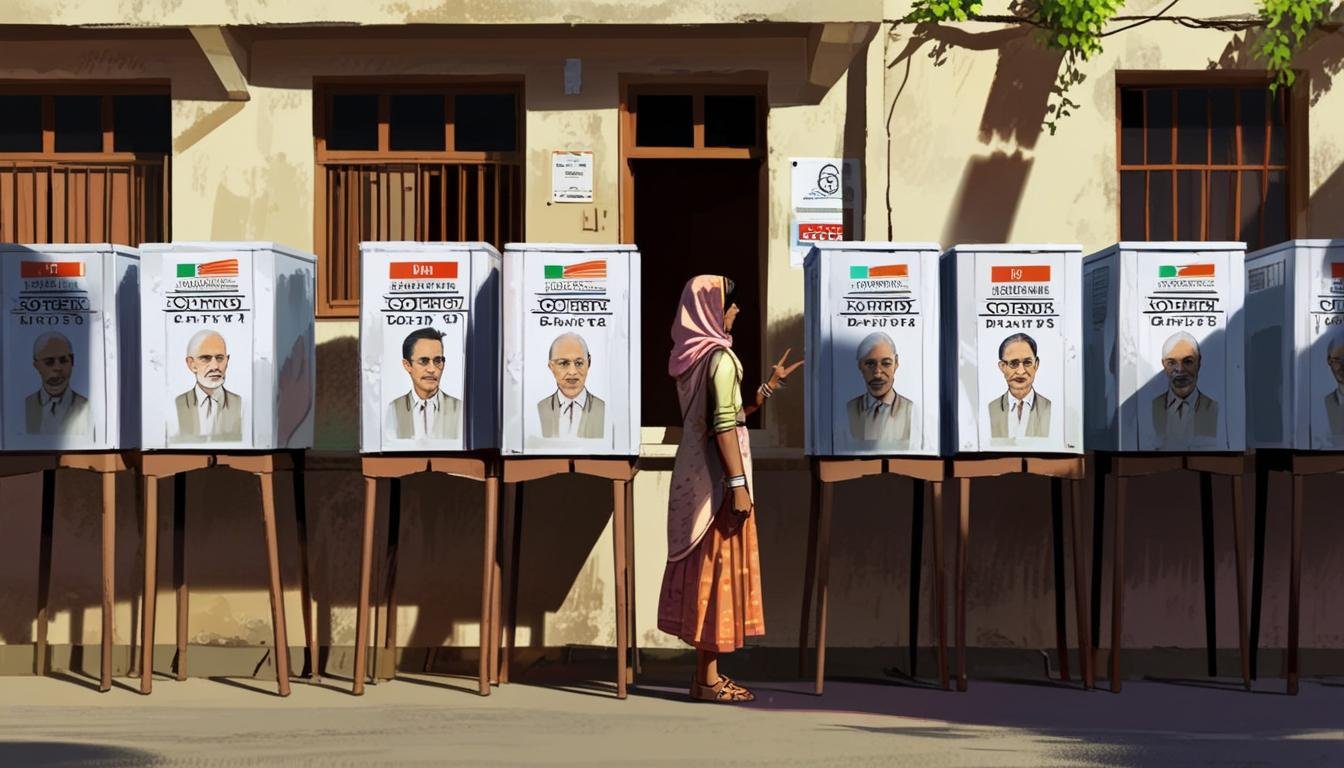
**Delhi**: The political dynamics between India and the US have come under scrutiny as funding controversies emerge, notably the blocking of $21 million meant for voter turnout initiatives amidst accusations of foreign interference in Indian elections and concerns over US foundations’ influence on domestic politics.
Since Prime Minister Narendra Modi took office in 2014, India has been the focus of a complex interplay of narratives shaped by various Western governments, media outlets, and think tanks. In a recent analysis, Kanwal Sibal, a retired Indian foreign secretary and former ambassador to Russia, elaborates on the political dynamics affecting India’s relationship with the United States, particularly in light of recent funding controversies.
The Department of Government Efficiency (DOGE), established by former US President Donald Trump and championed by tech entrepreneur Elon Musk, was designed to streamline federal operations, reduce waste, and combat corruption. Central to recent discussions is the decision to block $21 million earmarked for promoting voter turnout in India, which was intended to be administered via the Consortium for Elections and Political Process Strengthening (CEPPS), based in Washington, D.C. The rationale behind this funding has raised eyebrows, particularly as voter turnout in India’s general elections was already documented at 65.79% in 2024, exceeding that of US elections.

Trump has publicly questioned the necessity of such funds, suggesting potential improprieties and speculating that these financial resources could have been aimed at enhancing the electoral prospects of opposition parties in India against Modi’s Bharatiya Janata Party (BJP). Notably, Trump stated that it was perplexing for the US to allocate these funds to a country with such high voter engagement. He expressed confusion over the amount, initially referring to it as $21 million, later revising it to $18 million and stirring suspicions suggesting “kickbacks” might be involved.
Reports within India have added another layer to the narrative, with the opposition claiming that an even larger fund, reportedly $29 million, was allocated to Bangladesh for shoring up its political landscape. This line of argument suggests a broader implication of US involvement in regional political affairs, particularly in the aftermath of a regime change in Bangladesh that some speculate may have weakened Indian interests in the neighbouring country.
As this funding controversy unfolds, the political ramifications are significant. The ruling BJP has accused opposition elements of being potential beneficiaries of external financial interference, whereas opposition parties are calling for investigations to uncover the truth behind the flow of foreign funds into Indian politics. Historically, the US has provided financial aid for development projects in India, totalling around $1.5 billion over the past decade. However, under the current government, scrutiny of foreign funding, particularly aimed at NGOs, has intensified.
Concerns regarding the nature of US-supportive entities such as USAID have surfaced, as it has been revealed that several initiatives purportedly aimed at training Indian journalists and addressing disinformation may be seen as veiled interference in India’s internal affairs. For instance, USAID has funded training efforts for fact-checking and creating positive media narratives, which critics in India argue compromise the nation’s sovereignty.
Additionally, Sibal highlighted that the scrutiny of US foundations like the Open Society Foundation and the Ford Foundation has increased, with allegations of them operating politically against the Modi administration. This growing apprehension about foreign influence coincides with a wider pattern observed in established Western media, which has chronicled a similarly critical narrative about Modi’s governance and the state of democracy in India, particularly in the lead-up to the 2024 Lok Sabha elections.
Indian External Affairs Minister S. Jaishankar has cautiously responded to revelations surrounding USAID’s activities, acknowledging that the agency was permitted into India “in good faith.” Jaishankar indicated that the current discourse around its funding practices holds its own concerns, suggesting a need for further investigation.
The broader implications of these dynamics continue to evolve. Under the Trump administration, a shift in the focus of US-India relations may see contentions arise more from trade discussions rather than human rights or democratic criticisms that characterised earlier periods. Observers note that Trump’s approach may prioritise economic negotiations, including tariffs and market access, while also seeking to maintain India’s alignment with US strategic objectives.
As the situation develops, the international community, particularly observers in India, will be watching closely to ascertain the future of US-India relations amid these complexities.
Source: Noah Wire Services

