


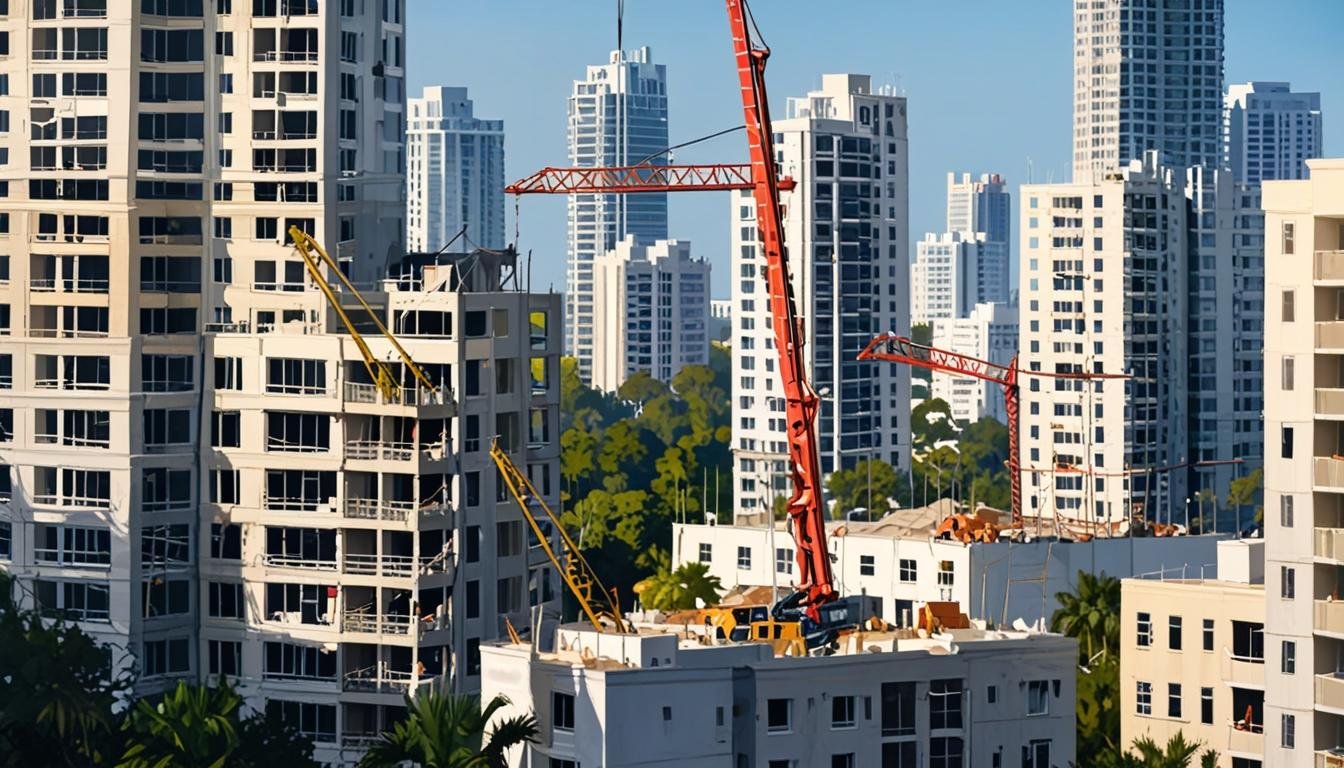
**Florida**: Contractors and developers are raising prices by up to 20% due to anticipated tariffs and inflation. CEO Jon Paul Pérez highlights how these increases reflect a protective strategy amid uncertainties in the construction market, with luxury real estate remaining strong despite the challenges.
Contractors and developers across the United States, particularly in Florida, are grappling with significant price increases largely driven by the anticipation of new tariffs and existing inflationary pressures. Jon Paul Pérez, CEO of Related Group, highlighted this trend during an interview with CNBC. He noted that subcontractors are adjusting their bids on ongoing projects, raising prices as much as 20% to cushion against the anticipated impact of tariffs introduced by President Donald Trump. These tariffs, set at 25% on certain goods imported from Canada and Mexico, including steel and aluminium, are expected to take effect broadly starting 2 April.
Pérez explained that the price hikes reflect a preemptive strategy rather than current cost changes and underscored the uncertainty in how these increased costs will ultimately be distributed between contractors and developers. “When you go through their numbers in detail and you start negotiating, you quickly find out they’re just sort of padding to protect themselves,” he remarked.

This situation exacerbates existing challenges in the real estate market, where high prices and elevated mortgage rates already put significant strain on potential buyers. According to a survey by the National Association of Home Builders, the escalating costs of construction materials could potentially add approximately $9,200 to the price of a typical home.
Related Group, known as one of the most significant developers in the United States, has over 90 projects in various stages of development, ranging from affordable housing to luxury condominiums. Pérez mentioned that the Trump administration’s stringent immigration policies could further influence construction costs, given the industry’s reliance on immigrant labour. “There will absolutely be a cost effect in our industry, in particular the construction industry,” he stated. “Losing these people will have an inflationary effect.”
Despite the challenges posed by tariffs and immigration policies, the high-end real estate market in Florida remains robust. Related Group recently sold two penthouses at their luxurious development on Fisher Island for a combined total of $150 million. They are also working on Rivage Residences Bal Harbour, a luxury oceanfront condo tower promising to provide what they term a “mega-mansion in the sky,” by merging two penthouses that may collectively exceed 20,000 square feet and be valued at over $150 million.
Chairman Jorge Pérez elaborated on the distinct nature of high-end buyers, noting their resilience in the market. He remarked, “The high-end buyer is a very particular buyer…they’re less affected; we’re not seeing a decline in that market.”
Conversely, the middle market—buyers looking at properties ranging from $1 million to $3 million— appears to be adopting a more cautious stance amid the continual uncertainty regarding tariffs and immigration. Pérez indicated that many condominium purchasers in the Miami area come from Canada and Latin America, making them particularly conscious of potential shifts in immigration laws. He recounted instances where multiple Canadian and Mexican buyers withdrew from contract negotiations due to tariff concerns. “We had a project where we just lost seven or eight Canadian and Mexican buyers that were ready to sign contracts, but when all these things came from tariffs, they didn’t want to buy. But I think that will calm down,” he acknowledged.
With the industry facing such fluctuations, the future of construction and real estate within the region remains to be seen as developers navigate these economic intricacies.
Source: Noah Wire Services

