


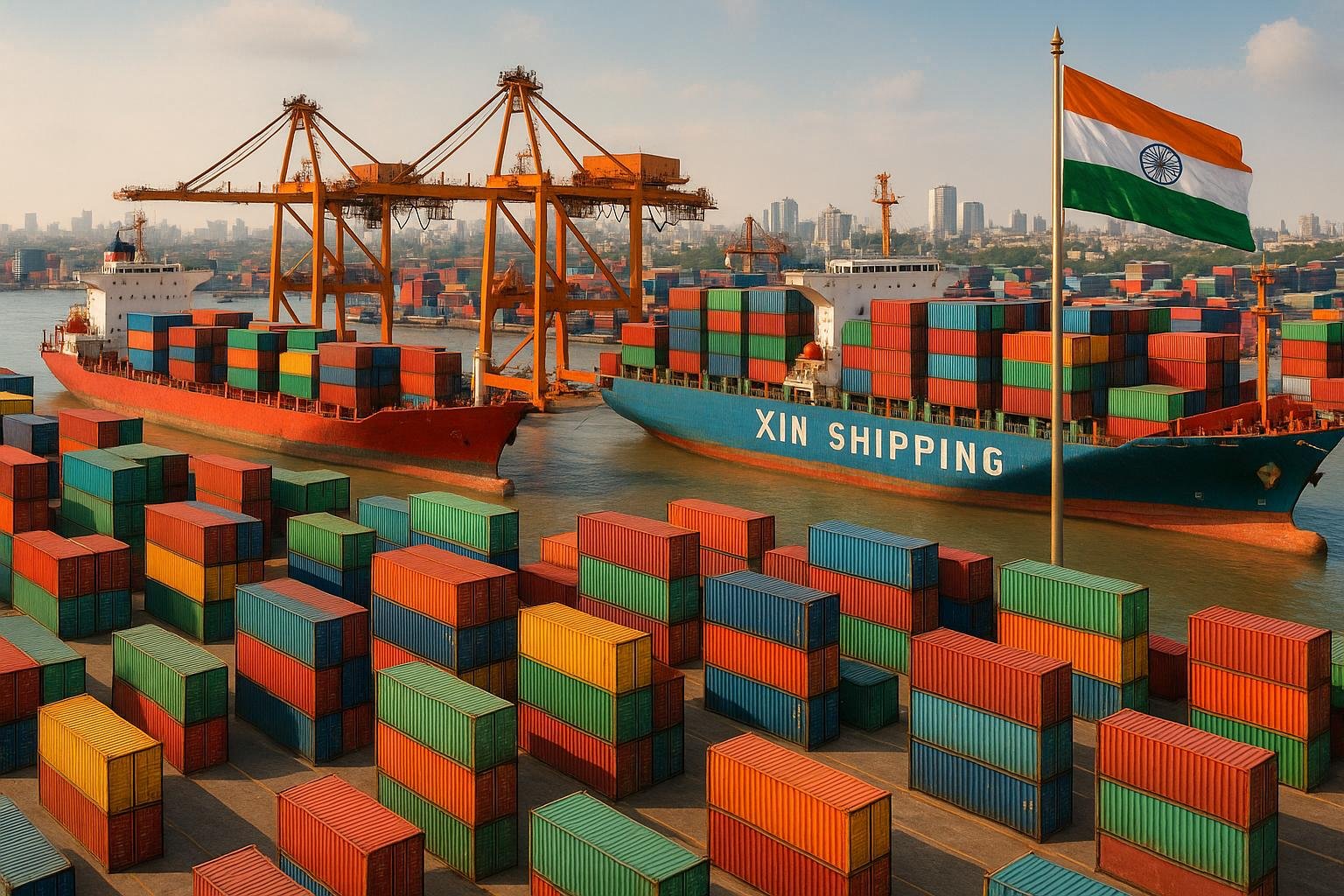
FedEx executives reveal India’s logistics sector is undergoing a significant transformation driven by infrastructure upgrades, rising air cargo, and technological adoption, positioning the country for exponential growth in global trade.

As India deepens its integration into global supply chains, FedEx executives say the country’s logistics landscape is undergoing a structural transformation driven by multimodal infrastructure, rising air cargo and accelerated digita...
Continue Reading This Article
Enjoy this article as well as all of our content, including reports, news, tips and more.
By registering or signing into your SRM Today account, you agree to SRM Today's Terms of Use and consent to the processing of your personal information as described in our Privacy Policy.
Those comments come as independent industry data points to rapid expansion in India’s air cargo market. Air Cargo News reported a 19% increase in Indian air cargo volumes in 2024, well ahead of the global average, and projected annual growth of 6–9% over the next five years that could take volumes to about 5.8 million tonnes by 2029. Global trends are broadly supportive: the International Air Transport Association’s air cargo market analysis for March 2025 showed year‑on‑year growth of about 3.3%, reflecting a steady recovery since mid‑2023 even as gains moderated in 2025.
FedEx executives framed those market shifts as both opportunity and impetus for further investment. Nitin Navneet Tatiwala, Vice President – Marketing, Customer Experience and Air Network, MEISA, told India Shipping News that 2025 had been “one of the most dynamic years for global trade”, and argued that agility, enabled by data and advanced technologies, has become critical for planning, routing, automated handling and end‑to‑end visibility across air networks. The company said in a statement that it will continue to invest in technology and network capabilities into 2026 to simplify cross‑border trade and strengthen resilience.
Corporate filings and FedEx’s own reporting supply further context for those claims. FedEx’s Global Economic Impact Report for fiscal 2025, cited by the company’s newsroom, estimates a $1.6 billion contribution to the MEISA region and notes investments in modernising facilities and deploying digital platforms to streamline imports for Indian businesses. The report also states FedEx directly contributed 0.1% to net economic output in the Transportation, Storage and Communications sector in the region, underscoring the company’s assertion of a measurable “FedEx effect” on trade facilitation.
Beyond capital spending, FedEx is stressing talent development as part of its India strategy. According to a FedEx newsroom release, the company has trained more than 1,500 young people in cloud computing, artificial intelligence, cybersecurity, supply‑chain management and warehouse operations through structured skilling programmes that combine technical instruction with employability training. The company presents these initiatives as a means to build job‑ready talent to power the nation’s digital and logistics growth.
Not all indicators are uniformly strong. IATA’s analysis shows global air cargo growth moderating to single‑digit rates in 2025, and media reporting in August 2025 noted fluctuations tied to shifting trade patterns and tariff policies in the Asia‑Pacific. Speaking to broader market dynamics, industry observers say India’s opportunity depends on continued investment in airport cargo handling, cold‑chain capacity for pharmaceuticals and streamlined customs processes to convert manufacturing and export momentum into sustained cargo growth.
FedEx’s public commentary and corporate data paint a picture of a logistics sector at the intersection of infrastructure upgrade, trade diversification and technology adoption. Whether that combination translates into lasting competitive advantage for Indian exporters will hinge on execution across airports, ports, inland multimodal links and skilling pipelines, and on the ability of private players and policymakers to align investments with fast‑changing trade flows. According to FedEx, its role will be to support that transition with network capacity, digital tools and training aimed at improving reliability, transparency and speed for Indian businesses.
Source: Noah Wire Services
Subscribe to Industry Updates

