


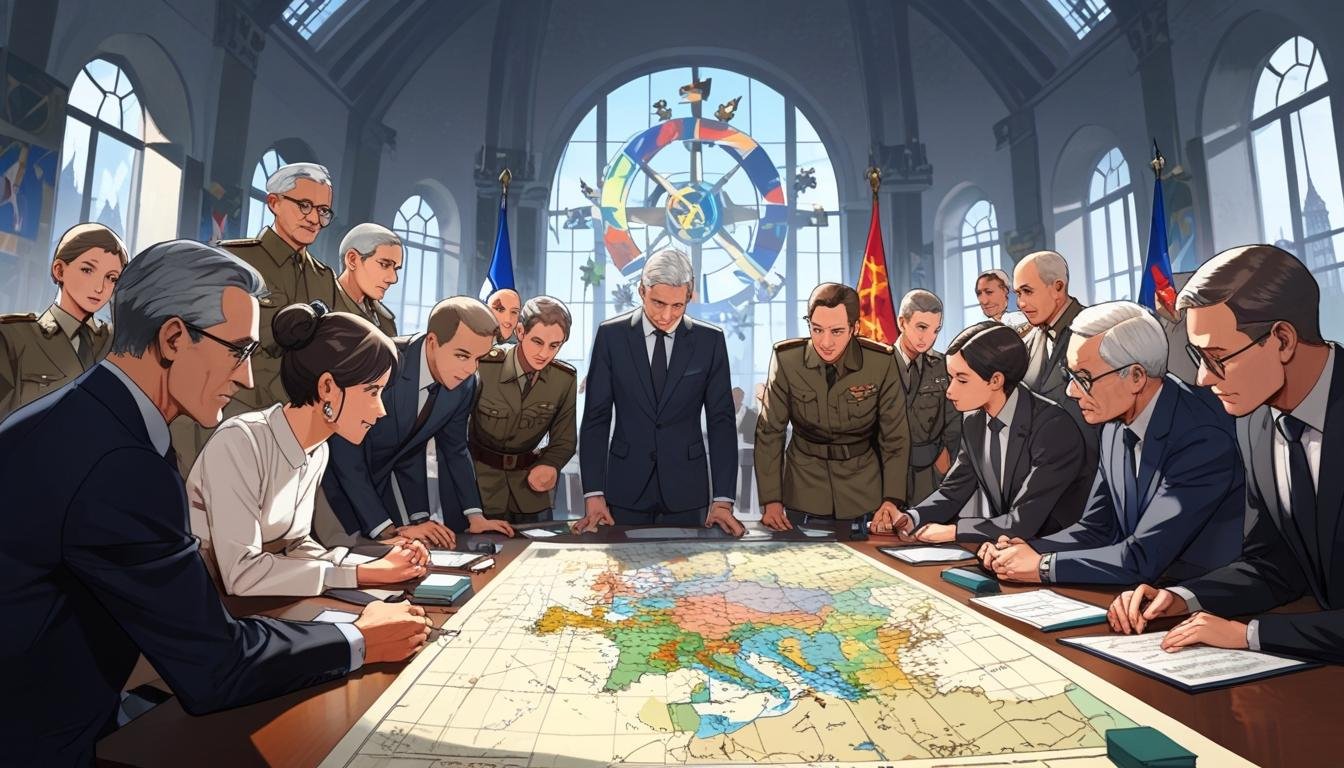
**London**: Peter Pomerantsev highlights Europe’s growing concerns over reliance on the US amidst tensions with Russia, urging unity, financial commitment, and a strong defence industry to regain autonomy and enhance security in an unpredictable global environment.
In recent political analyses, concerns over European reliance on the United States have been identified as a significant issue amidst the ongoing tensions related to Russia’s military activities. Peter Pomerantsev, writing for The Observer, has shared a detailed examination of the challenges faced by Europe in light of shifting geopolitical dynamics, specifically pointing to interactions with US President Donald Trump and prominent leaders such as French President Emmanuel Macron and Ukrainian President Volodymyr Zelensky.
Pomerantsev articulates the anxiety stemming from Europe’s dependency on perceptions of US politics, describing last week’s meetings with Trump as akin to “crawling through a minefield.” He states that the focus should not merely be on whether individual leaders could have navigated these situations differently but rather on the pressing need for Europe to assert control over its own future.

The analysis outlines several steps Europe must take to regain autonomy and enhance its security framework. The first point emphasises the necessity for European unity, noting that while the UK may have distinct diplomatic channels, fostering relationships with neighbouring countries could prove crucial in counterbalancing emerging threats.
Next, he advocates for tangible financial commitments, suggesting that frozen Russian assets, approximately valued at $300 billion, could serve as leverage in negotiations with the US and other arm suppliers. This would enable European nations to establish a more equitable position in discussions, rather than relying on uncertain outcomes tied to Trump’s fluctuating sentiments.
Pomerantsev’s third point revolves around the establishment of a robust European defence industry. Drawing parallels with Franklin Delano Roosevelt’s efforts to bolster US arms production during the 1930s, he encourages a proactive approach to strengthen military capabilities as a credible deterrent against growing Russian aggression.
He further highlights the importance of disrupting Russian military supply chains through various means beyond sanctions, including digital disruption and intelligence operations. Additionally, he calls for a strategic mastery in hybrid warfare techniques that Europe must adopt, mirroring efforts being made by nations such as Moldova.
The commentary also references the initiative in Brussels to develop a “shield of democracy,” while stressing the necessity for Europe to cultivate offensive strategies—a metaphorical “sword”—to protect its interests against undemocratic threats. Pomerantsev recalls Britain’s historical prowess in political warfare during World War II, suggesting that there are lessons to be learned from the past to bolster democratic resilience.
Ultimately, Pomerantsev notes that demonstrating a commitment to these resolutions will enhance Europe’s bargaining power on the global stage. He points to the disappointment regarding the Brexit narrative of “taking back control” as a reflection of genuine public sentiment around vulnerability in a chaotic world. He posits that a concerted effort could allow Europe to navigate its future with a renewed sense of self-determination.
As Europe faces a shifting landscape marked by external pressures, the quest for autonomy and security remains a pressing agenda, echoing broader discussions regarding transatlantic relations and regional stability.
Source: Noah Wire Services

