


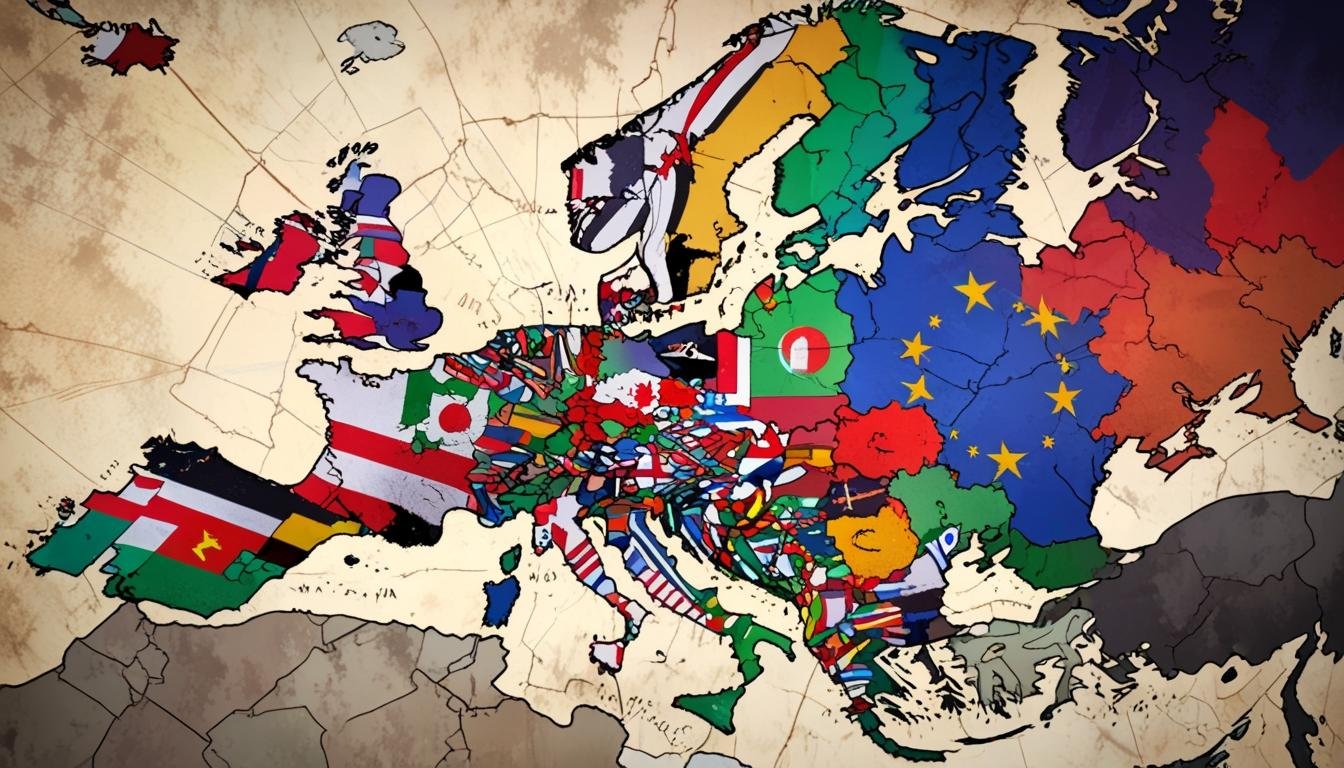
**London**: As Europe adapts to changing defence needs post-Brexit, military spending increases amid calls for a collective defence market. Challenges remain in trade relations and regulatory adaptation, but cooperation could enhance security and efficiency across borders, provided both the EU and UK can negotiate effectively.
Europe is progressively embracing the responsibility of its own defence, a shift underscored by an increased commitment to spending on military capabilities and addressing long-standing issues related to arms procurement inefficiencies across the region.
The backdrop of this development includes the departure of the United Kingdom from the European Union, an event that has exacerbated the existing parochialism within European defence efforts. Despite this challenge, there remains a mutual interest in maintaining cooperative defence initiatives. British officials are particularly keen to safeguard collaborative efforts in defence from being influenced by disagreements in other policy domains. As noted by Martin Sandbu in the Financial Times, the perceived risks stemming from the UK’s withdrawal are expected to lessen if the UK opts to re-enter a defence and security pact with the EU.

However, integrating British defence spending into a broader European framework will not rectify the estrangement from European supply chains resulting from the UK’s hard Brexit. Trade frictions between the EU and the UK, while not the most significant obstacle, still present issues that could hinder the rearmament efforts across Europe.
Moreover, within the EU, the European Commission has outlined various trade-related obstacles that hamper defence procurement efficiency. These include limited recognition of product certifications, burdensome red tape in military mobility, non-standardised customs procedures, and overregulation concerning the transfer of defence-related products within the EU. The situation is noticeably more complicated when considering the UK’s current status, which places it outside of EU rule-making and adjudication circles, resulting in further trade, capital, people, and data barriers that affect multiple economic sectors, including defence.
A potential solution proposed involves the creation of a frictionless market specific to the defence industry. This concept, intended to mirror the EU’s internal or single market, aims to eliminate the costs and complexities associated with divergent national regulations, enabling companies to operate without being hindered by border-crossing requirements. The proposition seeks to establish a “common market” for defence that would facilitate the movement of goods, services, capital, and specialised personnel across borders.
Nevertheless, the establishment of such a pan-European defence-industrial common market would face significant hurdles. From a practical standpoint, defining the sector for such a market presents challenges beyond the primary sectors excluded from existing agreements, as defence encompasses a range of activities beyond mere goods. However, there are existing frameworks within individual nations that recognise the unique aspects of the defence sector, which could provide a foundation for further development.
Border friction reduction could draw inspiration from solutions implemented in Northern Ireland, such as dedicated transport lanes for pre-certified shipments or allowing increased professional mobility rights for non-EU/EEA nationals working in the defence industry. Regulatory adaptation behind borders could address issues related to capital and data exchanges, which are currently governed by domestic laws.
The political landscape poses an even greater challenge to the establishment of such a common market. It would necessitate the implementation of EU legislation and the authority of the European court, elements that have historically met resistance from successive British governments. Nonetheless, there are signs of potential flexibility, as evidenced by Labour’s engagement with regulatory discussions concerning product standards.
The EU would also need to reconsider its stance on the indivisibility of its four freedoms, which currently dictate that economic exchanges must be comprehensive to remain frictionless. Historical precedents, such as the exclusion of agriculture and fishing from the European Economic Area, suggest a potential pathway towards a more flexible approach. Recent agreements, such as those with Switzerland, demonstrate the EU’s capacity to offer partial frictionless access to partners prepared to align with its regulations.
Ultimately, the prospects for a unifying defence market in Europe rest on the ability of both the EU and the UK to negotiate terms that address their mutual interests in security. If common security cannot provide a basis for concessions from both sides, it raises questions about the potential for enduring cooperation in defence matters. Such a market could not only enhance the efficiency of weapon supply chains across Europe but also foster greater trust and unity over time.
Source: Noah Wire Services

