


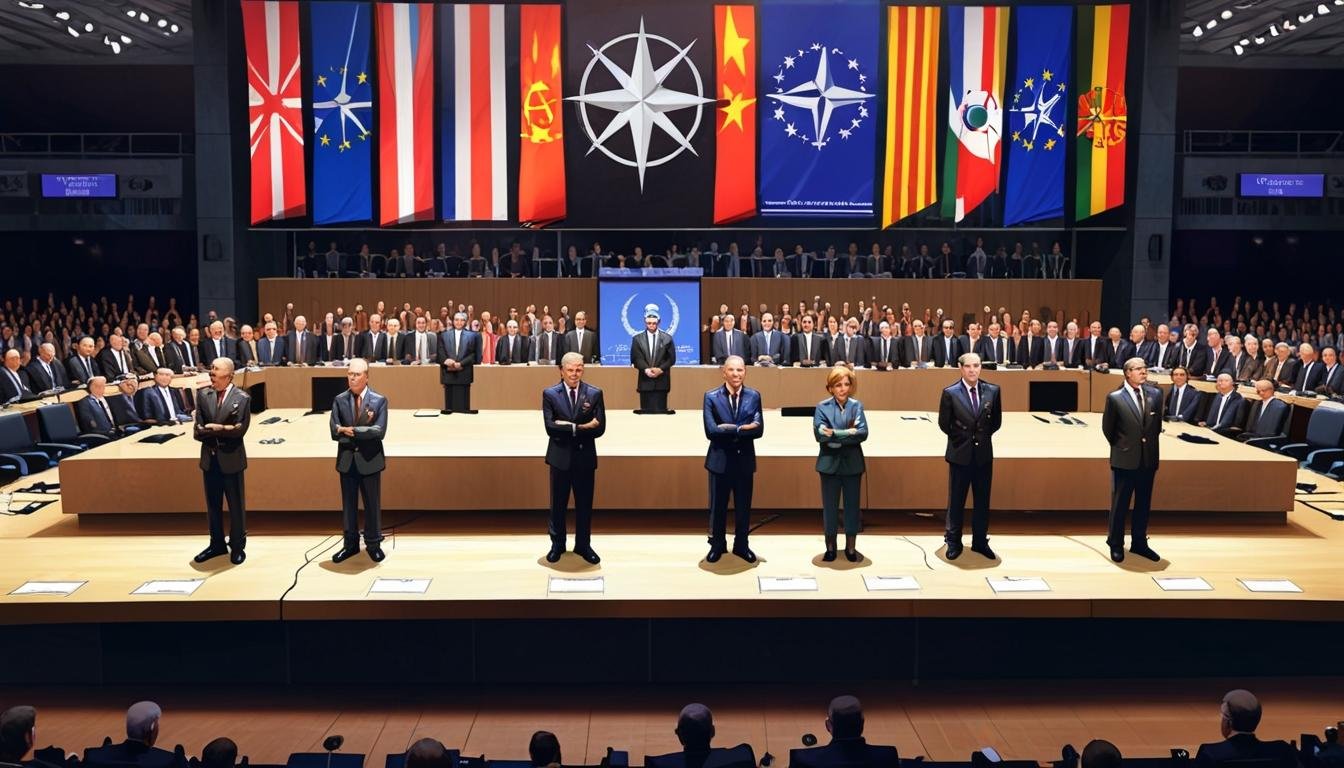
**London**: An emergency summit of European leaders showcased support for Ukraine’s President Zelensky against the backdrop of shifting military dynamics. Key discussions centred on increasing defence budgets and the necessity for a unified military stance to counter Russian aggression, amidst significant market reactions by defence firms.
An emergency summit of European leaders convened this week, primarily aimed at demonstrating cohesion and support for Ukrainian President Volodymyr Zelensky. The gathering unfolded against a backdrop of heightened tensions following the recent withdrawal of US military aid to Ukraine, resulting in a marked shift in the dynamics of international defence cooperation. British Prime Minister Keir Starmer, hosting the summit, articulated the event as a “once-in-a-generation moment,” signalling a pivotal turn towards greater military readiness in the face of Russian aggression.
The summit included key figures such as Zelensky, who has increasingly been viewed as a leading voice in Europe following Ukraine’s struggle since the onset of war in 2022. Joining Zelensky in a prominent display for the group photo were the leaders of Britain and France—countries equipped with nuclear capabilities—while Poland’s Prime Minister Donald Tusk and Finland’s president flanked them, both advocating for a robust military posture against potential threats from Russia.

While European leaders expressed their convictions of unity against Russian hostility, stark disparities persist regarding defence expenditure and militarisation strategies across the continent. Prior to the summit, Starmer unveiled plans to enhance Britain’s defensive spending, announcing cuts to international aid in order to allocate more resources to military needs. His government aims for a defence spending target of 2.5% of the GDP by 2027, climbing to 3% subsequently. Conversely, Poland has doubled its defence budget to 4% of GDP, aspiring to form Europe’s largest army by the decade’s end, alongside significant increases in military personnel.
The Baltic states, including Estonia, Lithuania, and Latvia, have similarly ramped up their defence investments to nearly 5%, whilst the Czech Prime Minister committed to a 3% increase. Analysts suggest these moves reflect a collective awakening among European nations towards prioritising military preparedness.
Market responses to these developments have been swift. European defence firms have witnessed a notable increase in their stock values, with companies such as Rheinmetall in Germany rising by 14% as of Monday. The positive market sentiment towards this militaristic pivot is indicative of broader acceptance of increased defence budgets and military collaborations.
Germany, long hesitant about extensive military spending, appears poised for a paradigm shift, with reports of plans to establish a substantial armaments fund ranging from €200 billion to €800 billion for the upcoming years. This realignment could pave the way for a pan-European defence fund valued at hundreds of billions of euros, aiding collaborative military projects.
In Poland, Prime Minister Tusk underscored the need for a more unified military presence in Europe, questioning the dependency on U.S. support amidst the threat posed by Russia. He argued for the necessity of an integrated military union within Europe to safeguard against external threats.
The ramifications of this burgeoning arms race extend beyond European borders; Israeli defence companies are expected to benefit significantly as Europe’s defence spending surges. Elbit Systems in Israel recently observed an uptick of over 5% in shares, amidst anticipations of deepening collaborations between European and Israeli firms. Pini Yungman, president of TSG, indicated that developments on the continent could promote partnerships aimed at bolstering military capabilities.
There are notable examples of Israeli-European cooperation, with a $3.5 billion deal for the supply of the Arrow 3 air defence system to Germany exemplifying the growing alignment of interests. Furthermore, Israel’s advanced missile systems are increasingly recognised as cost-effective alternatives in the European market, with strategic partnerships and initiatives already underway in multiple European countries.
Although the interplay of military forces has evolved dramatically, establishing a clearer correlation between defence strategy and market dynamics, the ongoing situation highlights varying approaches within Europe towards addressing security issues.
Source: Noah Wire Services

