


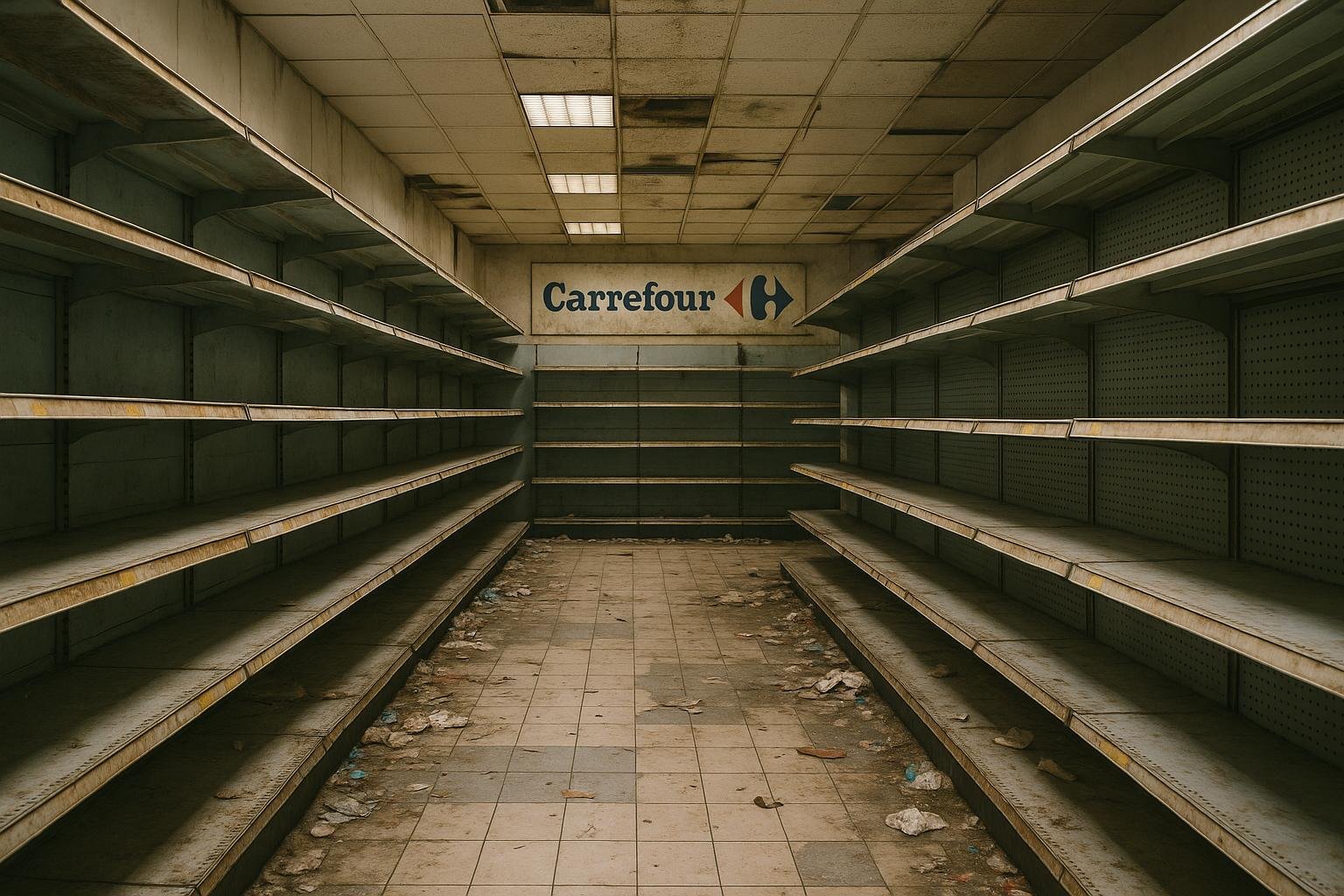
The 2025 shake-up in European grocery retail underscores the importance of supplier cooperation, with Carrefour’s Italian divestment serving as a cautionary tale for prioritising transactional dealings over collaborative partnerships.

In 2025 a major reshuffle of European grocery retail underscored a strategic faultline: firms that treat suppliers as adversaries risk ceding ground to more cooperative rivals. The recent exit of Carrefour from Italy , part of a divestme...
Continue Reading This Article
Enjoy this article as well as all of our content, including reports, news, tips and more.
By registering or signing into your SRM Today account, you agree to SRM Today's Terms of Use and consent to the processing of your personal information as described in our Privacy Policy.
Carrefour itself framed the Italian sale as a response to sustained declines in sales and negative operating income. The company’s July 2025 press release said the transaction covers 1,188 stores and is expected to complete by the end of 2025, subject to regulatory approvals. Carrefour agreed a €240 million contribution to support the deal and NewPrinces Group, the buyer, committed to invest €200 million to revitalise the network; the Carrefour name will continue to appear in stores during a transitional period of at least three years. According to Foggia, the outcome highlights how a procurement-focused stance can undermine competitiveness where rivals cultivate deeper supplier partnerships.
Across markets, the mechanics of effective retailer–supplier collaboration are becoming materially important to financial performance. Foggia’s cross‑regional analysis found a robust association between collaborative practices and stronger operating margins, net profit and revenue growth, with top-tier collaborators outpacing peers on revenue expansion. Industry benchmarking from Advantage shows firms in the upper collaborative bracket enjoy revenue growth roughly 3.7% above average and report improvements in resilience and innovation. McKinsey research cited by Foggia adds that coordinated supply‑chain activity across Europe could unlock more than $10 billion in savings, illustrating the scale of opportunity at stake.
Case studies illustrate how cooperation converts into measurable gains. Retailers that share forecasting and logistics data with suppliers reduce stockouts, cut inventory and recapture lost sales: the blog notes examples such as adjustments to replenishment timing that recovered multimillion‑pound sales and automated planning systems that lowered inventory while boosting in‑stock rates. During the COVID‑19 disruptions, firms with transactional relationships suffered more fragile supply lines and weaker collaborative forecasting, according to industry surveys referenced in the analysis.
Trust emerges repeatedly as the critical enabler. In a survey of 92 leading retailer–supplier alliances summarised by Foggia, high‑performing partnerships scored strongly on both character‑ and competence‑based trust, with formal mechanisms , supplier satisfaction surveys, regular review meetings and joint decision forums , helping to institutionalise cooperation beyond personal ties. Yet the essay warns against loose collaboration: many customisation programmes fail when joint planning is inadequate, producing higher costs and slow sales rather than the intended commercial uplift.
The distribution of gains is asymmetric but predictable. Retailers typically capture a larger share of immediate cost benefits from collaboration, while suppliers gain longer‑term market access, capability development and closer alignment with consumer demand. Foggia argues the right approach for retailers is to accept some inequity in short‑term returns in exchange for the sustainable competitive advantages that deeper partnerships provide. Practically, he recommends tiered partnership frameworks that distinguish strategic suppliers from transactional ones and set out clear expectations for data sharing, joint planning and multi‑year commitments.
The strategic stakes are growing as automation and AI make routine procurement tasks more efficient; differentiation increasingly depends on joint innovation, data‑driven insight and purpose‑led initiatives that require trust and institutionalised cooperation. The Carrefour Italy transaction reinforces the point: divestment followed a period when the company struggled to achieve the local distinctiveness that rival retailers obtained through closer supplier alignment. As Foggia concludes, the pressing question for many continental European retailers is no longer whether collaboration can pay off but whether they can afford the competitive cost of refusing to build it.
Source: Noah Wire Services
Subscribe to Industry Updates

