


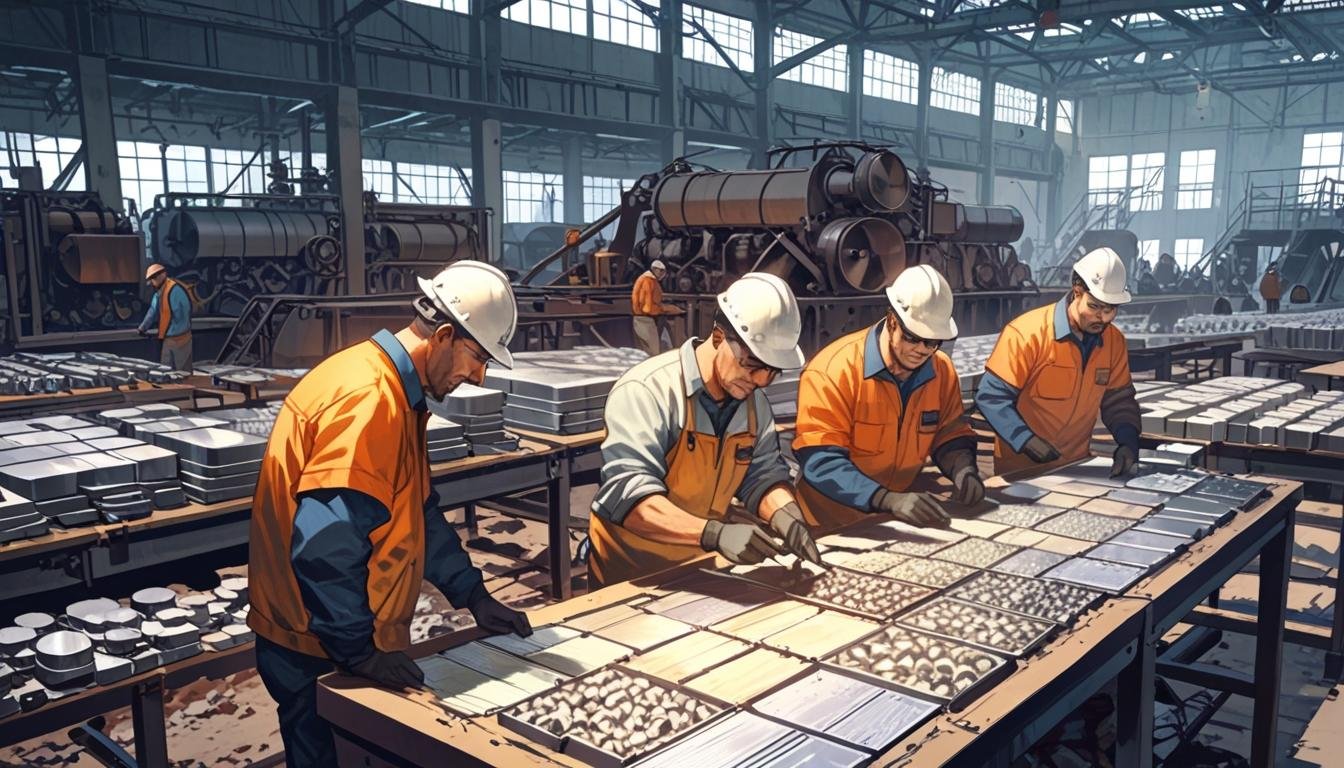
**Brussels**: The European Commission has announced 47 strategic projects to enhance the critical minerals sector, aiming to reduce dependency on imports, particularly from China, amidst challenges in steel production and high energy costs affecting the region’s metals industry.
The European Commission has unveiled plans to bolster the critical minerals sector within the EU, identifying 47 strategic projects aimed at reducing the region’s reliance on imports, especially from China. This initiative comes at a time when European industry is grappling with significant challenges in its existing metals sector, exacerbated by global market shifts and heightened energy costs.
The initiative was announced in the context of a broader crisis within the European metals production landscape. The region’s steel output has seen a dramatic decrease, plummeting from 160 million metric tons in 2017 to a projected 126 million in 2023. Current utilization rates sit precariously around 65%, a level deemed unsustainable by the European Commission. The situation has further deteriorated due to an historical decline in primary aluminum production capacity, with nearly half of existing facilities remaining inactive since 2021.

High electricity prices have been pinpointed as a core issue affecting the industrial metals sector. These prices surged following Russia’s invasion of Ukraine, although they have since shown signs of decline, they remain significantly elevated compared to historical norms and are considerably higher than those in the United States. To combat this challenge, the Commission’s “Action Plan” suggests a variety of strategies, including promoting long-term power contracts, improving energy network efficiency, and accelerating the approval process for renewable energy projects.
In parallel to efforts focused on future mineral needs, the threat posed by United States tariffs looms over European producers. President Donald Trump’s administration imposed increased tariffs on imported aluminum, prompting concerns that excess US production may flood the European market. European Commission Executive Vice-President, Stéphane Séjourne, indicated that stricter steel import quotas could be imminent, potentially as soon as next month. Measures under consideration include a “melted and poured” rule that would allow regulatory action against the original manufacturer of the metals rather than merely third-party processors.
An urgent response is being called for from industry leaders. Paul Voss, Director General of European Aluminium, has stressed the need for “immediate, targeted interventions to stabilize the sector.” One suggested intervention includes limiting the export of recyclable materials out of Europe, as US tariffs currently do not cover scrap metal.
Notably, aluminum scrap exports from the EU have surged, reportedly reaching a record of 1.3 million tons last year, with expectations of further increases this year as businesses seek to capitalise on the tariff regime in the United States. Copper recyclers have echoed these concerns, warning that impending copper tariffs could exacerbate the situation and divert more resources across the Atlantic.
In response, the European Commission has pledged to propose appropriate trade measures aimed at retaining more materials within the EU, with a potential focus on reciprocal actions against countries implementing metals tariffs and those restricting scrap exports.
The comprehensive approach taken by the European Commission signifies a recognition of the urgent need for both enhancing critical metals capacity and safeguarding existing operations amid a rapidly changing global landscape. However, as Voss succinctly remarked, “strategy alone won’t keep our operations running,” highlighting the necessity for prompt and decisive action in the face of these evolving challenges.
Source: Noah Wire Services

