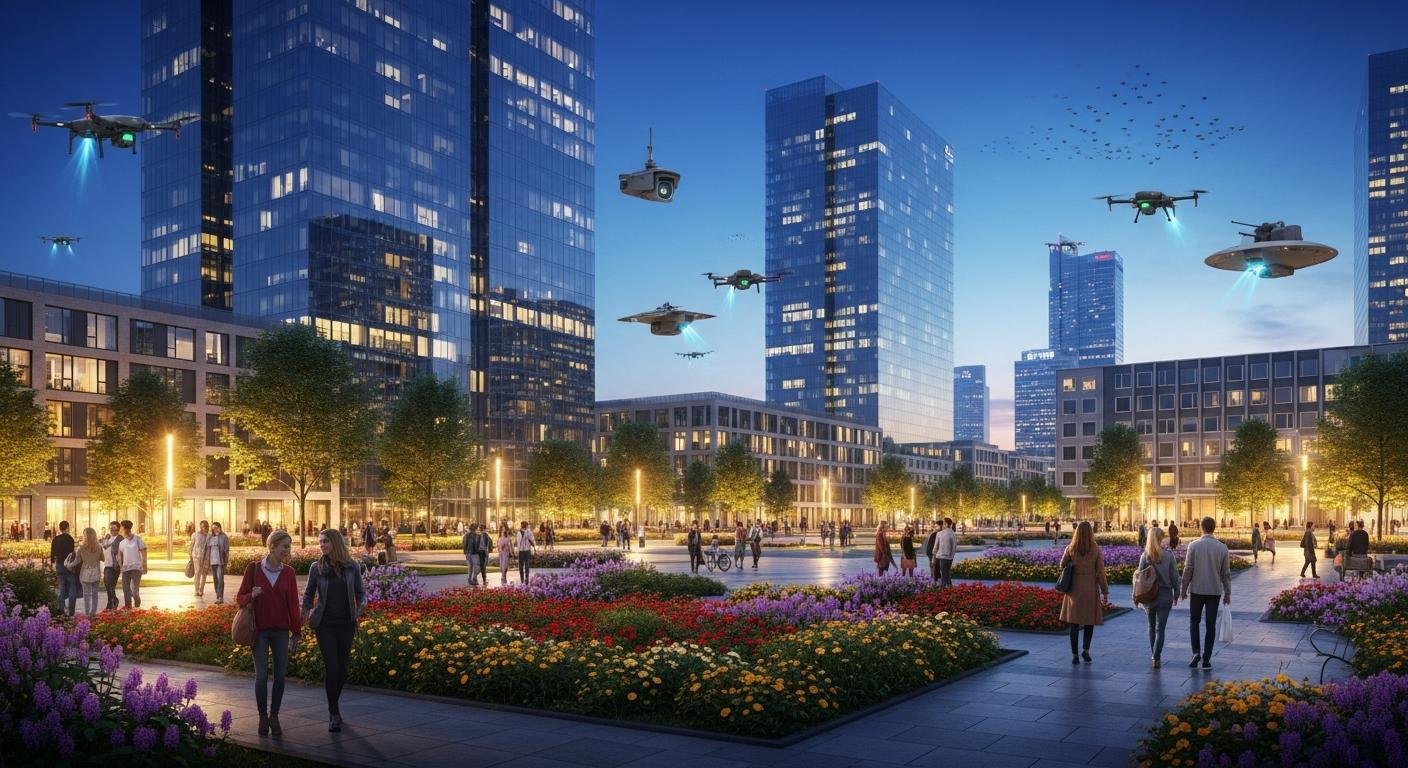
Plato’s cave still offers a useful way to think about Europe’s present unease. For decades after the Cold War, many in the continent assumed that liberal democracy had prevailed, globalisation would bind rivals together, and the United States would continue to underwrite Europe’s security. That comfortable picture has now been shattered by Russia’s war against Ukraine, repeated energy shocks, intensifying competition with China, migration pressures and a broader shift in globa...
Continue Reading This Article
Enjoy this article as well as all of our content, including reports, news, tips and more.
By registering or signing into your SRM Today account, you agree to SRM Today's Terms of Use and consent to the processing of your personal information as described in our Privacy Policy.
l power.
What once looked like a stable order now appears more like a set of shadows on a wall. Europe is being forced to confront the possibility that the assumptions which shaped its politics for three decades were never permanent truths, only conditions that could vanish.
This is where the idea sometimes described as “NATO 3.0” comes in. According to analysis from the Polish think tank OSW, the alliance is moving away from a model based on burden-sharing towards one in which European members carry a much larger share of the conventional defence load. The United States remains inside the alliance, but the strategic expectation is changing: Europe is increasingly expected not merely to consume security, but to produce it.
That shift does not amount to a simple military update. It implies a wider political and fiscal reckoning. If European states are to strengthen deterrence and defence, they must also decide what else will be delayed, reduced or politically contested. Defence spending is no longer an abstract debate about NATO abstracts or force posture; it is becoming a question about budgets, welfare commitments and the social contract itself.
NATO’s own official line remains rooted in collective defence, democracy and the rule of law, while the alliance’s 2022 Madrid summit set out a more comprehensive, 360-degree approach to deterrence and defence. But the strategic mood is unmistakably different. As Washington’s attention increasingly tilts beyond Europe, the burden on European capitals is becoming more visible, and more immediate.
The political consequences are already evident. Recent elections across the continent do not support a simplistic story of an uncontested rightward lurch. In some places, pragmatic coalitions have held; in others, opposition forces have regained momentum. The larger point is that Europe’s democracies are not collapsing, but they are being reorganised around security.
That is why the position taken by Spain’s Pedro Sánchez stands out. He accepts the need for stronger defence spending, but resists the idea that rearmament should automatically hollow out social protection. His stance reflects a broader tension at the heart of Europe’s response: voters may tolerate higher security outlays, but only if they do not come to see education, healthcare, pensions and housing as the price of geopolitical seriousness.
This is the danger now facing the centre ground. If citizens begin to feel that every external crisis leads to a smaller share of everyday security at home, then the political space for populist forces grows. In that sense, the new European debate is not simply about weapons or strategy. It is about whether security can be expanded without narrowing democracy.
Europe is therefore standing, metaphorically, at the mouth of the cave. It knows it can no longer rely on the old arrangement. It understands that a stronger European pillar within NATO is no longer optional, and that greater responsibility will have to be matched by greater capability. Yet the deeper challenge is not just to become more powerful. It is to do so without losing the democratic balance that gave the old order its legitimacy in the first place.
Source: Noah Wire Services