


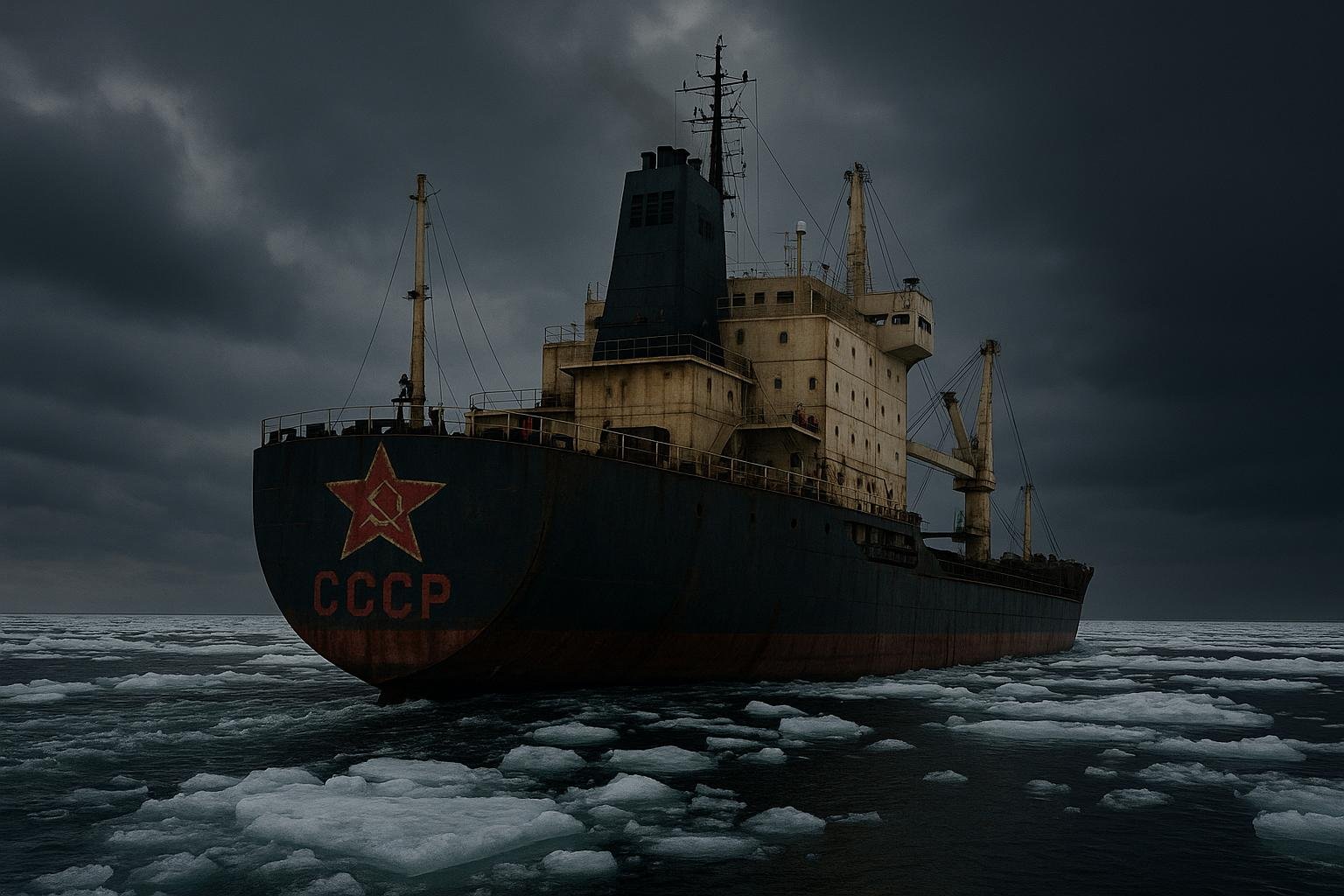
The European Council signals a continued crackdown on Russia’s energy revenues through a new sanctions package, targeting shadow fleet operations and enhancing international coordination by early 2026.

“The European Union remains determined to maintain and increase pressure on Russia to stop its brutal war of aggression and engage in meaningful negotiations towards peace. In this context, the European Council calls on the Council to continue working on a new...
Continue Reading This Article
Enjoy this article as well as all of our content, including reports, news, tips and more.
By registering or signing into your SRM Today account, you agree to SRM Today's Terms of Use and consent to the processing of your personal information as described in our Privacy Policy.
“The European Council took stock of efforts to curb Russia’s shadow fleet operations, which have effectively decreased Russian energy revenues, and welcomes the recent adoption of new sanctions to this end. It calls for further coordinated action by Member States and cooperation with G7 partners, also in relation to port and coastal states and vis-à-vis thirdcountry flag states and all actors involved in the shadow fleet ecosystem, to further decrease Russian energy revenues and to continue to address the significant risks the shadow fleet poses,” the document notes.
According to Interfax, those conclusions reflect a renewed pledge by EU leaders to tighten pressure on Moscow and to press for a 20th EU sanctions package aimed at further constraining Russia’s ability to sustain its war in Ukraine. The Council’s language underlines both political will and a timetable, with the package targeted for adoption “as soon as possible after its presentation in early 2026”, signalling a multi-month process of drafting, negotiation and coordination with partners.
The Council of the European Union’s own public statements provide context for the stepwise intensification of measures over 2024–25. On 20 May 2025 the EU agreed a 17th package of sanctions that, for the first time, explicitly targeted elements of Russia’s “shadow fleet” and entities involved in circumventing existing restrictions,according to the Council press release. Earlier, on 24 February 2025 the EU adopted a 16th package listing an additional 48 individuals and 35 entities implicated in undermining Ukraine’s sovereignty. Those measures complemented repeated renewals of broader economic restrictions: the Council extended economic restrictive measures on 27 January 2025 (to 31 July 2025) and again on 30 June 2025 (to 31 January 2026),while on 12 September 2025 the Council prolonged individual travel bans and asset freezes affecting more than 2,500 individuals and entities until 15 March 2026.
Industry data and Council statements cited by EU officials have portrayed the “shadow fleet”, a network of tankers, brokers, insurers and third‑country facilitators, as a major channel through which Russia has sought to preserve energy revenues despite sanctions. The European Council’s conclusions welcome the “recent adoption of new sanctions” against that ecosystem and call for stepped‑up co‑operation with G7 partners, port and coastal states and flag states to close loopholes and “further decrease Russian energy revenues”,according to the document.
European leaders emphasised anti‑circumvention measures as central to future packages. The Council’s prior measures have combined sectoral bans on trade, finance, energy and technology with targeted listings of individuals and firms,and the forthcoming 20th package is framed as a continuation and intensification of that approach. According to the Council press releases, successive renewals of economic restrictive measures, dating back to the 2014 measures and expanded after February 2022, remain in force alongside the individual listings and shadow‑fleet restrictions.
The EU statements also point to sustained diplomatic coordination. The European Council explicitly calls for “further coordination with G7 and other like‑minded partners on sanctions”,reflecting concern that unilateral measures are vulnerable to evasion unless backed by broad international cooperation on enforcement, shipping regulation and financial transparency.
While the conclusions set an early‑2026 timetable for presenting the next package, the Council’s recent history shows the process of drafting and adoption can be incremental and politically contested among member states. The May 2025 shadow‑fleet measures demonstrated the EU’s willingness to broaden the targeting of sanctions beyond traditional state actors to complex networks that sustain revenues,the Council said. The planned 20th package is therefore likely to combine further listings, tighter anti‑circumvention rules and measures designed to limit third‑party facilitation,subject to agreement among EU capitals and coordination with external partners.
Source: Noah Wire Services
Subscribe to Industry Updates

