


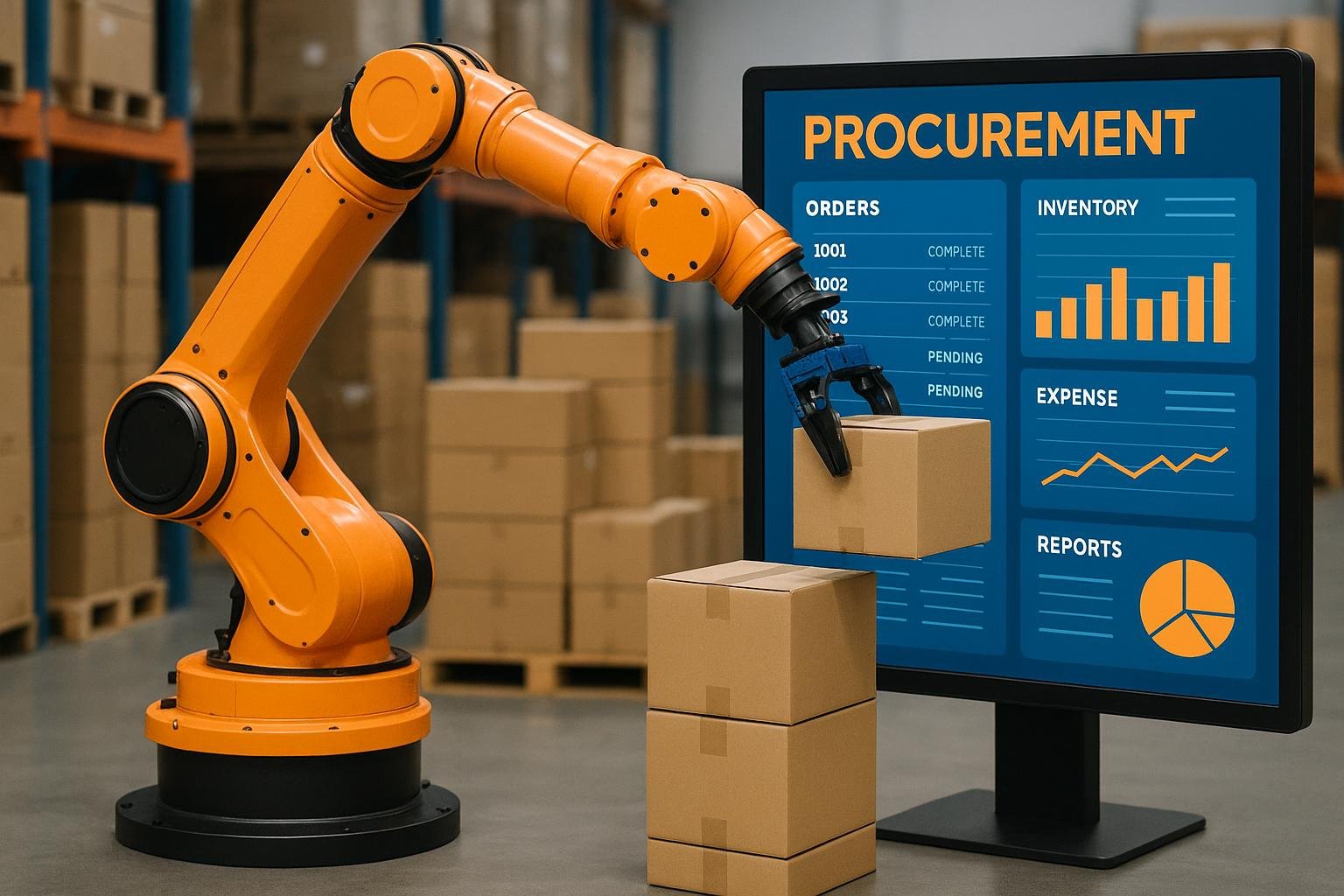
As organisations face mounting pressure on margins and agility, automation in procurement is transforming buying, paying, and supplier management into a strategic advantage, promising faster processes, greater control, and measurable financial benefits.

In an era where corporate margins and agility are under constant pressure, eProcurement automation is increasingly presented not as a technical upgrade but as a strategic capability that reshapes how organisations buy, p...
Continue Reading This Article
Enjoy this article as well as all of our content, including reports, news, tips and more.
By registering or signing into your SRM Today account, you agree to SRM Today's Terms of Use and consent to the processing of your personal information as described in our Privacy Policy.
Cost optimisation is the most immediate and visible benefit companies cite. According to procurement research published in the International Journal of Law, Regulation and Public Policy, automation reduces manual effort and error, delivering faster processing times and improved accuracy that translate into lower transactional and operating costs. Vendor guidance from Zycus likewise stresses that removing paper-based procedures frees buying teams to negotiate better pricing, exploit bulk-purchase opportunities and tighten payment terms, bringing direct savings and improved working-capital management. Consultancy analysis from PwC adds that enhanced spend visibility across categories enables firms to identify overspend and enforce contract compliance, boosting savings further.
Operational speed and accuracy drive those savings. Automated workflows minimise approval bottlenecks and cut invoice-processing times, creating a faster, more predictable procure-to-pay cycle. A field study on AI-driven procurement cited in the International Journal of Computer Engineering and Technology reported a 41.2% reduction in procurement cycle times and a 29.4% increase in procurement-team productivity where intelligence was applied to supplier selection and performance tracking. Vendor-focused reviews identify reduced duplicate payments and lower maverick spend as frequent outcomes of structured, automated approval paths.
Supplier relationships and risk management benefit in parallel. Centralised eProcurement platforms create a single source of truth for orders, deliveries and invoices, improving transparency and reducing disputes. Krinati’s overview of digital procurement notes that aggregation of demand across departments helps firms leverage economies of scale and secure better terms from suppliers, while tools for performance tracking and timely payment reduce friction and support long-term partnerships. Procol’s analysis lists improved supplier selection and structured procurement control among the top advantages, describing how automation mitigates bottlenecks and prevents unnecessary expenses through rigorous approval workflows.
Data and analytics are central to the change. Systems capture granular transactional and supplier-performance data that leadership teams can use for strategic sourcing, category management and compliance reporting. Zycus highlights how real-time visibility enables procurement to demonstrate contribution to broader corporate objectives; PwC underlines the role of integrated platforms in surfacing actionable insights across global procurement operations. Where AI or advanced analytics are applied, research finds measurable lifts in supplier reliability (31.5% in one study) and reductions in supply-chain disruption, reinforcing the case for data-driven procurement decisions.
Automation also strengthens governance and compliance. Academic and industry sources observe that digital trails and enforceable workflows reduce fraud risk and make adherence to regulatory requirements more straightforward. The International Journal of Law, Regulation and Public Policy points to stronger procurement policy enforcement and reduced compliance risk as consistent benefits of automation, a view echoed in consultancy materials that stress the value of consistent documentation for auditability.
Adoption barriers remain real but manageable. Concerns commonly include perceived implementation cost, integration complexity and user resistance. Vendor literature and practitioner guides recommend choosing scalable, user-friendly platforms with strong ERP integration capabilities and investing in stakeholder engagement and training. Case evidence suggests that when organisations prioritise change management and select solutions aligned with existing systems, implementation friction falls and time-to-value shortens.
Taken together, academic studies, industry guides and consultancy reports paint a consistent picture: eProcurement automation is not a cosmetic improvement but a lever for operational resilience, cost control and strategic procurement. The most significant gains come where automation is coupled with disciplined supplier management, data governance and executive sponsorship. For organisations seeking to reduce cycle times, contain costs, improve supplier performance and strengthen compliance, the investment in eProcurement platforms is increasingly presented as a strategic necessity rather than an optional efficiency project.
Source: Noah Wire Services
Subscribe to Industry Updates

