


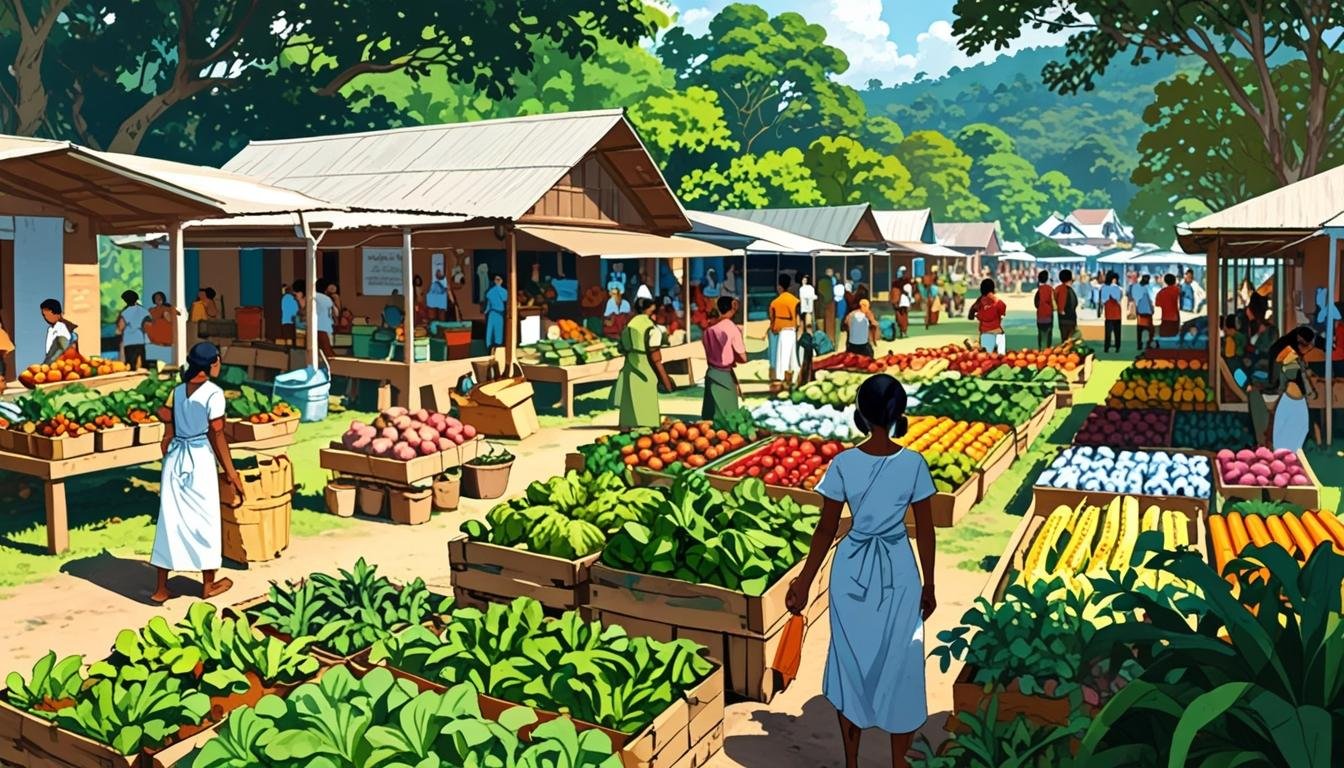
**Vavuniya**: Representatives from Hirdaramani Apparel, the Lacoste Foundation and UNDP visit the Smallholder Farmer Resilience project to enhance local farming practices and economic stability. Initiatives include backyard poultry units and home gardens, benefiting over 100 families, predominantly women, through training and market access.
Representatives from Hirdaramani Apparel, the Lacoste Foundation, and the United Nations Development Programme (UNDP) in Sri Lanka have recently visited the ‘Smallholder Farmer Resilience through Innovative Financing Project’ as part of their initiative to empower smallholder farmers. The site visit took place in Vengala Chettikulum and the Vavuniya South Divisional Secretariat divisions, with officials assessing the project’s progress and impact.
The delegation included key figures such as Mr. Mathieu Brousse, Vice President of Global Sourcing at Lacoste; Mr. Siddharth Hirdaramani, Director of the Hirdaramani Group; and Ms. Azusa Kubota, Resident Representative of UNDP Sri Lanka. Their visit aimed to engage with local farming communities and observe firsthand the outcomes of the initiative, which is supported by UNDP’s Private Sector Giving Facility.

Since its inception, the project has made significant strides, establishing 105 backyard poultry units and 101 integrated market home gardens that empower local families to create a stable income while adopting sustainable agricultural practices. These developments contribute not only to the economic vitality of the region but also enhance food security by fostering a direct connection between smallholder farmers and consumers. A noteworthy development has been the establishment of a weekly farmer’s market at the Hirdaramani factory in Vavuniya, enabling farmers to sell their produce directly to consumers, thereby ensuring fair pricing and cutting out intermediaries.
In comments about the initiative, Mathieu Brousse highlighted the holistic view of economic and societal contributions, stating, “At Lacoste, we believe that our long-term economic success goes together with the ability to generate societal value through our activities. This is why we strive to team up with local partners who share our commitment to making environmental and social issues a priority.” He noted that the partnership has positively impacted over 100 families in the Vavuniya district, improving their living conditions.
The initiative has reached 102 farming families, with a staggering 95% of the beneficiaries being women. Participants have received training and resources to successfully establish home gardens and engage in poultry farming. They were educated on crop planning, irrigation setups, and received materials such as grow bags and organic fertiliser for their gardens. Poultry farming also saw the provision of chicks and coops, along with training on managing feed and health, which has led to an impressive 45% income increase for families engaged in these practices.
Azusa Kubota remarked, “By equipping smallholder farmers with the skills, resources, and market access they need, we are not only strengthening local food security but also empowering communities to thrive for the generations to come.” She further emphasised the need for collaboration between the private sector and UNDP to scale up efforts and ensure stability for farmers and sustainable supply chains for consumers.
The economic ripple effects extend beyond the participating families, benefiting Hirdaramani employees and their families as well. Siddarth Hirdaramani noted the significance of secure market access, stating, “By sourcing sustainable produce and organising weekly farmer markets, we have been able to connect local communities with consistent income opportunities.” He indicated that this access allows local farmers to achieve greater returns and enhances their agricultural practices.
On a broader scale, the project encourages sustainability and self-sufficiency practices, with farmers integrating cost-effective feeds like Azolla into their poultry methods. Through the production and consumption of organic products, families not only improved their health but also created additional income streams through sales.
The project represents a concerted effort to fortify rural economies and food security in Sri Lanka. By equipping smallholder farmers with vital skills and fostering market connections, the initiative aims to build resilience and promote inclusive economic growth. Moving forward, it seeks to enhance strategies for market access, reinforcing relationships between farmers and consumers and supporting a sustainable agricultural future in Sri Lanka.
Source: Noah Wire Services

