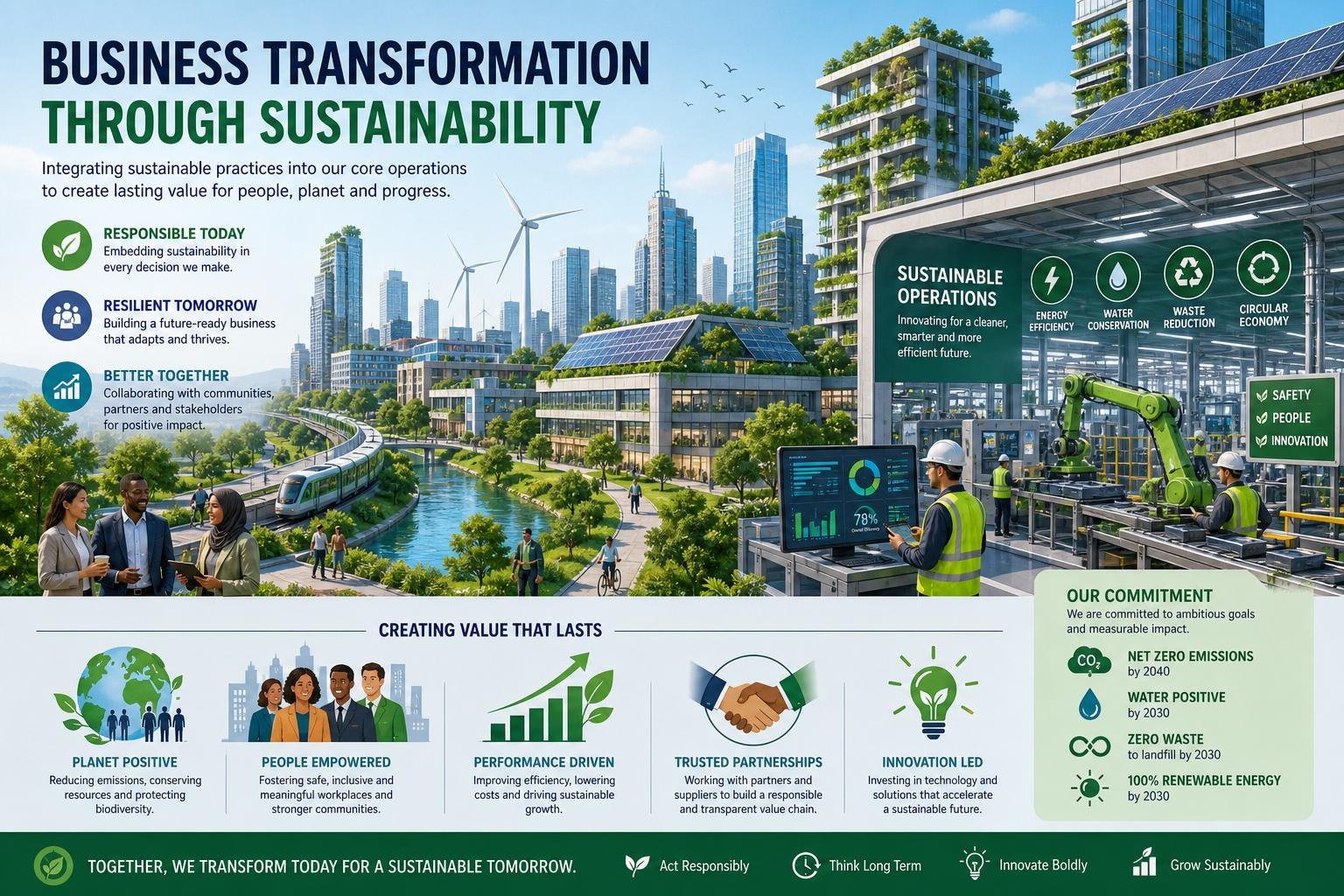
Kaleidoscope has argued that sustainability only starts to matter commercially when it is built into the way a business actually runs, rather than left as a reporting exercise or a boardroom slogan.
The London-based advisory said its latest findings draw on five years of research, expert-led salons and its Impact Prism™ framework, with a focus on how sustainability plays out across procurement, pricing, systems, suppliers, customers and the everyday decisions that shape perfo...
Continue Reading This Article
Enjoy this article as well as all of our content, including reports, news, tips and more.
By registering or signing into your SRM Today account, you agree to SRM Today's Terms of Use and consent to the processing of your personal information as described in our Privacy Policy.
rmance.
Its central conclusion is blunt: the biggest obstacle is not a lack of technology or regulation, but a lack of ownership. In many organisations, sustainability sits vertically in a function or team, while the decisions that determine outcomes are spread horizontally across operations, procurement, finance and commercial leadership. The result, Kaleidoscope says, is that ambition exists but execution falters.
That view echoes a wider shift in procurement thinking. Industry and consultancy research has increasingly treated procurement as a strategic lever rather than a back-office cost control function, with digital tooling, analytics and operating-model redesign seen as essential to managing risk, resilience and value creation. Sustainable procurement, in particular, has moved from a corporate responsibility topic to a core concern for business and technology leaders, because purchasing choices now affect compliance exposure, supply-chain stability and customer trust.
Kaleidoscope places procurement at the centre of that transition. It argues that every buying decision is also a sustainability decision, whether the organisation acknowledges it or not. In one example from its work, a mid-market food ingredients distributor had sustainability commitments on paper, including supplier criteria and ethical sourcing promises, but its purchasing process still came down to price and delivery times. There was no structured sustainability screen for suppliers and no usable traceability data to support customer demands for proof.
The advisory said the leadership team responded by revising supplier onboarding, adding sustainability weighting to procurement decisions, building traceability into the procurement system and prioritising the highest-risk suppliers for immediate review. Within a single buying cycle, sustainability had moved from statement to process.
That, according to Kaleidoscope, is the difference between a programme that is symbolic and one that is operational. Buyers, it said, are not necessarily seeking perfection; they want certainty that products and services are compliant, auditable and safe.
The same logic applies to technology. Kaleidoscope said organisations that scale sustainability successfully tend to have embedded it in systems architecture, not merely in reporting architecture. Reporting can describe performance after the fact, but systems architecture determines what gets done in the first place. Its view is that sustainability becomes scalable only when governance, compliance tracking and environmental accounting are designed into core platforms rather than bolted on afterwards.
The research also points to the commercial cost of transition. Kaleidoscope says sustainability is not always cheap to implement, especially in the short term, because the systems and controls needed to support it carry real cost. Businesses that ignore that reality, it argues, often end up with strategies that sound persuasive but cannot be delivered.
Regulation, meanwhile, is landing unevenly across value chains. Larger firms with compliance teams are better able to absorb it, while smaller suppliers can struggle to keep up. Kaleidoscope described a case involving a consumer health brand preparing for the EU market, where an initial sustainability narrative masked deeper weaknesses in traceability, accountability and internal alignment. The advisory said the answer was not a better story but a stronger structure: a unified compliance framework and a clearer operating model to support what the business claimed externally.
Across its research, Kaleidoscope’s message is consistent. The companies making sustainability work are not necessarily those with the boldest targets, but those that have stopped treating it as a separate initiative and started building it into the machinery of the business.
As founder and chief executive Sandhya Sabapathy put it, sustainability works when it sits where decisions are made.
Source: Noah Wire Services