


Industrial operations have moved beyond an era defined solely by machines and production lines; competitiveness increasingly depends on the systems that translate streams of sensor readings into timely, actionable foresight. As the Industrial Internet of Things knits together equipment, control systems and enterprise data, mere connectivity is no longer the end goal. The decisive change comes when data is harnessed to anticipate events and guide decisions, and predictive analytics is ...
Continue Reading This Article
Enjoy this article as well as all of our content, including reports, news, tips and more.

By registering or signing into your SRM Today account, you agree to SRM Today's Terms of Use and consent to the processing of your personal information as described in our Privacy Policy.
Factories, refineries, warehouses and fleets now generate high-velocity signals, vibration, temperature, pressure, acoustic and environmental metrics, augmented by maintenance logs, production schedules and business systems. Left unmanaged this torrent of information is fragmented and reactive. Predictive analytics provides the interpretive layer that unifies historical patterns with live telemetry, spotting incipient faults, forecasting remaining useful life and turning transient anomalies into early warnings that teams can act on before disruption occurs.
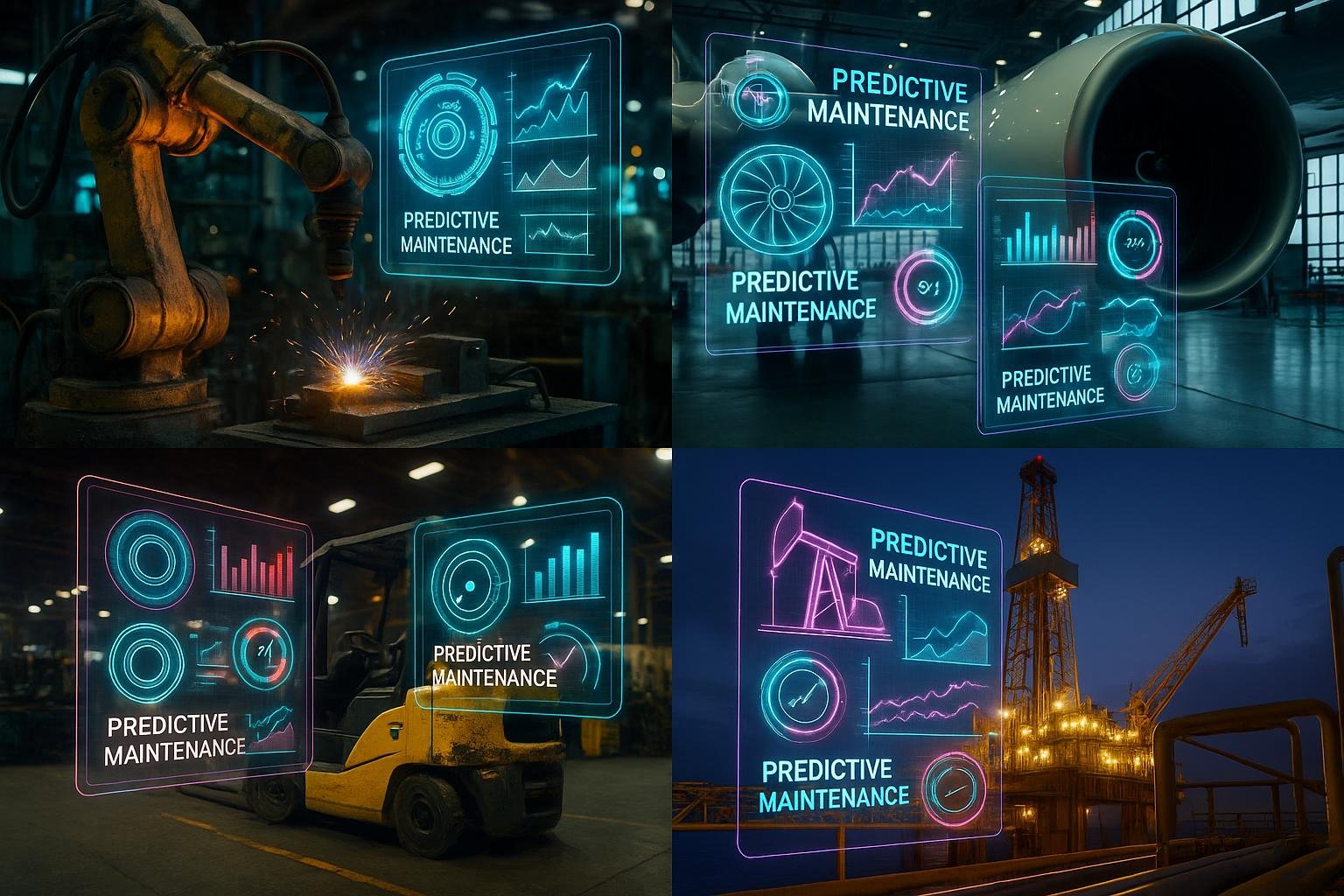
Predictive maintenance remains the clearest early win. Moving away from calendar-based servicing and break‑fix responses, analytic models correlate multi-sensor signatures with failure histories and operating context to pinpoint when interventions are genuinely needed. The outcome is more targeted downtime, lower spare-parts inventory and extended asset life. When applied enterprise-wide, analytics can benchmark equipment health against manufacturer specifications and operating environments, enabling standardised strategies that nonetheless respect local conditions.
That asset-level intelligence scales through digital twins, continuously updated virtual replicas of machines, production lines or whole sites. Digital twins allow engineers to rehearse changes, stress-test scenarios and optimise configurations without risking live operations. Recent work shows that coupling generative AI techniques such as GANs and VAEs with digital twins improves their realism by producing synthetic failure data and rare-event scenarios absent from historical records; this enrichment raises prediction accuracy and supports more robust maintenance planning, according to a review of generative-AI-driven digital-twin research. Academic syntheses also point to an evolving AI-enabled digital twin architecture that blends predictive, explainable and context-aware modalities to increase autonomy and interoperability across manufacturing systems.
Generative models do more than fill data gaps. They accelerate experimentation inside virtualised environments, enabling millions of what-if simulations to explore degradation trajectories and maintenance trade-offs rapidly. Meanwhile, edge AI and machine-learning augmented twins deploy inference closer to sensors, delivering low-latency detection for time-critical use cases while reserving cloud resources for heavier model training and cross-site learning. A review of digital-twin and edge-AI integration highlights how this combination supports predictive maintenance, quality control and process optimisation across diverse industrial settings.
The potential gains are tangible. An agent-based IIoT framework combining data-centric modelling and AI-driven decision support showed material operational improvements in experimental evaluations, reporting performance uplifts of roughly 20% and resource consumption reductions near 15% compared with conventional IoT approaches. These findings underline how analytics-driven orchestration can raise throughput and reduce waste when models are embedded into operational workflows.
Beyond maintenance, predictive analytics underpins quality control and energy management. By elevating monitoring upstream, manufacturers can detect small process drifts, thermal, humidity, visual or acoustic, that presage defects, reducing scrap, rework and customer disputes. In energy-constrained settings, models that fuse historical consumption with production plans, weather forecasts and market signals allow firms to predict demand, manage peak loads and inform scheduling decisions that lower costs and emissions. Such visibility also supports more credible sustainability reporting and compliance.
Analytics also extends into supply chains and logistics. Layering predictive models on top of GPS, inventory and transport data produces anticipatory supply-chain intelligence: forecasts of demand swings, early identification of transport disruptions and fleet diagnostics that reduce the likelihood of breakdowns en route. In a world of geopolitical uncertainty and climate risk, this anticipatory capability bolsters resilience and responsiveness.
Human safety and ergonomics benefit as well. Wearable sensors and environmental monitors feed predictive models that detect fatigue, hazardous exposure or unsafe proximity, enabling pre-emptive interventions. Rather than displacing operators, predictive systems are most effective when they augment human judgement, reducing cognitive load and surfacing the most relevant, time-sensitive insights to support decisions on the plant floor.
Emerging capabilities in generative and agentic AI promise to broaden the remit of predictive systems. Generative AI supports scenario generation and design optimisation; agentic systems, autonomous agents confined by governance rules, can run closed-loop processes that detect anomalies, diagnose root causes and initiate corrective actions. When multiple agents coordinate across maintenance, production and logistics, the potential is a shift from siloed optimisation to system-wide improvement.
Despite the upside, scaling predictive analytics remains difficult. Data quality and integration are perennial obstacles: sensor streams, legacy control systems and enterprise records often require extensive preprocessing and feature engineering. Real-time needs push intelligence to the edge, while continuous learning and model refinement demand cloud scale. Interoperability and standards lag behind heterogeneous industrial estates, and the complexity of retrofitting older assets constrains rollout. Workforce readiness, trust in model outputs and change management are as consequential as the underlying technology.
Cybersecurity further complicates adoption. Transmitting operational data across networks exposes manufacturing processes to manipulation, espionage and safety risks. Industry commentary stresses that encryption, strong authentication, network segmentation and intrusion detection are essential controls, and it highlights the difficulty of achieving global standardisation given regional regulation and legacy infrastructure. Securing the analytic pipeline, from sensor provenance to model integrity, must be integral to any deployment.
Research and reviews point to a pragmatic path forward. Hybrid architectures that place inference at the edge while aggregating anonymised data to the cloud for continuous model training preserve latency and scale. Augmenting digital twins with synthetic data and explainable-AI layers improves both reliability and operator trust. Agent-based and autonomous approaches should be introduced incrementally within bounded rulesets, with human oversight retained for critical decisions.
When organisations combine robust data management, layered AI models, careful security and a focus on human-centred design, predictive analytics moves from a pilot technology to the nervous system of industrial enterprises. The most advanced adopters are already blending predictive and generative techniques to create adaptive systems that forecast problems, propose interventions and, where governance allows, execute corrective actions. As IIoT ecosystems mature, those that make foresight a core capability, rather than an add-on, will shape the next wave of industrial performance, resilience and sustainability.
Source: Noah Wire Services
Subscribe to Industry Updates

